
Simple Prompting Hack for OpenAI's New Open-Weight Models

Simple Prompting Hack for OpenAI’s New Open-Weight Models

Simple Prompting Hack for OpenAI’s New Open-Weight Models

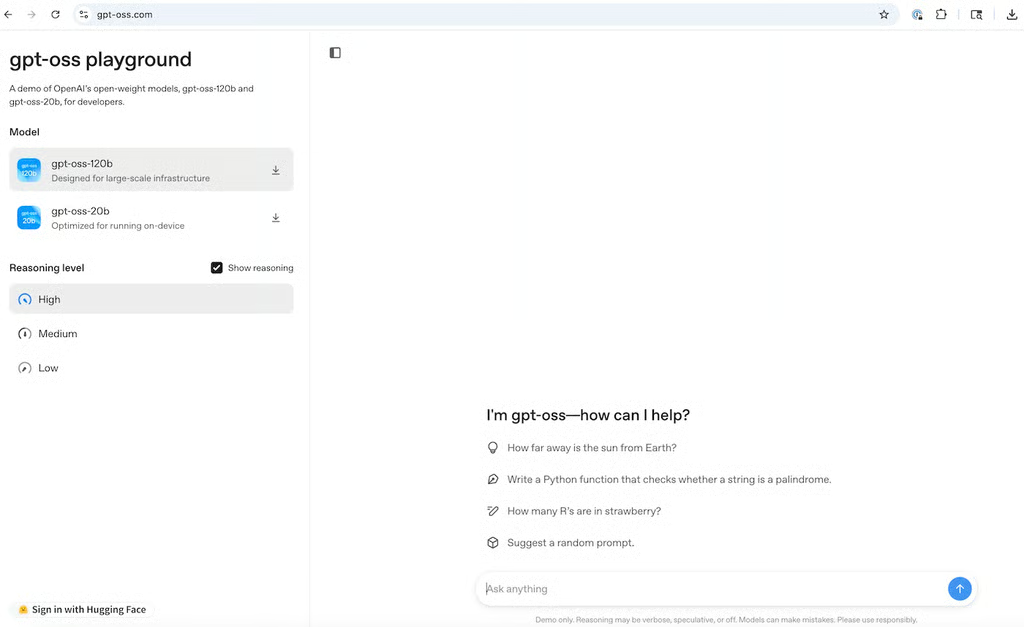
Screenshot of OpenAI's simple playground where developers can try both gpt-oss models in the browser. Image: OpenAI

TechnologyAdvice’s Grant Harvey shares a “dead-simple prompting hack” for OpenAI’s gpt-oss models, as well as several related developer guides.

Écrit par
Grant Harvey
Grant Harvey
Aug 6, 2025

OpenAI’s new open-weight gpt-oss models come with a dead-simple prompting hack: just add “Reasoning: high” to unlock deep thinking mode, or use “reasoning: low” for faster responses when you don’t need the full analysis. (“Reasoning: medium” is the balanced version, which is on by default.) Here’s how that’s handled in LM Studio.

These gpt-oss models separate their outputs into channels: “analysis” shows raw chain-of-thought, while “final” contains the polished answer. So when you prompt with high reasoning, you literally see the model working through the problem step-by-step before answering.

Additional insight for developers

First of all, Hugging Face has a guide to working with gpt-oss. Secondly, you’ll need to use the harmony response format for proper prompt formatting. OpenAI demonstrates what that looks like below:
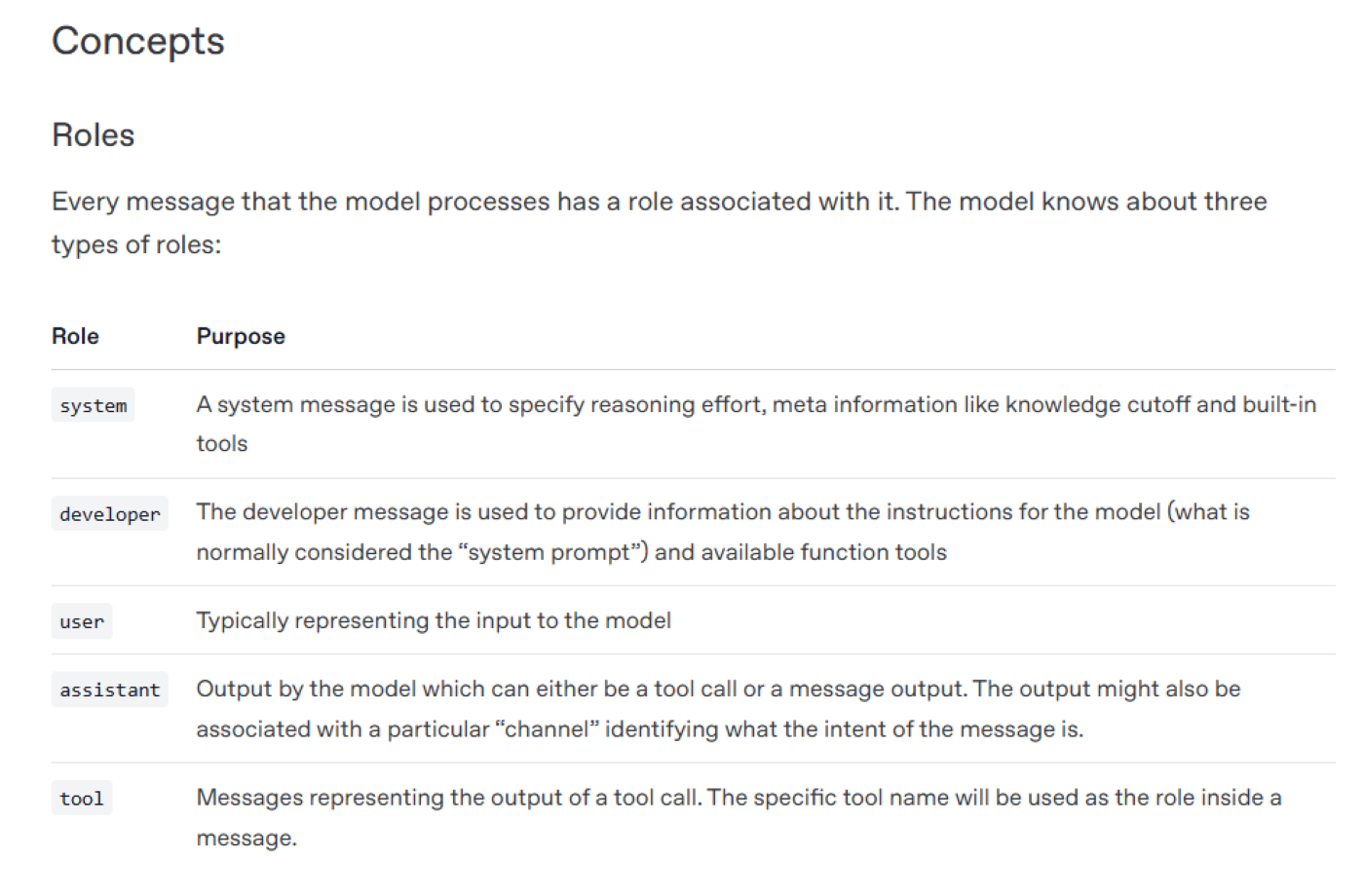
OpenAI says this structure is needed to get the oss models to output to multiple “channels” for chain of thought, tool calling, and regular responses.

They open-sourced the Harmony renderer for this purpose, but this OpenAI guide walks through how to use this if you’re going to try to spin this up on your own and not through an API provider or via Ollama or LM Studio. Oh, and if you want to fine-tune this model yourself, here’s OpenAI’s guide for that, too.

Editor’s note: This content originally ran in today’s newsletter of our sister publication, The Neuron. To read more from The Neuron, sign up for its newsletter here.

Grant Harvey

Grant Harvey is the Lead Writer at The Neuron, where he leads daily coverage of artificial intelligence, emerging technologies, AI tools, and industry trends. His work focuses on helping business professionals understand how AI is transforming the workplace and how they can apply new technologies to improve productivity, decision-making, and business performance. Before specializing in AI, Grant spent more than five years covering emerging technology and digital innovation. He combines deep industry research with hands-on testing of AI tools, platforms, and workflows, providing practical insights that help readers separate meaningful advancements from hype. In addition to his editorial work, Grant brings experience from go-to-market and revenue leadership roles across technology startups, including positions in marketing, growth, and business development. This background gives him a unique perspective on how organizations evaluate, adopt, and scale new technologies. Grant is also a co-host of The Neuron: AI Explained podcast, where he breaks down complex developments in artificial intelligence for business audiences. He continues to expand his expertise through ongoing AI education, including MIT xPRO's Generative AI program, while actively exploring the latest advancements in AI applications, automation, and workplace technology. Through his writing and analysis, Grant helps business leaders, knowledge workers, and technology professionals stay informed about the rapidly evolving AI landscape and make smarter decisions about emerging technologies.