


Editor’s note: This article was updated on March 10, 2025 to clarify Silent Beacon’s pricing and adoption options.
A few months ago, a home healthcare worker found herself in the middle of a Chicago street. Her patient was making a beeline for the busy intersection.
She needed backup, but there was no time to reach for her phone. No time to dial 911, explain where she was, or describe what was happening. In a traditional emergency, she would have had to choose: manage the crisis or call for help.
But this day was different. With one press of a button, she activated Silent Beacon’s panic system, which transmitted her location to emergency services and opened a two-way audio feed within seconds. By the time she pulled the patient back to safety, help was already en route.
Kenny Kelley, CEO of the safety wearables company, shared this story as one entry in what has become a monthly catalog of near-misses and prevented harm. Each one underscores a growing structural problem with traditional workplace emergency protocols: What happens when the person in danger is moving, working alone, or dealing with a situation that escalates faster than any written procedure can accommodate?
The “invisible workforce”
Most emergency response infrastructure assumes you’re in one place when something goes wrong. Fire alarms, panic buttons mounted under desks, blue light emergency stations—they all depend on you being able to reach a specific location and activate a device that alerts responders to that fixed point.
Kelley encounters this assumption constantly when speaking with potential clients. “People think they want a panic button solution that goes under a desk,” he said. “They live in this world where you’d go into a 7-Eleven or a bank, you’d hit the button, the police would show up in two seconds, everyone would be saved. That’s not reality.”
Silent Beacon’s client base reveals which industries have been operating inside this gap for years. Home healthcare workers who make solo visits to patients in unfamiliar neighborhoods represent their largest segment. Social workers, hospice staff, mental health crisis workers, and educators who work in community settings follow closely behind.
Kelley calls these workers the invisible workforce. “They’re niche, under the radar industries and individuals,” he said. “I don’t think the general public quite understands their need for [extra safety measures].”
The statistics paint a slightly more ominous picture. According to the National Safety Council, nearly 70% of companies have reported a safety incident involving an employee working alone in the past three years, with one in five of those incidents classified as “quite or very severe.”
The Silent Beacon system
Silent Beacon’s approach addresses the mobile worker problem through design. The device pairs with the employee’s smartphone via Bluetooth and doesn’t require infrastructure changes like new routers or network modifications. In an emergency, a single button press simultaneously alerts 911, internal safety teams, and personal emergency contacts. Each device includes two-way audio, silent mode for discreet alerts, and real-time GPS location sharing.
Silent Beacon’s architecture addresses the other common concern Kelley navigates with potential clients: privacy. The system doesn’t track location unless the emergency button is pressed; between emergencies, no location data is collected or stored.
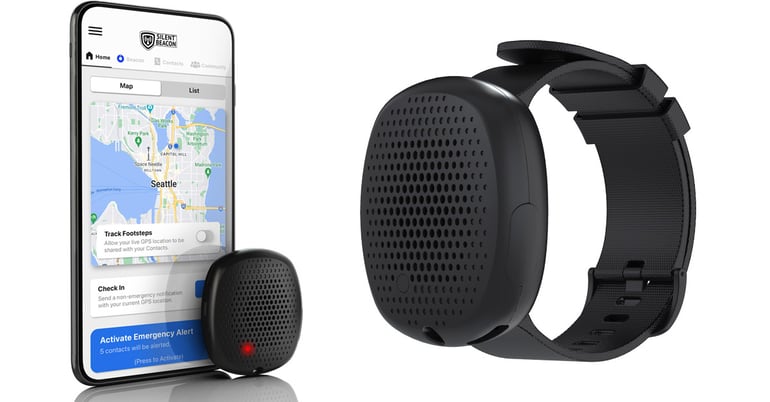
Organizations may purchase the devices upfront or lease them, which includes ongoing hardware and software updates. This flexible option minimizes employers’ overhead costs and ensures access to new functionality as it’s developed.
Bridging the gap
State mandates are accelerating adoption for devices like Silent Beacon. New Jersey, for example, requires hotels with 100 or more rooms to provide panic buttons for housekeeping and room service staff. New York will require employers with 500 or more retail workers to provide mobile or wearable panic buttons by January 2027.
But Kelley sees organizations arriving with outdated assumptions about what compliance actually requires. “Employers must recognize that workplace safety is not just about meeting legal requirements,” he said. “It’s about creating an environment where employees truly feel secure.”
For business leaders looking to close the gap, Kelley’s advice centers on listening first. Listen to what employees report about their safety experiences. Look at anonymous feedback that surfaces through HR. Audit whether current safety systems actually map to how and where employees work.
Then review emergency response plans with a few basic questions:
- Can employees call for help from anywhere they work?
- Does the system explain what kind of emergency is happening?
- What happens if the person who needs help can’t speak?
Emergency response infrastructure built for fixed locations can’t protect a workforce that moves. If your system assumes employees will be at their desks when something goes wrong, it’s time to update the assumptions.