



Workplace injuries tend to conjure a specific image: a construction site, a warehouse, heavy equipment. Not a desk.
But sitting for eight hours a day carries its own risks. You might not notice anything if you spend one day with your chair or monitor at the wrong height or your wrist extended at a weird angle, but slowly, over time, you’re likely to develop an injury.
There’s a good chance you already know what I’m talking about. Musculoskeletal disorders—back pain, neck pain, shoulder strain, and related conditions—account for roughly 30% of all absences in private industry, according to BLS data. For employers, these injuries rack up billions in related labor costs every year.
Why your back always hurts
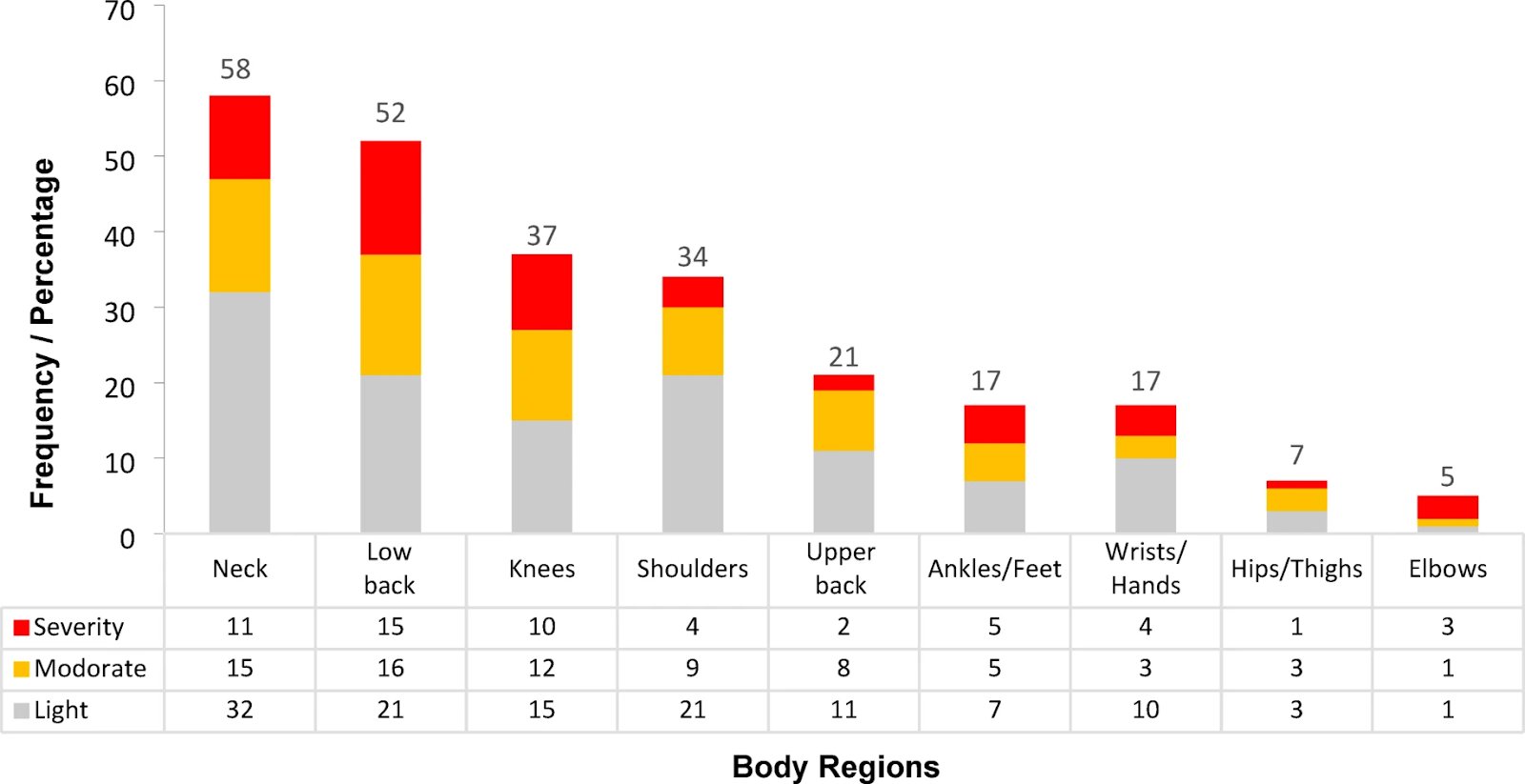
A recent cross-sectional study published in Scientific Reports assessed ergonomic conditions among office workers and found that more than 80% had experienced musculoskeletal symptoms in at least one body region. The neck, lower back, and shoulders were the most affected (Fig. A).
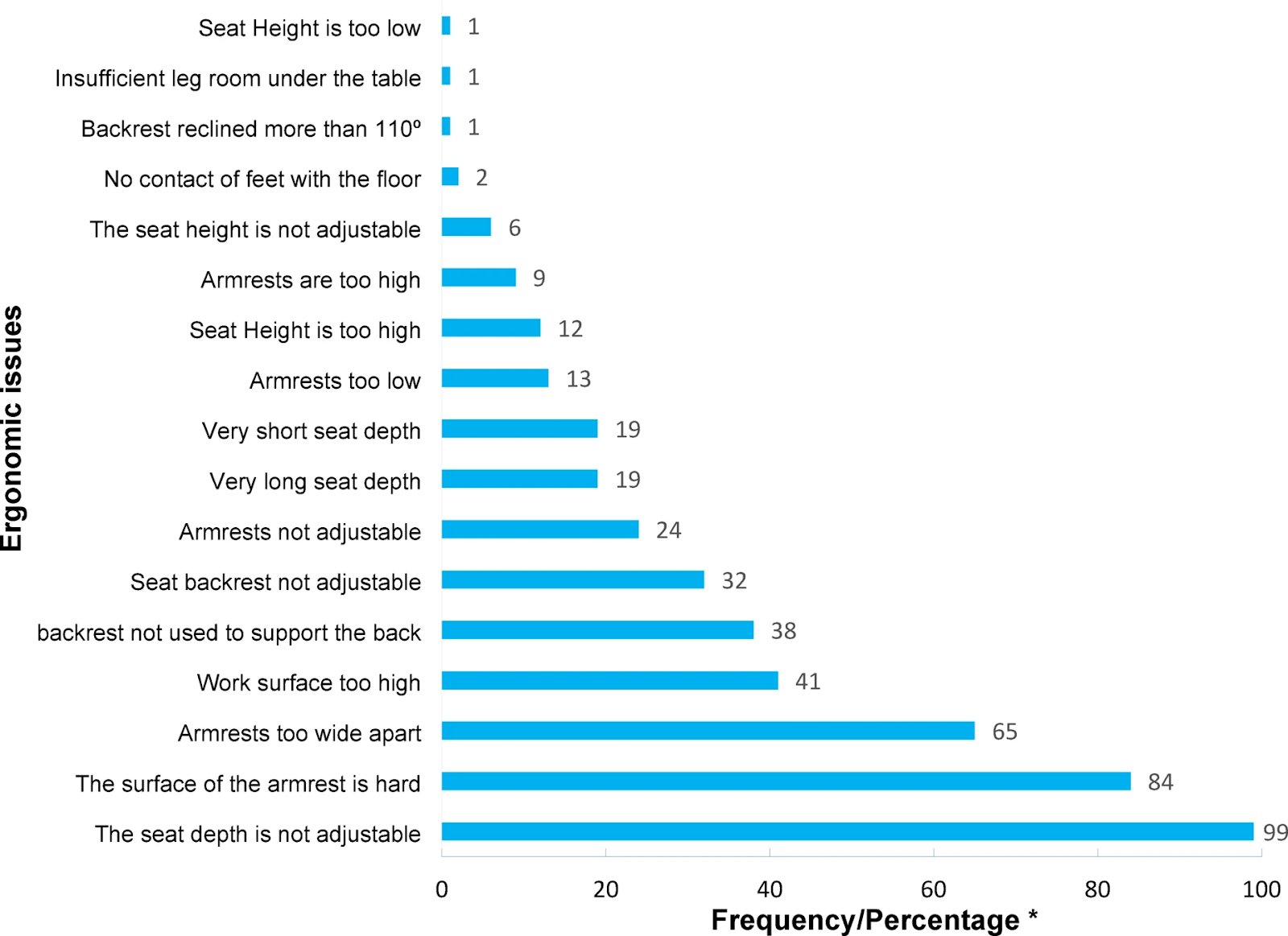
The most common culprit of musculoskeletal pain? Chairs without adjustable seat depth (99%), though armrests that were too hard (84%) or too wide (65%) followed closely behind (Fig. B).
This research comes on the heels of a 2024 systematic review that found similar patterns. Across 25 studies in 14 countries, participants reported pain most frequently in the lower back, neck, upper back, and shoulder, with “working in an awkward posture” listed as the second-largest risk factor.
So where does HR fit into this?
I should clarify that none of this is an argument that employers are solely responsible for their employees’ physical health. People bring their own histories, habits, and risk factors to work. But the research is fairly consistent that workstation design influences outcomes in ways that are, to a meaningful degree, preventable.
For in-office teams, that means treating ergonomic assessments as something closer to routine maintenance than a one-time expense. Adjustable chairs, monitor risers, and keyboard trays are not glamorous line items, but they’re considerably cheaper than a workers’ comp claim.
For remote and hybrid teams, the calculus is similar. A home office stipend that helps your employees set up a functional workstation is an investment in the same logic: the work environment shapes physical health.
If you’re in a decision-making role, the business case is fairly clear. Fewer injuries means fewer absences, lower healthcare utilization, and sustained productivity from people who aren’t working through chronic pain.
What's hot at TechRepublic
- Blackpoint Cyber vs. Arctic Wolf: Which MDR Solution is Right for You?
- Why AWS Sellers Choose Deepgram Over Other Voice AI Tools
- SS&C Intralinks DealCentre AI vs. Datasite: Which platform is built for the future of dealmaking?
- SS&C Intralinks FundCentre AI vs. Juniper Square: Which platform better supports modern private markets fund managers?
- Verito vs. Rightworks: Which IT Provider Is Best for Your Firm?