


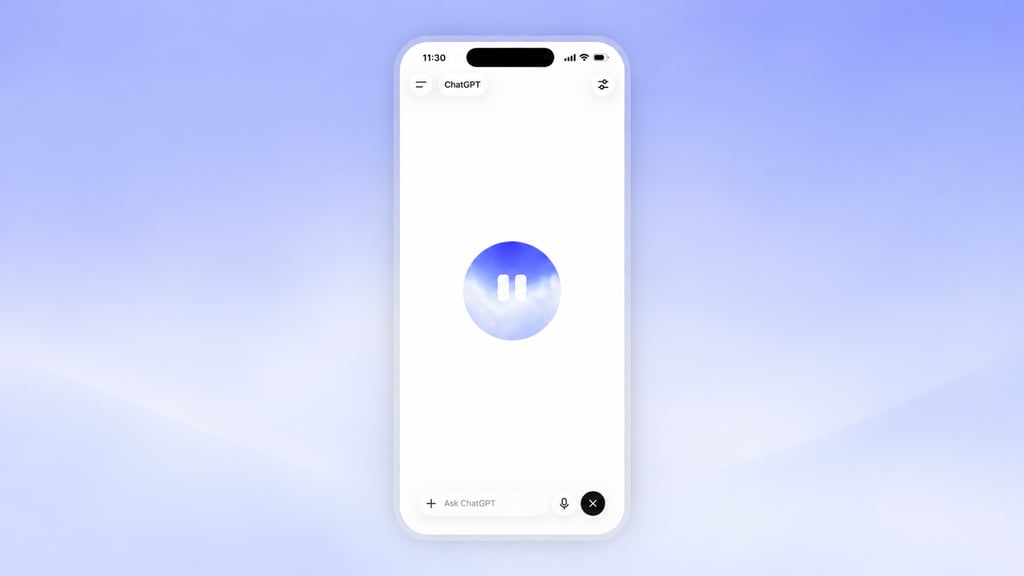
ChatGPT users who prefer Advanced or Standard voice have less than a month left to use them. Both modes will disappear as selectable options on December 11, 2026, but the conversations created with them are staying.
OpenAI confirmed the retirement on November 10, announcing that users of the older modes will automatically switch to GPT-Live. The replacement allows more natural interruptions and faster exchanges, although users accustomed to the older modes’ pacing will no longer be able to select those experiences.
Which voice modes are retiring, and what happens to chats?
Under OpenAI’s retirement schedule, both modes remain available until December 11. After that, they will disappear from Settings > Voice, and accounts using either will switch to Live.
Standard converts speech into text before generating a spoken response. Advanced processes audio directly but follows a turn-based format, waiting for users to finish speaking.
GPT-Live can listen and speak simultaneously, allowing interruptions and quicker exchanges. It can also pass complex requests to other AI models while keeping the conversation active. Similar full-duplex capabilities are being developed for business applications, as illustrated by OpenAI’s GPT-Live-1 developer model.
Saved conversations will remain accessible, but original audio recordings follow separate retention rules.
OpenAI’s voice data policy states that Advanced and Live audio clips are retained for 30 days. Standard audio is deleted after transcription unless users opted to share recordings for model training. Voice transcripts may not capture every spoken word exactly.
Deleting a chat also triggers deletion of associated audio and video clips within 30 days, subject to stated exceptions.
Users can follow the ChatGPT data export instructions to download eligible account information, although availability varies by plan and workspace. Exporting is unnecessary for the voice transition.
For additional privacy, ChatGPT’s Locked Chats feature can restrict access to selected conversations without changing their retention settings.
Why OpenAI is making the switch and what stays available
OpenAI reports that voice usage has nearly doubled since GPT-Live launched in July 2026, with virtually all voice users already using the newer system.
The company is concentrating development on GPT-Live, including response quality and conversational continuity. It acknowledges that some users prefer the older modes’ speaking styles, which will no longer be selectable after December 11.
Advanced voice will continue powering live video and screen sharing until GPT-Live supports those capabilities. OpenAI has not announced a replacement date.
Custom GPTs face a separate December 11 retirement. Creators can review the custom GPT migration process, while OpenAI’s official guidance outlines replacement options and extensions for qualifying workspaces.
Users who prefer the older modes can test GPT-Live before December 11 through Settings > Voice. No chat migration or backup is required for the transition.
Organizations that use voice for training, accessibility support, or hands-free work should check whether their instructions depend on Advanced or Standard. Existing workspace permissions remain unchanged, but the familiar speaking patterns those workflows rely on may not.
Read more: Explore available models, subscription differences, and privacy settings in the updated TechRepublic ChatGPT Cheat Sheet.