


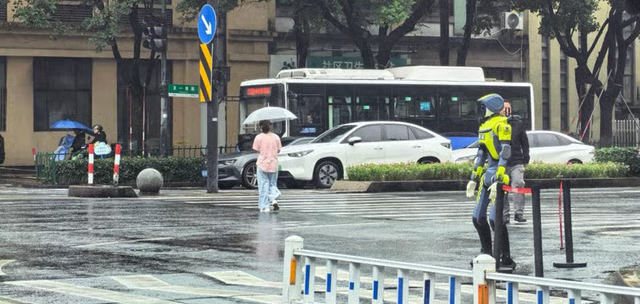
Commuters braving heavy downpours in eastern China encountered an unexpected crossing guard: a waterproof humanoid robot directing traffic.
DEEP Robotics conducted field trials of its DR02 humanoid robots in early October across Xihu District, Hangzhou, China, where persistent rain and heavy tourist traffic placed additional demands on local traffic management.
The robots were tested at busy intersections, including Zheda Road and West Wenyi Road, as well as tourist destinations such as Xixi National Wetland Park. The trials examined whether humanoid robots could assist with traffic direction, pedestrian safety and visitor information in crowded public spaces.
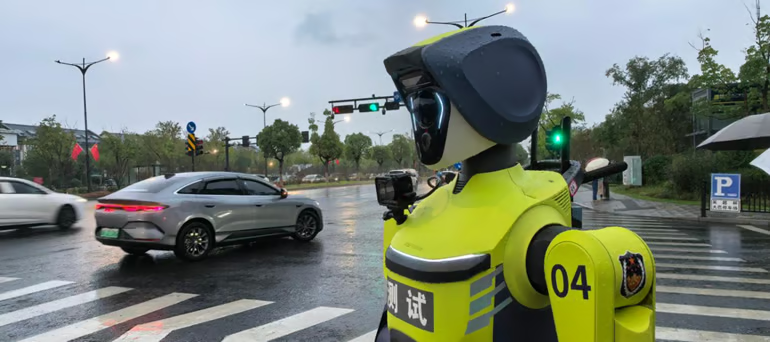
The DR02 features IP66-rated protection against dust and water, which the company tested under sustained rainfall. Its environmental perception and motion-control systems allow it to navigate around pedestrians and vehicles and adjust its position and hand signals while directing traffic.
However, the trials were presented as product testing rather than evidence of a completed commercial deployment or a replacement for human traffic officers.
How the robots monitor traffic and assist visitors
Beyond directing traffic, the DR02 was tested on tasks that could reduce the repetitive workload of personnel stationed at busy intersections.
According to DEEP Robotics, its visual perception and recognition capabilities can identify potential violations, including motorbike riders without helmets, overloaded vehicles, pedestrians crossing designated lines and vehicles stopping beyond stop lines. The robots can issue voice-based safety reminders to people in these situations.
The company also tested multilingual voice interactions at tourist areas, where visitors frequently ask for directions, transportation information and details about traffic restrictions. The robots are intended to handle routine inquiries while human staff focus on emergencies, traffic enforcement and situations requiring judgment.
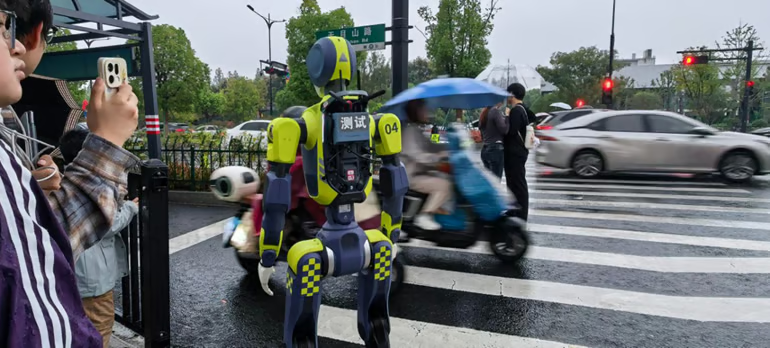
An on-site staff member, per DEEP Robotics, said, “with many repetitive advisory tasks handed to the robot, we can devote more energy to accident handling and enforcement of key violations—work that requires more human judgment.”
The challenge of putting humanoids on public roads
The trials point to a practical use for humanoid robots beyond factories and warehouses: performing repetitive public-facing tasks in environments designed for people.
Their humanlike form could make it easier to use existing pedestrian spaces and hand signals without redesigning infrastructure around specialized machines. But that advantage does not establish that humanoids are the most effective or affordable option for traffic management. Fixed cameras, automated warning systems and conventional traffic-control equipment can already handle some of these functions.
Performance in real traffic also raises questions about reliability, safe movement around unpredictable pedestrians, recognition accuracy in heavy rain and the consequences of incorrect warnings. DEEP Robotics did not provide trial results quantifying accuracy, uptime, cost savings or improvements in traffic flow.
What this means for tourists and road users
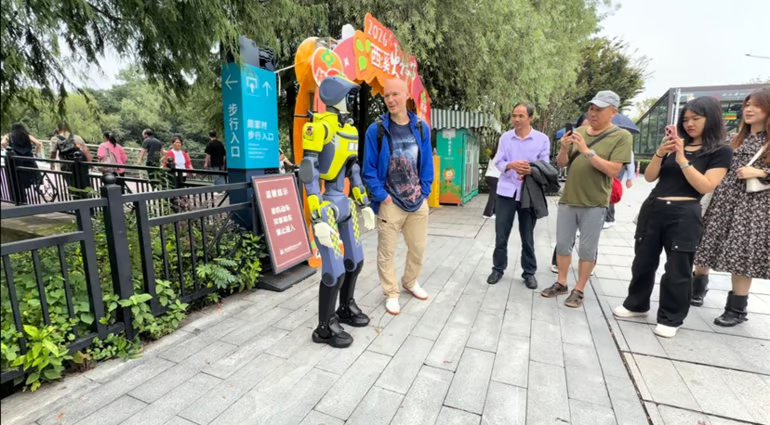
For visitors, the technology could eventually mean easier access to directions and transportation information, including multilingual assistance at crowded attractions. Pedestrians and drivers could also receive more timely reminders about road safety.
Those benefits remain prospective. The trials do not establish that the robots can independently enforce traffic laws. For city authorities, the immediate value is testing whether robots can supplement existing staff during peak periods and difficult weather.
Any broader rollout will depend on demonstrating dependable performance, clear coordination with human officers and measurable benefits over existing traffic-management systems.
Other news: The Best Robot Companions of 2026 explores the growing range of robots designed for companionship and everyday assistance.