

By year’s end, experimentation with AI will have shifted to keeping pace with how quickly it is moving. Generative AI is evolving into agentic AI, automation will be more refined, and emerging technologies will be in full-scale deployment, according to Forrester, which has released its top 10 emerging technologies for 2025.
Top 10 emerging tech in 2025
Forrester categorized the top 10 emerging tech over the short-term, mid-term, and long-term to help organizations prioritize their investments.
Short-term technologies
According to Forrester, these technologies balance AI acceleration with security needs and will offer measurable ROI within the next two years.
1. Synthetic data
2. IoT security
3. TuringBots
4. GenAI for language
SEE: How to Use AI in Business (TechRepublic Premium)
Mid-term technologies
These technologies are stalling due to integration challenges, lack of industry standards, and the challenge of deploying AI safely in human environments and will deliver benefits in the next two to five years.
5. Agentic AI
6. GenAI for visual content
7. Edge intelligence
8. Autonomous mobility
9. Quantum security
Long-term technology
This AI breakthrough is moving faster than anticipated but will take at least five more years to deliver tangible enterprise value.
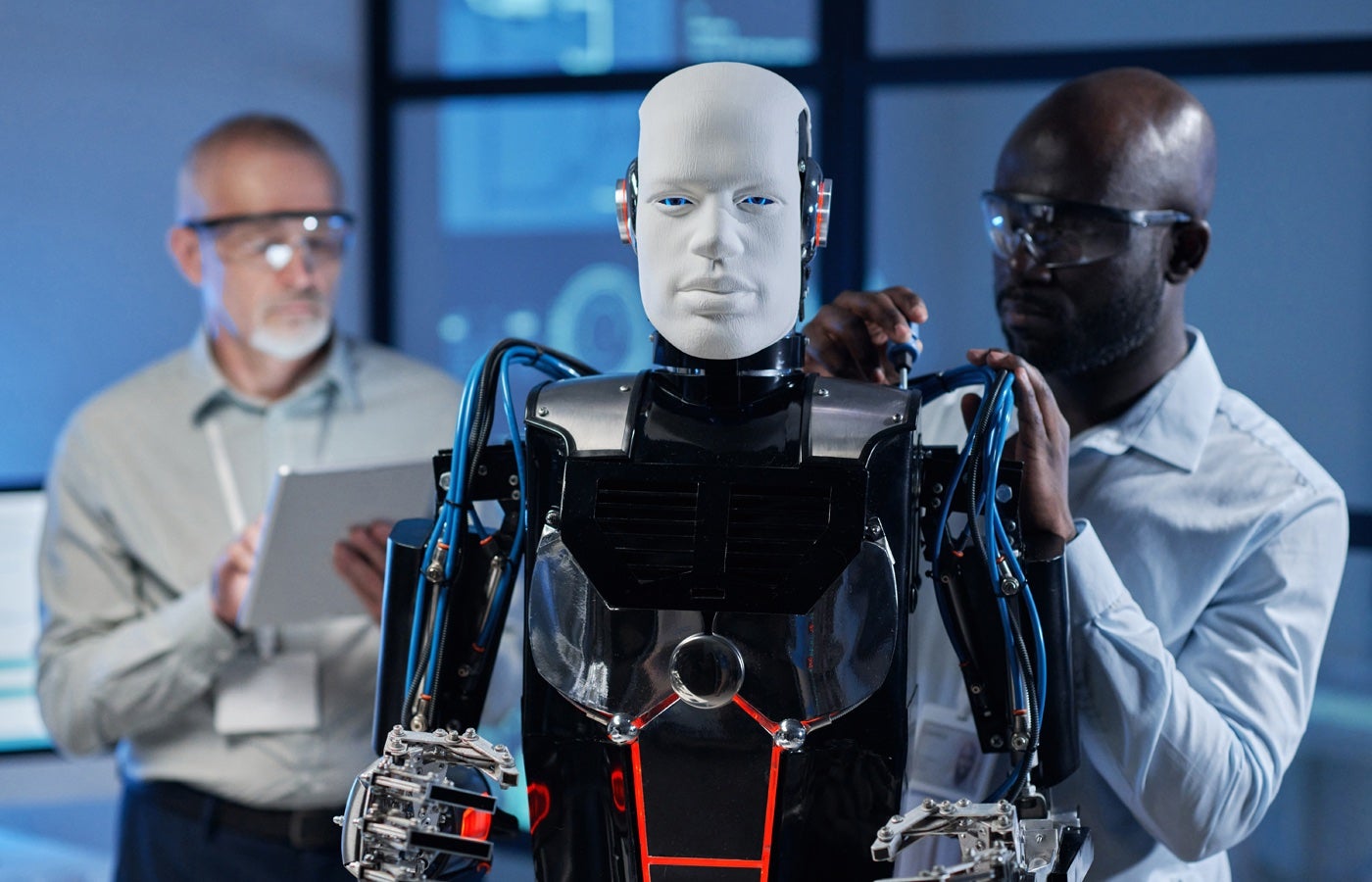
10. Humanoid robots
More must-read AI coverage
- SS&C Intralinks DealCentre AI vs. Datasite: Which platform is built for the future of dealmaking?
- SS&C Intralinks FundCentre AI vs. Juniper Square: Which platform better supports modern private markets fund managers?
- Why Data, Not Models, Determines AI Success
- The Rise of the AI-Native Factory: How Physical AI Is Transforming Manufacturing
Three standouts organizations should have on their radar now
Three of these 10 technologies are particularly notable, Brian Hopkins, vice president of emerging technology and principal analyst at Forrester, told TechRepublic.
Agentic AI
The first is agentic AI, which is shifting from traditional AI agent applications. Agentic AI comprises “the underlying emerging technologies that make agents more autonomous,’’ Hopkins said. “These include reasoning models, LLMs as critics, advanced retrieval methods, and novel model engineering techniques. Together, these innovations significantly enhance the capabilities of next-generation AI agents.”
Synthetic data
Synthetic data is new to Forrester’s top 10 this year because it is playing a pivotal role in training and fine-tuning AI models, particularly those that power agentic systems, Hopkins said. “While it’s already valued for enabling privacy and reducing bias, its growing impact on boosting model performance is what earned it a spot on this year’s list.”
Industries that will benefit the most from adopting synthetic data to minimize risk include financial services, insurance, healthcare, and the public sector.
Humanoid robots
The development of humanoid robots is being accelerated by advances in AI language and visual reasoning, combined with declining costs in sensors and mechanical components, Hopkins said.
Millions of AI-powered assistants will enter the workforce in the next five to 10 years, and this will redefine labor markets and create new regulatory and ethical challenges.
“These robots are increasingly capable of working alongside humans in both industrial and consumer settings,’’ Hopkins explained. “While this trend has been developing for some time, 2025 marks a tipping point. We’re advising clients to prepare for the impact on their workforce and to explore innovation opportunities this presents for customer-facing applications.”
Correction: The information in the short-term and mid-term technologies categories have been updated.