


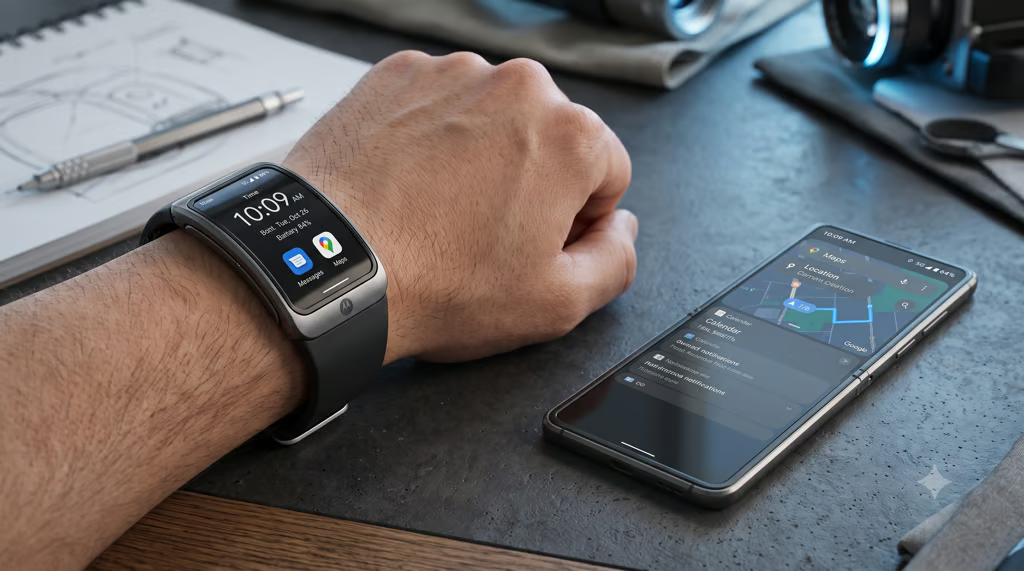
A future Motorola phone might not spend all day in a pocket. It could wrap around a user’s wrist and then transform into a handheld screen when needed.
A newly granted U.S. patent describes a flexible wearable that can switch between smartwatch and smartphone configurations. The filing shows display sections forming a wristband before pivoting into a wider rectangular device for handheld use.
Patent drawings explain how it might change shape. Daily use would decide whether the design deserves to leave the lab.
How the smartwatch could turn into a phone
The flexible display sections would form the band, leaving a compact watch interface visible on top. When removed, one half would pivot beside the other to create a wider rectangle. A coupling system would keep both sides together during handheld use.
Position sensors would recognize each arrangement and reorganize onscreen content automatically. The screen area would stay the same, with its shape changing to suit each mode.
Motorola’s filing identifies smartwatch and smartphone modes but leaves the final dimensions and specifications open.
Motorola has tested flexible screens before
Shape-changing screens are familiar territory for the mobile maker. Its Adaptive Display concept used a single 6.9-inch pOLED panel that could lie flat, stand upright, or wrap around a wrist. Unlike the pivoting patent, the entire panel bent to change form.
Motorola has also explored coiled wearable screens and demonstrated a rollable phone with a display that expands from a compact body. Together, the projects show a broader effort to fit larger screens into devices that remain portable—or wearable.
The company’s recent Razr Fold announcement offers another example of the company fitting a larger display into a portable device.
Could a smartwatch like this replace your phone?
Frequent travelers, field workers, and LTE smartwatch users are the likeliest audience for a watch-phone. They already use mobile devices for directions, boarding passes, messages, and login approvals while moving, so switching between wrist and handheld modes could make those tasks easier without adding another gadget. Photography and long typing sessions would probably keep a conventional phone in the picture.
Serving these users well would require apps that move smoothly between screen layouts. Developers would need to keep controls legible and preserve a user’s place during each transition. Anyone considering the device should watch live demonstrations for restarts, missing controls, or awkward resizing.
Battery life will be another hurdle. New battery technology in slim Motorola phones suggests the company is already exploring ways to add capacity without making a device bulkier. Buyers should also check water resistance, repair pricing, and comfort after several hours on the wrist.
Motorola has not announced a commercial device or release schedule. Until working hardware appears, readers should treat the watch-phone as a possibility instead of an upcoming purchase.
Other News: Five major OS upgrades would give Samsung’s next Galaxy Watches a longer shelf life, but IT teams still need model-specific terms.