


A trip to the notary is no longer the only option for eligible business documents in the Philippines.
The Supreme Court launched nationwide electronic notarization on October 19, 2026, allowing businesses and individuals to notarize qualifying digital documents through accredited platforms. The rollout follows agreements with the Securities and Exchange Commission (SEC) and Land Registration Authority (LRA) establishing guidelines for accepting electronically notarized records in corporate and property transactions.
For companies operating across the Philippines, the service provides a new option for notarizing eligible business documents without requiring every signer to appear in person. However, eligibility rules, agency filing requirements and data-security obligations remain important considerations before moving existing processes online.
How electronic notarization works
The October 19 launch opened public access through three Supreme Court-accredited platforms: TWALA by Ohelio Inc., NotarizeIT by UNAWA and QLegal by Quanby Solutions Inc.
The Supreme Court’s Rules on Electronic Notarization, which took effect March 24, 2025, give qualifying electronic notarial acts the same legal validity as those performed under traditional notarial rules. The framework supplements rather than replaces conventional notarization.
The court’s official guidance covers acknowledgments, oaths, jurats and signature witnessing. Electronic documents must be in PDF or PDF/A format. Scanned paper documents, including those bearing handwritten signatures, may qualify under specified conditions. Previously signed documents are subject to additional requirements, while paper originals requiring conventional notarization remain under the existing rules.
Electronic notarization can take place in person, through live videoconferencing or through a combination of both. Commissioned electronic notaries can serve eligible signers nationwide, while overseas participation is restricted to specified Philippine diplomatic or consular locations.
Businesses can find accredited providers through the Supreme Court’s eNotarization portal. Users must complete identity verification and arrange a session with a commissioned electronic notary.
What businesses need to know
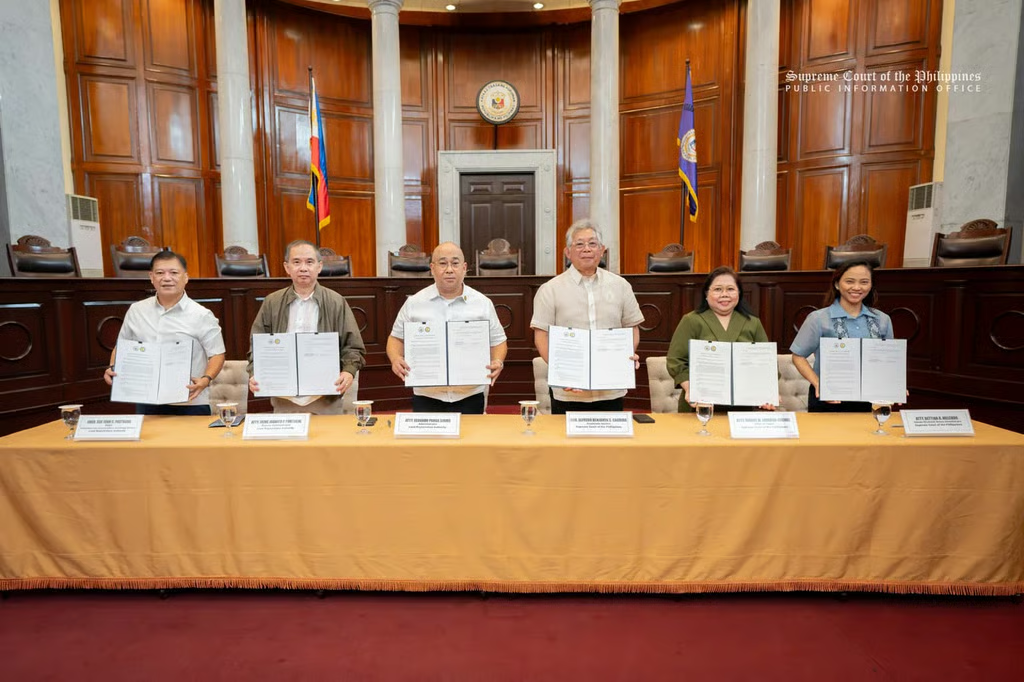
On October 13, the Supreme Court signed joint memorandum circulars with the SEC and LRA, establishing guidelines for accepting and processing electronically notarized records. The SEC framework sets procedures for accepting, verifying and processing these documents, while the LRA guidelines address their use in land-registration transactions. Specific filing requirements still apply.
These procedures could simplify documentation for companies handling corporate authorizations, commercial agreements and property transactions across Philippine locations. Similar efforts are emerging elsewhere in Southeast Asia, including a Singapore-Vietnam digital credentials pilot designed to streamline trade-finance document checks. Each initiative operates under its own legal requirements.
Security controls remain essential. Accredited platforms must support identity verification, multifactor authentication, geolocation checks and protections against document tampering. IT teams should also examine data retention, access controls and incident-response procedures before adopting a provider.
Companies operating across Southeast Asia face different national data-governance requirements. Indonesia, for example, is considering additional rules covering government information and cross-border data processing, separate from the Philippines’ notarization framework.
A government access channel remains under development. Department of Information and Communications Technology Secretary Robert Joseph Montes de Claro said on October 19 that electronic notarization had been connected to the government’s eGov platform and was undergoing final testing, with no public release date announced. The work follows the Philippines’ broader expansion of digital services through eGovPH.
With electronic notarization available nationwide, Philippine businesses can begin identifying which legal and corporate documents qualify for digital processing. Whether those transactions become simpler will depend on how consistently government agencies, financial institutions and other counterparties accept electronically notarized records.
Read more: Digital documentation is only one part of the challenge, as ASEAN businesses continue to face barriers to cross-border digital trade despite growing adoption of online tools.