


Samsung’s Android 17 rollout is moving beyond its newest Galaxy phones.
Samsung has begun expanding One UI 9, its Android 17-based software, across the Galaxy lineup after initially launching the stable update on its latest foldables and then the Galaxy S26 series. The rollout is now reaching the Galaxy S25 family and 2025 foldables in additional markets, while more Galaxy phones are expected to follow.
For Galaxy owners, the big questions are straightforward: Is your phone eligible, and when will the update arrive? The answer depends on the model, country, and carrier, making Samsung’s rollout less of a single launch date and more of a moving calendar.
Which Samsung Galaxy phones have One UI 9?
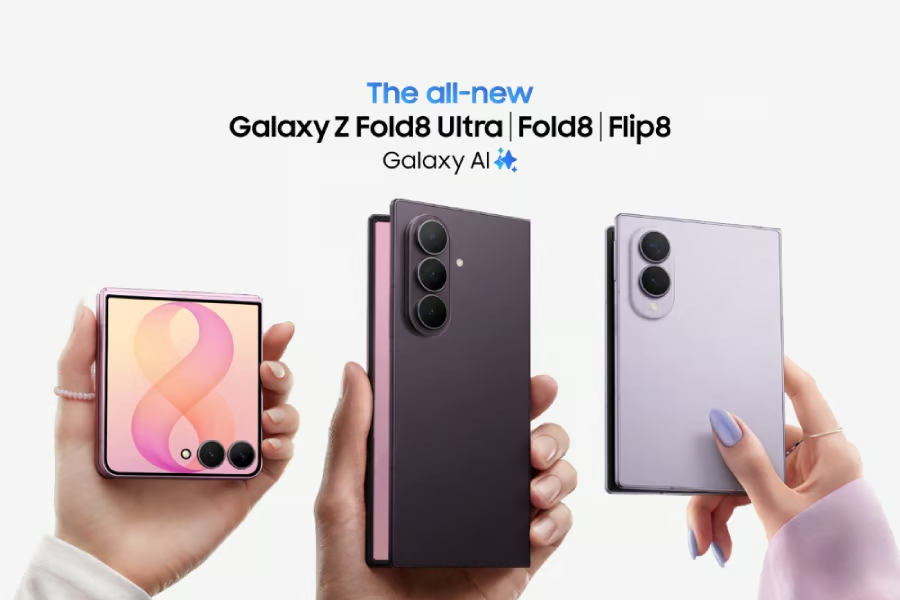
One UI 9 debuted on Samsung’s newest foldable phones, including the Galaxy Z Fold8 Ultra, Galaxy Z Fold8, and Galaxy Z Flip8. Samsung then officially began expanding One UI 9 to the Galaxy S26 Ultra, S26+, and S26 on Sept. 16.
Samsung says availability and timing can vary by device, market, and carrier, meaning Galaxy owners may receive the same major software release at different times.
The stable rollout has also expanded to additional devices. In South Korea, Samsung began distributing stable One UI 9 to the Galaxy S25 family. The Galaxy S25, S25+, and S25 Ultra received the stable update for both beta participants and users moving directly from Android 16 and One UI 8.5. The rollout also includes the Galaxy S25 Edge and S25 FE.
The Galaxy Z Fold7 and Galaxy Z Flip7 initially began receiving the stable update in South Korea, with early availability reported for devices enrolled in Samsung’s beta program. The rollout has since expanded, with stable One UI 9 reaching Galaxy Z Fold7 and Z Flip7 models in the US as of Oct. 2.
The rollout currently includes:
- Galaxy Z Fold8 Ultra
- Galaxy Z Fold8
- Galaxy Z Flip8
- Galaxy S26 Ultra
- Galaxy S26+
- Galaxy S26
- Galaxy S25 Ultra
- Galaxy S25+
- Galaxy S25
- Galaxy S25 Edge
- Galaxy S25 FE
- Galaxy Z Fold7
- Galaxy Z Flip7
Availability is not simultaneous worldwide. An eligible phone may not receive the update immediately, even if One UI 9 has started rolling out to the same model elsewhere.
Which Galaxy phones are expected to get Android 17 next?
Samsung has not published one global schedule listing a precise One UI 9 release date for every eligible Galaxy phone.
There are, however, some official clues.
Samsung has said the rollout will gradually expand to additional Galaxy devices. Regional schedules can differ, with Samsung’s Thailand announcement indicating that the Galaxy S25 series and Galaxy Z Fold7 and Z Flip7 would begin receiving One UI 9 during September, followed by additional Galaxy models later in 2026.
The Galaxy S24 and S23 families are also expected to receive Android 17, based on Samsung’s software support commitments. Samsung has expanded One UI 9 beta testing beyond the S26 series to additional devices as it prepares the software for wider availability.
TechRepublic previously examined which Samsung Galaxy phones may miss Android 17, including older devices nearing the end of their promised major Android upgrade cycles. The Galaxy S23 series, by contrast, is expected to remain eligible, with Android 17 representing the fourth major Android generation for the lineup.
Samsung’s own One UI 9 documentation also identifies several older models as supporting specific One UI 9 features, including:
- Galaxy S25 and S25 FE
- Galaxy S24 and S24 FE
- Galaxy S23 and S23 FE
- Galaxy Z Fold7 and Z Flip7
- Galaxy Z Fold6 and Z Flip6
- Galaxy Z Fold5 and Z Flip5
- Galaxy Tab S11 series
- Galaxy Tab S10 series
- Galaxy Tab S9 series
That should not be read as a complete global rollout schedule. Feature availability can vary by device, and Samsung has not given every model an exact stable release date.
Mobility must-reads
- Big Apple OS Makeover: Here’s What to Expect & When
- MWC 2025: Nothing Shows Off (3A) Phones With AI Organization Tool
- Bad News for App Developers: Most Apps Fail to Hit $1,000 Monthly Revenue Within Two Years
- Mobile Device Computing Policy
What’s new in Samsung One UI 9?
One UI 9 is built on Android 17 but adds Samsung-specific features and interface changes on top of Google’s operating system.
Among the additions Samsung highlights are My FanCam, which can track and automatically reframe a selected person in recorded video, and new customizable cards for Now Brief. Samsung has also expanded Now Nudge with context-aware suggestions and added improvements to Interpreter, Document Scan, Voice Recorder, and other Galaxy tools.
Security and privacy are another focus. A new Security Brief can surface warnings about malware, apps installed from unknown sources, and unnecessary permissions. Privacy Alerts use on-device AI to identify potential privacy risks, including unnecessary attempts to access permissions in the background.
Samsung is also bringing device-support tools directly into Settings through Warranty and Care. TechRepublic previously covered One UI 9’s Warranty and Care hub, which provides warranty information, diagnostics, repair estimates, Samsung Care+ details, and service-booking options for supported devices.
Not every One UI 9 feature will necessarily be available on every eligible Galaxy device. Samsung says availability can depend on the device model, region, language, and other requirements.
How to check for One UI 9 on your Galaxy phone
Galaxy owners do not need to manually download Android 17 from Samsung’s website when the normal over-the-air update becomes available.
To check:
- Open Settings.
- Select Software update.
- Tap Download and install.
- Follow the prompts if One UI 9 is available.
If the update does not appear, that does not necessarily mean the phone is ineligible. Samsung rolls out major software releases gradually, and availability can differ by region and carrier.
Users should also back up important data and ensure they have sufficient battery life and storage space before installing a major operating system update.
What the One UI 9 rollout means for Galaxy owners
The One UI 9 rollout also highlights the growing importance of software support when choosing an Android phone.
Samsung’s newer flagship phones come with much longer software commitments than some previous generations. TechRepublic’s comparison of Samsung and Google software support explains how the two companies approach long-term Android upgrades and security patches differently.
That matters because receiving Android 17 is only part of the equation. Two phones that both get One UI 9 today could have very different numbers of major OS upgrades remaining.
For people managing their own Galaxy phones, the immediate move is simple: check Samsung’s update notices and the Software update menu rather than assuming an update is unavailable just because it hasn’t appeared yet.
For organizations managing fleets of Samsung devices, the staggered rollout makes tracking models and support policies more important. Different Galaxy generations may have different update schedules, and carriers and markets can introduce additional timing differences.
As One UI 9 expands, knowing which devices are eligible, which have actually received the stable build, and how much support each has left can help determine whether to update, keep, or eventually replace existing hardware.
Related reading: Android Cheat Sheet: Features, Updates, Security, and More explains Android 17, software updates, security support, and what users should know about keeping their devices current.