


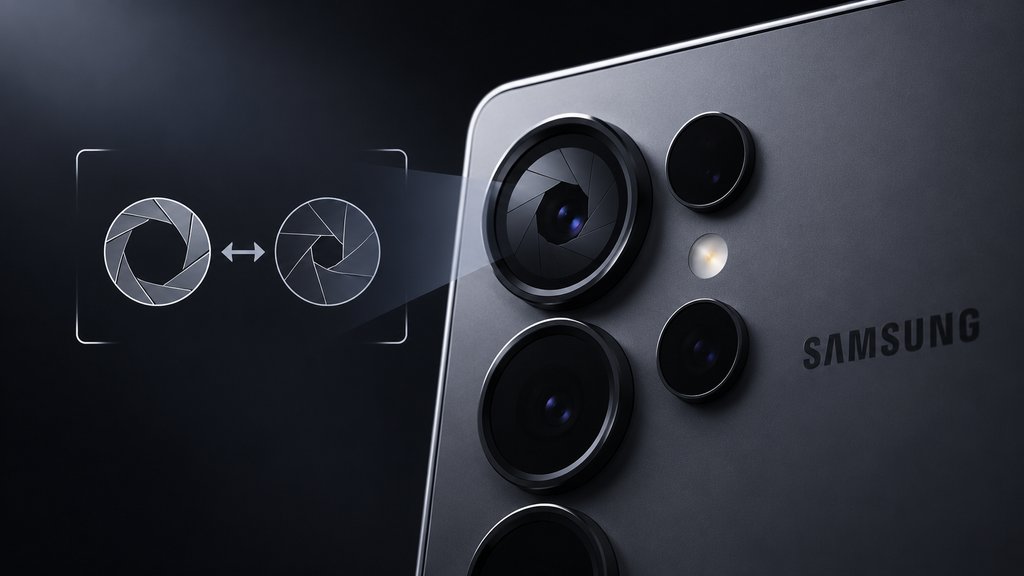
The Galaxy S9’s main camera could physically shrink the opening that lets light in. By the Galaxy S20, that opening was fixed.
Smartphone tipster Yogesh Brar suggested in a Nov. 16 post on X that variable aperture could return on the Galaxy S28 Pro and S28 Ultra, Notebookcheck reported. Samsung has yet to confirm the feature. Apple brought variable aperture to the main cameras on the iPhone 18 Pro and Pro Max in September.
For anyone who shoots video on a phone, the potential benefit is more control over exposure and motion blur in bright light.
When Samsung dropped Dual Aperture
Samsung introduced Dual Aperture on the Galaxy S9 and S9+ in 2018 and kept it on the Galaxy S10. The main camera switched between f/1.5 and f/2.4. The Galaxy S20 had a fixed f/1.8 aperture.
The iPhone 18 Pro and Pro Max offer four aperture settings on their main cameras. PhoneArena’s Ilia Temelkov argues that a larger sensor could make a bigger difference in everyday Galaxy photos.
Variable aperture allows a camera to adjust the size of its lens opening, controlling how much light reaches the image sensor. A wider aperture lets in more light, making it useful in darker environments, while a narrower opening reduces incoming light.
The Galaxy S27 series is expected in early 2027. Brar’s post points to the following generation and leaves open how many aperture settings Samsung might offer or whether users could adjust them manually.
What to check if variable aperture returns
If Samsung ships the feature, compare it with a fixed-aperture phone in the situations you shoot most often. Three tests would show where the extra control earns its place.
- Outdoor video. At 30 frames per second, a shutter speed of 1/60 second gives motion a natural-looking blur. A narrower aperture can help hold that shutter speed without overexposing the shot. Check whether your recording app lets you set both controls and whether you still need a neutral-density filter in direct sun.
- Indoor subjects in motion. Compare the phones in auto mode under the same lighting. A wider aperture lets in more light, but what matters in the finished shot is whether a moving subject looks sharp and whether darker areas show distracting noise. Manual settings can also change how a phone processes the shot.
- Group photos. Take the same shot at the widest and narrowest settings. Check whether the back row looks sharper at the narrower setting and whether the phone compensates with a slower shutter speed or higher ISO.
If you’re buying now, compare independent camera tests for phones already on sale. If Samsung confirms the feature, check which lens supports it and whether the controls work in the app you use.