


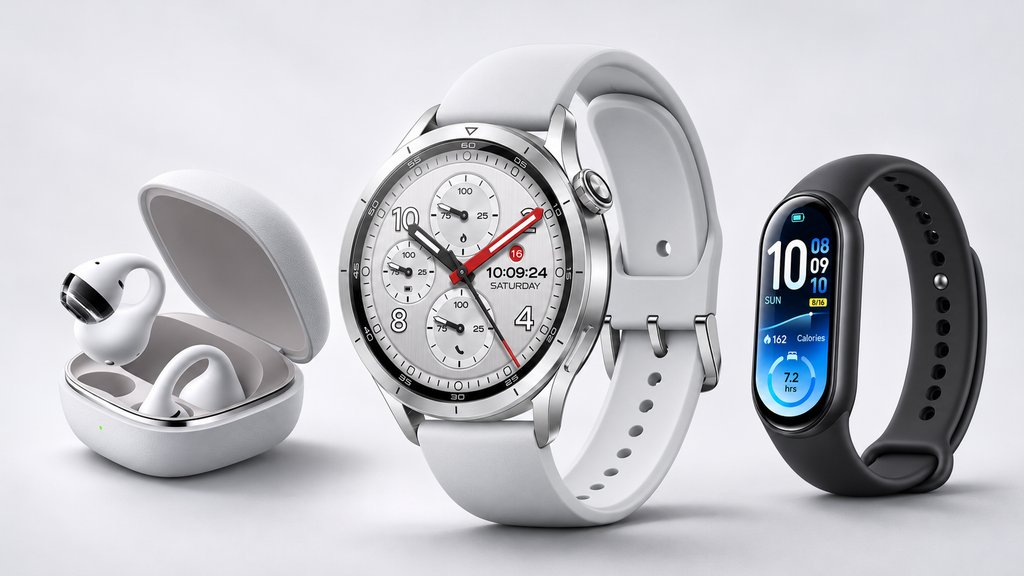
Xiaomi has more than phones up its sleeve for global buyers: a compact smartwatch, a budget fitness band, and clip-on earbuds that keep users tuned in to their surroundings.
Unveiled for international markets on Nov. 17 alongside the Xiaomi 18 Pro phones, the Watch S5 41mm, Smart Band 11, and Xiaomi Clip target different needs. The watch combines navigation and wrist payments, the band emphasizes affordable health tracking, and the earbuds let users hear their surroundings while listening to audio.
Pricing and release dates vary by region, so buyers and IT teams should look beyond the headline specifications before ordering.
Xiaomi Watch S5 combines navigation with health tracking
According to Xiaomi’s Watch S5 specifications, the 41mm smartwatch has a stainless-steel case, a 1.32-inch AMOLED display, and a claimed peak brightness of 3,000 nits. It runs HyperOS 4 and supports more than 150 sports modes.
Five satellite positioning systems, downloadable offline maps, and route navigation make the watch useful for travelers and people working outdoors. It also monitors heart rate, blood oxygen, stress, sleep, and wrist skin temperature. Xiaomi describes these as wellness features, not medical diagnostics.
Battery life is rated at up to 14 days in light use, eight days under normal conditions, and five days with the always-on display. Google Pay and Xiaomi Pay are available in supported markets, but bank and card compatibility varies.
The watch pairs with Android 8.0 or iOS 14.0 and newer. However, its HyperOS software differs from Wear OS, and users should not assume the same third-party watch applications are supported. Smartphone ecosystem differences are also worth examining when comparing HyperOS 4 with Samsung’s One UI 9.
Smart Band 11 prioritizes fitness and battery life
The Smart Band 11 product specifications list a 1.72-inch AMOLED display, more than 150 exercise modes, and 5ATM water resistance. The band tracks heart rate, blood oxygen, stress, sleep, and menstrual cycles.
It also displays phone notifications, broadcasts heart-rate data to compatible devices, and offers selected smartphone controls through Mi Fitness. Compatibility and permissions affect which functions work on Android and iOS.
Xiaomi estimates 21 days of battery life in light use, 10 days in normal use, and six days with the always-on display enabled. Those estimates come from controlled tests, so frequent alerts and continuous monitoring can reduce battery life.
Contactless payments require the separate NFC model. Xiaomi’s Smart Band 11 NFC support guide explains card setup through Xiaomi Pay, but supported banks and markets should be checked before purchasing.
Xiaomi Clip uses an open-ear design
The Xiaomi Clip specifications describe earbuds that attach around the outer ear without sealing the ear canal. Each weighs approximately 5.5g and includes an 11mm driver, Bluetooth 5.4, and LHDC 5.0 support.
Three microphones, a bone-conduction pickup sensor, and software noise reduction are intended to improve call quality. Xiaomi also claims its acoustic design limits sound leakage, although performance in busy workplaces requires real-world testing.
Xiaomi rates battery life at up to nine hours per charge and 38 hours with the case using AAC. The earbuds have an IP57 rating, which does not apply to the case.
Dual-device Bluetooth connectivity may help hybrid workers switch between devices. Apple Find My can locate the charging case, not individual earbuds. An optional recording function also warrants attention to meeting policies and consent requirements.
Open-ear listening can help commuters remain aware of traffic and nearby conversations, but people who need stronger noise isolation should compare earbuds designed for work calls.
Xiaomi wearable prices and regional availability
Xiaomi’s Spanish launch terms and UK store listings indicate the following regular prices before promotional discounts:
| Device | Spain | UK |
|---|---|---|
| Watch S5 41mm | €229.99 | £199.99 |
| Smart Band 11 | €59.99 | £54.99 |
| Smart Band 11 NFC | €79.99 | Not confirmed |
| Xiaomi Clip | €149.99 | £129.99 |
Launch promotions may temporarily reduce those prices. Availability also differs by market: Xiaomi’s Japan announcement scheduled local retail sales for Nov. 27. A US launch date and US prices were not confirmed in the official European and UK listings reviewed.
Which Xiaomi wearable fits your needs?
The products offer different compromises rather than a simple good-better-best ranking:
- Watch S5 for navigation and productivity: Consider it for offline maps, health monitoring, and wrist payments, provided the payment services you need work locally.
- Smart Band 11 for low-cost activity tracking: Choose it for basic wellness features and fewer charging interruptions; confirm NFC availability if payments matter.
- Xiaomi Clip for situational awareness: Its open-ear fit suits commuting and shared spaces, but may be less effective for confidential calls or loud offices.
For buyers, the most important checks are compatible phone software, local feature availability, and realistic battery performance. A maximum battery claim based on light use may not reflect frequent notifications, navigation, or continuous monitoring.
What IT teams should review before approving wearables
Personal wearables connected to managed smartphones can create support and privacy considerations. Smartwatch notifications may expose work-message previews, while companion apps can request Bluetooth, notification, location, and health-data permissions.
IT teams should check mobile-device management policies and whether employees can restrict sensitive notifications on accessory screens.
Xiaomi Clip’s recording capability deserves particular scrutiny in meetings and customer calls. Organizations should make sure employees understand recording consent rules and internal policies. Likewise, dual-device pairing should be tested with approved computers, phones, and conferencing applications before relying on the earbuds for daily work.
For bulk purchases, IT buyers should check warranty coverage, firmware-update arrangements, replacement availability, and application compatibility in each deployment market.
An inexpensive band is not necessarily economical if it cannot use the required payment system or stops working with a supported corporate phone.
Ultimately, regional support and software compatibility matter as much as the hardware. Buyers should confirm that essential features, applications, and payment services work in their market before choosing a device.
Also read: For more options, compare four leading Wear OS smartwatches for 2026 based on software features, battery life, and smartphone compatibility.