


XtalPi has outlined how Kodexia, its closed-loop platform, combines generative AI, biological modeling and automated experiments to accelerate the discovery of small interfering RNA therapies.
In an Oct. 6 announcement, the company highlighted six proprietary preclinical programs spanning metabolic, renal, respiratory and central nervous system diseases. More than half have completed animal efficacy testing, according to XtalPi. For pharmaceutical R&D teams, the potential benefit is a connected workflow in which experimental results inform the next round of AI-generated designs.
siRNA drugs work by silencing disease-driving genes before they produce proteins, potentially opening paths to targets that are difficult to address with conventional drugs. But designing effective sequences, selecting chemical modifications, proving activity in animals and delivering the molecules outside the liver remain major development challenges.
How Kodexia works
At the center of Kodexia is XtalPi’s proprietary siFormer architecture, which combines RNA interference biology with nucleic acid chemistry. The system uses factors such as RNA thermodynamics, strand loading, target accessibility and silencing efficiency when generating candidate molecules.
That matters because siRNA discovery is not simply a matter of finding a sequence that works in a laboratory test. A promising design must also survive the jump into an animal, maintain activity, avoid unwanted effects and potentially clear intellectual property hurdles.
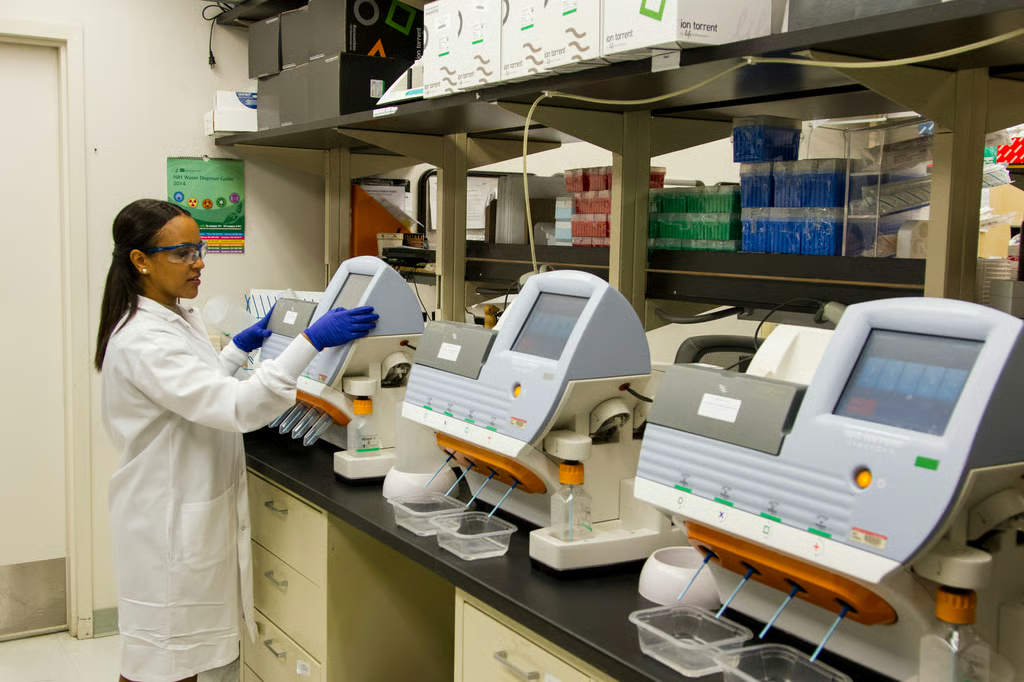
XtalPi said Kodexia connects computational design with automated testing, allowing experimental results to feed back into its models. The company says its laboratories conduct more than 500 in vitro experiments, performed outside a living organism, and 30 in vivo experiments, conducted in animals, each week.
According to XtalPi’s announcement, internal preclinical benchmarking showed molecular design efficiency nearly three times that of conventional workflows. More than 50% of first-round designs tested across multiple programs reportedly showed stronger in vivo activity than positive controls.
Taking RNA interference beyond the liver
Delivery is another major focus. XtalPi says Kodexia co-designs siRNA molecules and delivery systems, optimizing antibody, peptide and small-molecule conjugates for research targeting the kidney, spleen and fat tissue.
The platform also supports dual-target siRNAs, allowing two disease-related targets to be addressed through a single molecule.
XtalPi’s lead IgA nephropathy program offers the earliest test of the approach. The company said it reached non-human primate efficacy data in seven months and showed greater activity and durability than a clinical-stage reference molecule targeting the same target. XtalPi previously projected preclinical candidate selection within nine months of project initiation, compared with the 12-to-18-month timeline it cites as an industry norm. Its August interim results said its most advanced siRNA program had reached the preclinical candidate stage.
What Kodexia means for drug developers
For pharmaceutical and biotechnology companies, the potential value is less about AI generating another batch of sequences and more about compressing several stages of RNA discovery into a connected workflow.
If XtalPi’s results hold up as programs mature, researchers could spend less time moving candidates between disconnected design, testing and delivery workflows. That could make difficult targets more practical to pursue while giving drugmakers more data earlier when deciding which molecules deserve further investment. For teams evaluating Kodexia, the practical questions are how its efficiency benchmarks were measured, how it fits existing laboratory workflows and whether its candidates retain their advantages as development progresses.
Read more: NVIDIA’s open viral protein dataset and BioNeMo pipeline offer another example of AI supporting biological research, with laboratory testing still needed to validate predictions.