


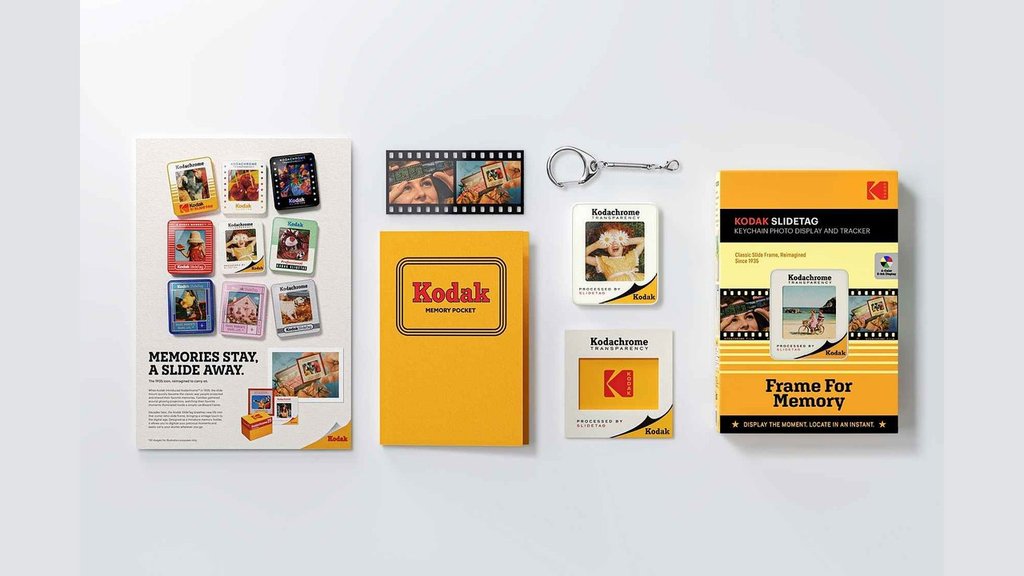
Your keys might be buried under the sofa cushions, but their tracker can still display a perfectly nice family photo. Kodak’s new SlideTag combines a miniature digital photo frame with a Bluetooth item finder.
Reto Production, a Kodak licensee, launched SlideTag on Nov. 22, 2026, for $34.99 in US dollars. It supports Apple’s Find My or Google’s Find Hub, making it an option for both iPhone and Android owners with compatible devices.
The Kodak SlideTag costs nearly $6 more than Apple’s second-generation AirTag. That extra money buys a customizable display, although SlideTag’s published specifications do not list Ultra Wideband (UWB) for directional finding.
From film slides to keychains
The design borrows from Kodak’s vintage Kodachrome slide mounts, swapping photographic film for a 1.54-inch, six-color E Ink screen with a resolution of 240 × 240 pixels.
Using the Kodak Memory Link app, owners can load up to 12 photos and display them individually or as a slideshow. Other options include calendars, countdowns, QR codes and to-do lists.
The screen can retain a static image even after the battery runs out. Tracking, audible alerts and screen updates still require power.
Other specifications include:
- Connectivity: Bluetooth 5.4, with a manufacturer-rated range of up to 30 meters in open areas.
- Battery: Replaceable CR2032 coin cell, with a low-battery warning below 10%.
- Durability: IP54-rated protection against dust and water splashes, not immersion.
- Weight: 16.6 grams.
- Attachment: Included keyring, eliminating the need for a separate holder.
There’s one surprise when ordering SlideTag: You don’t get to pick its retro frame. Since its November launch, Reto has sold individual trackers in blind boxes with randomized designs. Orders placed through its store cannot be canceled or modified, so check regional availability and shipping costs before buying.
Nice photos, but can it find your keys?
Reto’s SlideTag setup instructions specify iOS 26 or later and Android 9 or later for full functionality. Android phones also need Find Hub support and the relevant Bluetooth and location permissions. Owners of older iPhones should check software compatibility before ordering.
Kodak Memory Link handles display customization, while Find My or Find Hub handles tracking. If Google Play installation fails, Reto offers a separate Android installation file (APK) that users must update manually.
SlideTag can make a misplaced keyring beep, but Apple’s $29 second-generation AirTag can also tell you which direction to move and how far away the tracker is through Precision Finding on compatible devices.
Beyond Bluetooth range, a lost bag may still be located through nearby participating devices. Unlike Google’s Find Hub location reminders, which save a location manually, the finding network can update SlideTag’s reported location when participating devices detect it.
Reto’s product listing and support documentation provide no battery-life estimate. If you display contact details on your luggage, those details remain visible even when the tracker is off. To clear the display, Reto recommends uploading a replacement image, such as a plain white picture.
If you’d enjoy carrying a tiny photo gallery on your keychain, SlideTag offers something a conventional tracker doesn’t. If finding misplaced belongings is your only priority, AirTag or Google Pixel Tag may be more practical, depending on your phone.
How we assessed SlideTag: We reviewed manufacturer specifications, setup documentation and independent reporting, evaluating price, compatibility, display functions and tracking limitations.
Read more: If the display isn’t a priority, other AirTag alternatives offer different battery designs, attachment options and smartphone compatibility.