


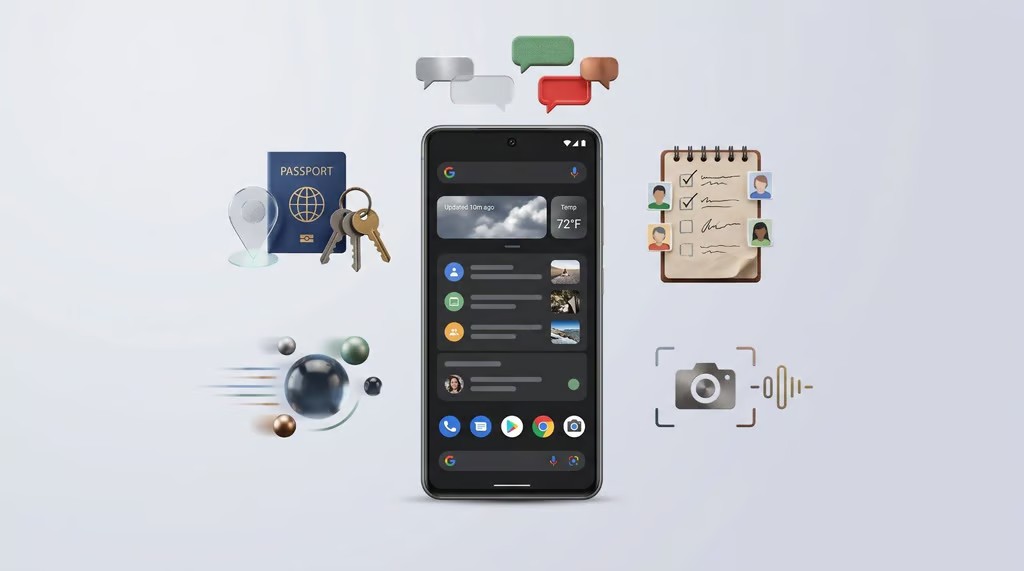
Google’s September Android Drop is less about a major redesign and more about solving everyday annoyances, from remembering where you left your passport to making scrolling in the passenger seat less uncomfortable.
The September Android Drop introduces five features across Gemini, Find Hub, Google Keep, and Google Messages. Some are already rolling out, while others are coming soon, and availability varies by Android version and region.
For users and IT teams managing Android devices, checking those requirements will be important before expecting every feature to appear.
Here are the five additions Google is highlighting:
1. Gemini can remember where you put things
Google said users will soon be able to ask Gemini to remember where they placed items that do not have tracker tags, such as a passport, spare key, or charger. Gemini saves the user-provided location in Find Hub, where it can be recalled later.
Users can also attach an optional photo, then ask Gemini about the item later or open the remembered items tab in Find Hub. The feature works more like a digital reminder than a tracker because it does not follow an item’s real-time location.
The feature requires Android 16 or later and is available in countries where Gemini and Find Hub are supported.
2. Motion Assist aims to reduce motion sickness
Motion Assist adds customizable bubbles to the screen that move with a vehicle, helping reduce the mismatch between what passengers see and the movement they feel.
According to Google, users can set it to activate automatically, add it to Quick Settings, and adjust the bubbles’ shape, color, and opacity. The feature could be useful for passengers who want to read, browse, or watch videos during a trip without immediately putting their phone away.
Motion Assist requires Android 17, and Google cautioned that results vary. Some users may still experience discomfort or even worsening symptoms.
3. Guided vision brings more accessibility to Gemini Live
Guided vision lets users share their camera through Gemini Live and receive spoken descriptions of what is in front of them. Google developed the feature with blind and low-vision communities.
GSMArena noted that the tool can help read fine print, identify household objects, or interpret a dimly lit menu. If the camera is pointed incorrectly, Gemini can provide voice instructions to reframe the shot, pan across an area, or center an object.
Guided vision is coming soon to compatible devices running Android 9 or later, giving it much broader device support than several other features in the update.
4. Google Keep moves inside Messages
Google Messages is also getting built-in Google Keep collaboration. Users can create or update grocery lists, vacation plans, and other notes without leaving a conversation.
Everyone in the chat can view, edit, and add ideas to the shared note, reducing the need to bounce between Keep and Messages while planning something as a group. Users can access the feature through the “+” button inside Messages.
The rollout has begun globally, but Google said RCS must be enabled and the Google Keep app and extension are required.
5. Google Messages gets custom chat themes
Android users can now give individual Google Messages conversations their own backgrounds and colors. They can choose a wallpaper or personal photo, while message bubbles automatically adopt matching colors that can also be changed manually.
The feature is mostly cosmetic, but individual themes could also make conversations easier to distinguish at a glance, particularly for users juggling several active group chats.
Chat themes are available now. Google noted that RCS must be enabled and that the selected theme is visible only to the person who created it.
Not every Android phone gets the same experience
The biggest limitation of the September Android Drop is compatibility. Motion Assist requires Android 17, Gemini’s remembered-items feature needs Android 16 or later, while Guided Vision supports compatible devices running Android 9 or newer.
Some features also have additional requirements. Google Messages collaboration and chat themes depend on RCS, while regional availability varies for Gemini and Find Hub.or navigation or obstacle detection. Motion Assist should never be used while operating a vehicle.
Forbes noted that Google’s broader Gemini Intelligence suite is also absent from the September Android Drop. For users and IT teams, the practical takeaway is simple: check Android version, regional availability, RCS support and app requirements before assuming all five features will arrive on every device.
Related news: Android’s changes don’t stop with user-facing features, as Google has also set a February 2027 deadline for developers to ensure their apps meet new memory limits.