


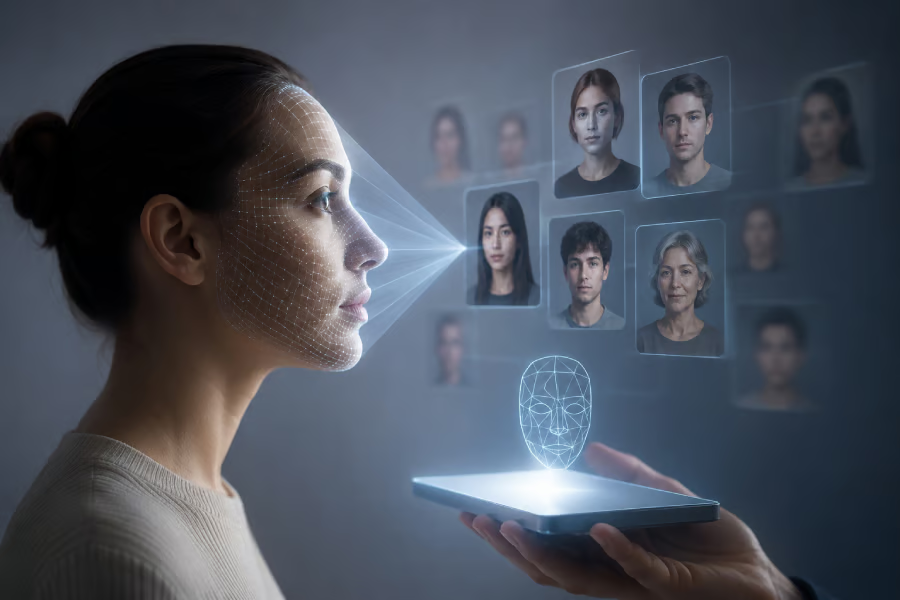
China’s AI video industry is creating an unexpected new side hustle: licensing your face.
Platforms such as ActID and New Claw are paying people to let producers use AI-generated versions of their likenesses in films, advertisements, and short-form videos. Rather than hiring performers for every shoot, creators can license pre-approved digital identities that can be reused across multiple projects.
The business model aims to offer a consent-based alternative to unauthorized deepfakes, but it also raises difficult questions about how biometric identity should be owned, protected, and monetized as generative AI becomes more capable.
Rest of World reports that in the first three months of 2026, over 95% of the 128,000 microdramas released in China featured AI, fueling backlash over the nonconsensual use of images and the eventual emergence of face-licensing platforms.
Microdramas are short-form serialized videos—typically just a few minutes per episode—that have become hugely popular on Chinese social media platforms. Their low production costs and rapid release schedules have made them an increasingly attractive use case for generative AI.
How does this even work?
According to Rest of World, participants — including models, students, retirees, and other members of the public — can earn anywhere from $15 to $700, depending on the licensing terms and the type of project.
In an interview with Rest of World, New Claw operations head Long Lyu said licensing a person’s face for AI-generated films is significantly less expensive than hiring someone to appear on set, highlighting how generative AI could reshape parts of the film and advertising production process.
According to the outlet, users either upload photos of themselves or visit partner studios to have their images captured before joining the platform. They can then choose where their likeness may be used and set licensing conditions.
Once a participant’s likeness is licensed, it becomes part of a searchable catalog that content producers can browse while creating AI-generated videos.
To distinguish the model from unauthorized deepfakes, ActID also says it monitors the internet for nonconsensual use of participants’ images and provides legal assistance when misuse is detected.
More must-read AI coverage
- SS&C Intralinks DealCentre AI vs. Datasite: Which platform is built for the future of dealmaking?
- SS&C Intralinks FundCentre AI vs. Juniper Square: Which platform better supports modern private markets fund managers?
- Why Data, Not Models, Determines AI Success
- The Rise of the AI-Native Factory: How Physical AI Is Transforming Manufacturing
A growing industry with a growing problem
The appeal of face licensing is easy to understand. But it also raises a difficult question: what happens if the data is stolen — or simply used in ways the original owner never anticipated?
Once a person’s facial likeness has been digitized, long-term control becomes complex. Even with contractual safeguards, platforms cannot fully prevent events like data breaches. As generative AI improves, the value — and the risks — of this development are only likely to increase.
The trend also points to a wider shift in filmmaking. Netflix recently disclosed that it has used generative AI in around 300 titles, underscoring AI’s growing role in mainstream production. China’s emerging marketplaces for licensed digital likenesses take that evolution a step further, creating a model where AI-generated performers can be licensed and reused across multiple projects with the consent of the people behind them.
Face-licensing platforms illustrate how generative AI is reshaping the economics of digital content creation. As facial likenesses become licensable digital assets, they also raise new questions about ownership, consent, and how biometric data should be protected once it enters AI production pipelines.
Other News: The report comes days after a Tech Transparency Project investigation found that Facebook and Instagram served thousands of ads promoting AI “nudify” apps through a China-based advertising partner, despite Meta’s policies banning such content.