


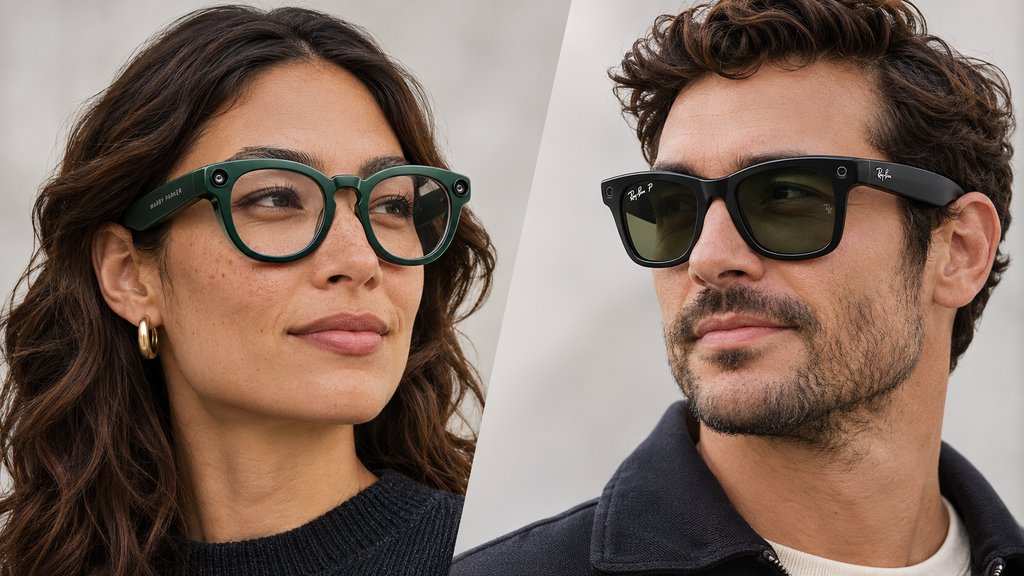
Saving $54 on a pair of AI glasses sounds like a good deal. But is it worth waiting nearly a month to get them?
Samsung and Google developed the new Gemini-powered Intelligent Eyewear, with Warby Parker and Gentle Monster providing the frame designs. The companies opened preorders Nov. 12 and plan to release the glasses Dec. 10.
Google’s Warby Parker models start at $395, compared with $449 for Ray-Ban Meta Gen 3. Both offer cameras, AI assistants, and hands-free features, but their differences go beyond price.
Buyers must decide whether to grab Meta’s glasses now or wait for Google’s alternative, depending on their phones, preferred apps, and everyday needs.
Google AI Glasses vs. Ray-Ban Meta Gen 3: Quick comparison
Google’s Intelligent Eyewear comes in two collections. Warby Parker offers three frame styles starting at $395, while Gentle Monster has six styles priced from $449 to $489. Both use the same underlying hardware, with differences in design, fit, and lens options.
According to Samsung’s announcement, the glasses combine Gemini with a 12MP camera, open-ear speakers, and four microphones.
Ray-Ban Meta Gen 3 also has a 12MP camera but uses Meta AI and includes six microphones.
| Feature | Google AI Glasses | Ray-Ban Meta Gen 3 |
|---|---|---|
| Starting US price | $395 (Warby Parker); $449 (Gentle Monster) | $449 |
| Availability | Preorder; Dec. 10 release | Available now |
| AI assistant | Gemini | Meta AI |
| Camera | 12MP | 12MP |
| Video | Up to 3K at 30 fps | Up to 3K at 30 fps |
| Microphones | Four | Six |
| Battery life | Up to nine hours | Up to nine hours |
| Charging case | Up to 72 hours total | Up to 50 additional hours |
| Storage | 64GB | 32GB |
| Phone compatibility | Selected Android phones and iPhones | Compatible Android phones and iPhones |
Battery figures are manufacturer estimates. Actual performance depends on usage and settings.
Gemini vs. Meta AI: Which assistant is more useful?
Google’s biggest selling point is its integration with services people already use.
According to Google’s product announcement, the glasses allow wearers to ask Gemini questions about their surroundings, translate conversations, and get hands-free assistance.
Someone visiting an unfamiliar city, for example, could ask about a landmark or follow spoken Google Maps directions without checking their phone. On supported Galaxy phones, users can also ask Gemini to summarize a whiteboard and save the information to Samsung Notes.
Ray-Ban Meta Gen 3 offers similar visual assistance, voice commands, and live translation. However, its integrations center more heavily on Meta’s services, including WhatsApp, Messenger, and Instagram.
Meta’s September launch announcement also introduced a customizable action button, allowing wearers to access selected functions without repeating a voice command.
Verdict: Google is a better fit for people who regularly use Gemini, Maps, and other Google services. Ray-Ban Meta Gen 3 is better suited to those who frequently use Meta’s messaging and social apps. Neither assistant is a clear winner for everyone.
Camera, battery, and comfort compared
The two products have similar camera specifications, but several hardware differences are worth considering.
- Camera and video: Both have 12MP cameras and support 3K video recording at 30 fps. Google’s glasses offer HDR photography and video stabilization, while Ray-Ban Meta Gen 3 includes slow motion and hyperlapse recording.
- Microphones: Meta has six microphones compared with Google’s four. The company claims its updated microphone system reduces background noise, although microphone count alone doesn’t establish better call quality.
- Storage and battery: Google offers 64GB of storage, twice Meta’s 32GB. Both advertise up to nine hours per charge, but Google claims up to 72 hours with its charging case. According to Meta’s specifications, its case provides another 50 hours.
- Comfort and fit: Google’s frames weigh approximately 40 to 44 grams, depending on the model. Meta’s standard Wayfarer Gen 3 weighs about 51.5 grams and offers adjustable temple tips. Both support prescription lenses, although options vary by frame.
These specifications don’t establish which glasses take better photos, deliver clearer calls, or last longer during heavy use. Buyers may want to wait for independent testing, particularly if they plan to record video frequently or wear the glasses throughout the day.
Verdict: Google has the advantage in onboard storage and advertised total battery life with the case. Meta offers more recording modes. Neither has a proven lead in overall camera quality, audio performance, or comfort.
Phone compatibility and privacy could decide your purchase
Before preordering Google’s glasses, buyers should check whether their phones and accounts qualify.
According to Google’s official product information, there are three important requirements:
- Phone compatibility: The glasses support selected Pixel and Galaxy phones, as well as compatible iPhones. Minimum operating system and hardware requirements apply.
- Account eligibility: Activation requires an eligible Google account associated with the United States or South Korea. Users must also be at least 18.
- Feature availability: Some capabilities, including Guided Vision and Aira visual assistance, require a compatible Android phone at launch.
An iPhone owner could therefore have a supported device without access to every advertised feature.
Ray-Ban Meta Gen 3 also requires a compatible smartphone, a Meta account, and the Meta AI app. Its supported services and AI features can vary by country.
Privacy is another consideration, especially for people who want to wear smart glasses at work.
Google says its intelligent eyewear privacy protections include recording indicators, camera permission controls, and automatic redaction of bystanders’ faces during Gemini visual queries. The company also says visuals processed through those queries are not used to train AI models or target advertisements.
Meta’s glasses also include an external recording indicator to alert people nearby when photos or videos are being captured.
For workplace use, buyers should consider whether camera-equipped glasses are permitted in meetings, offices, or locations where confidential information may be visible.
Verdict: Neither product has a demonstrated overall privacy advantage. Google’s account and feature restrictions make compatibility especially important, while Meta buyers must also check regional availability. Both warrant a review of their data policies before workplace use.
Which smart glasses are right for you?
Neither pair is right for everyone. If you’re deciding whether to buy Ray-Ban Meta Gen 3 now or wait for Google’s glasses, here’s how they compare by priority.
| Your priority | Recommended glasses | Why it fits |
|---|---|---|
| The lowest starting price | Google AI Glasses | Warby Parker models start at $395, saving $54 compared with Ray-Ban Meta Gen 3. |
| Gemini and Google services | Google AI Glasses | Built around Gemini, with integrations for navigation, visual assistance, and other supported services. |
| Messaging and social media features | Ray-Ban Meta Gen 3 | Integrates with WhatsApp, Messenger, Instagram, and other supported apps. |
| Smart glasses you can buy now | Ray-Ban Meta Gen 3 | Already available, while Google's glasses are scheduled for release Dec. 10. |
| More storage for photos and videos | Google AI Glasses | Includes 64GB of onboard storage compared with Meta's 32GB. |
| More video recording options | Ray-Ban Meta Gen 3 | Offers slow motion, hyperlapse, and additional capture modes. |
| The best real-world camera or battery performance | Wait for independent testing | Similar advertised specifications don't establish which performs better. |
For buyers with compatible devices and eligible accounts, the $395 Warby Parker models could be worth waiting for, particularly if they regularly use Gemini and Google services.
Ray-Ban Meta Gen 3 is the more immediate choice for shoppers who want smart glasses now or already rely on Meta’s supported apps.
Anyone prioritizing camera quality, call performance, or real-world battery life may be better off waiting for independent comparisons after Google’s Dec. 10 release.
Before spending hundreds of dollars, check whether your phone supports the features you want and consider waiting for independent camera and battery testing after Google’s Dec. 10 release. The best AI glasses aren’t necessarily the cheapest or most powerful on paper. They’re the ones that actually work the way you need them to.
Also read: Curious about the AI behind smart glasses? The Neuron Academy’s Introduction to Building with AI covers APIs, AI agents, integrations, and deployment. Explore more hands-on AI lessons with a free seven-day trial.