


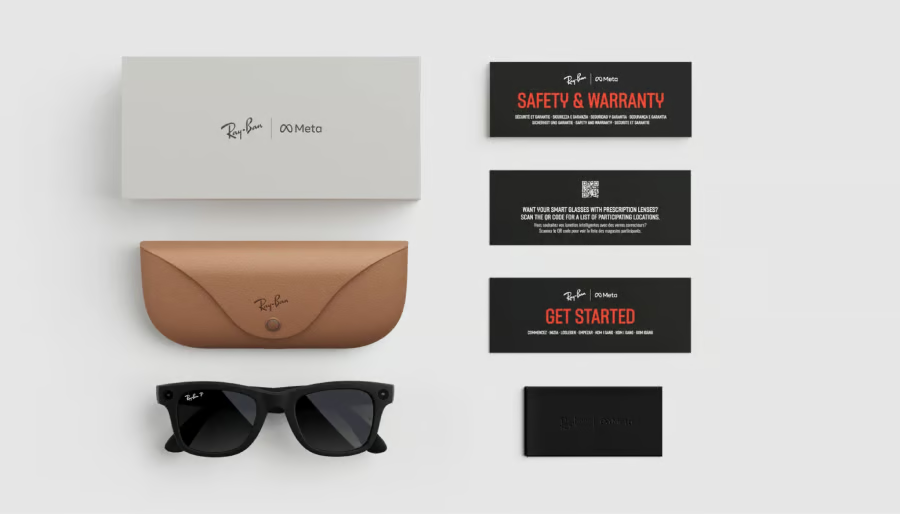
Ray-Ban Meta may be the best-known name in smart glasses, but it is no longer the only serious option.
Between the original launch, last year’s Gen 2 upgrade and Meta’s own cheaper in-house line, Meta and its manufacturing partner EssilorLuxottica now account for roughly three-quarters of the entire smart glasses market. For most shoppers, that’s still the easy, default answer.
But 2026 has also been the year cracks started to show. Reports of secretly recorded footage, a facial-recognition Name Tag feature that drew pushback from civil rights organizations, and courtroom and restaurant bans across the US and UK have put privacy on the shopping list right alongside camera quality and battery life. That shift has opened the door for rivals — some chasing Meta head-on with cameras and AI, others going a completely different direction with no camera at all.
Here’s a rundown of the most credible alternatives on the market right now, organized by who each pair is actually built for.
- Solos AirGo V2: The AI-agnostic powerhouse
- Rokid AI Glasses Style: The lightweight contender
- Oakley Meta HSTN: The sports-first pick
- HTC Vive Eagle
- Oakley Meta Vanguard
- Viture Beast: The prism display king
- XReal a01+
- Even Realities G2
- Dymesty AI Smart Glasses
- Chamelo Music Shield
- Lucyd Lyte
- Nuance Audio
- What’s coming next
- The bottom line: Which one is right for you?
Solos AirGo V2: The AI-agnostic powerhouse
Best for: Professionals who want AI flexibility and content creators needing live streaming without ecosystem lock-in.
The Solos AirGo V2, which launched at CES 2026, represents a meaningful step forward in both hardware and AI capability. Unlike the Ray-Ban Meta’s locked Meta AI ecosystem, the V2 supports ChatGPT, Gemini, Claude, and DeepSeek through SolosChat 3.0. Users can switch between AI engines depending on the task—a flexibility that no other camera-equipped smart glasses currently offer.
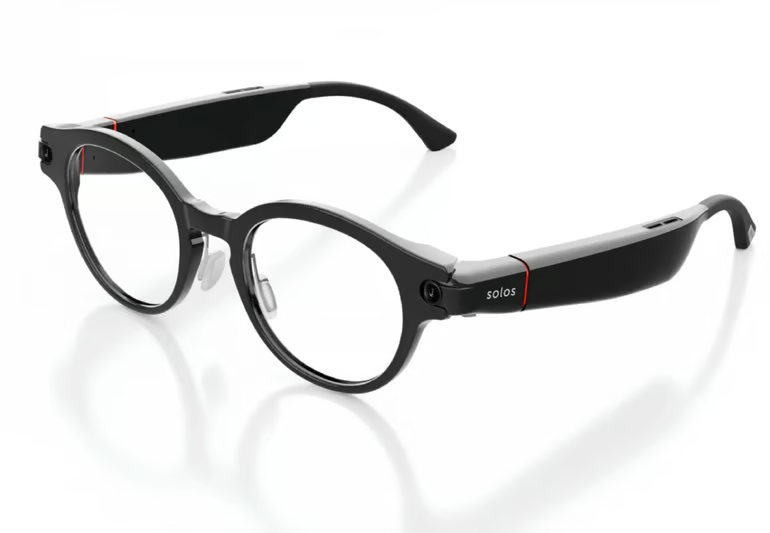
The hardware itself is equally impressive. A 16MP camera with electronic image stabilization captures Full HD video, and the modular SmartHinge design allows users to carry spare battery arms and swap them mid-day, effectively eliminating battery anxiety. Solos claims 10 hours of music streaming and 7 hours of calls per set of temples. Low-power Wi-Fi enables live streaming without the lag typical of Bluetooth-only devices.
Price: $299
Where it shines: The ChatGPT integration stands out as the biggest advantage, and call quality remains crystal-clear even in noisy environments. However, the modular design adds a bit of bulk compared to slimmer frames, so all-day comfort isn’t its strongest suit.
Rokid AI Glasses Style: The lightweight contender
Best for: Budget-conscious buyers who want a camera and AI assistant without paying the Meta or Oakley premium.
At 38.5 grams, the Rokid AI Glasses Style are significantly lighter than the Ray-Ban Meta (around 50 grams) and close to the lightest camera-free alternatives. The lightweight design becomes apparent as soon as you unbox them, and the air-cushioned liquid-silicone nose pads keep them firmly in place even during physical activity.
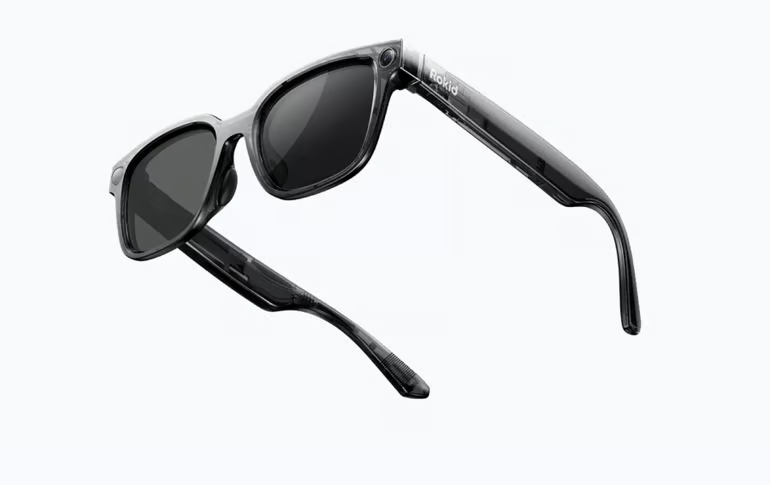
The camera system uses a 12MP Sony IMX681 sensor supporting 4K photos and 3K video at 30fps. Notably, the camera tilts inward 3 degrees to better match the wearer’s line of sight—a small detail that competing models often overlook. A dual-chip architecture separates low-power always-on tasks from heavier AI and imaging workloads, letting Rokid claim up to 12 hours of battery life under typical mixed use.
Multi-AI support includes ChatGPT, Gemini, and DeepSeek, plus Microsoft Translator for real-time translation in 89 languages online and 6 languages offline. Full prescription compatibility supports myopia and astigmatism directly.
Price: $299
Where it shines: The main trade-off is software maturity. Multiple reviewers have noted that the companion app and AI features still feel rough around the edges, and the off-center camera placement can make framing photos slightly awkward. But for the price-to-feature ratio, Rokid is hard to beat in mid-2026.
Oakley Meta HSTN: The sports-first pick
Best for: Runners, cyclists, hikers, and outdoor athletes who want Meta AI and a camera in a frame built for physical activity.
Oakley Meta HSTN is Meta’s answer to athletes who find the Ray-Ban Wayfarer silhouette too fragile for active use. As a co-development between Meta and Oakley (both under EssilorLuxottica), the HSTN runs the same Meta AI platform and camera system as the Ray-Ban Meta but wraps it in Oakley’s performance-grade frame engineering.
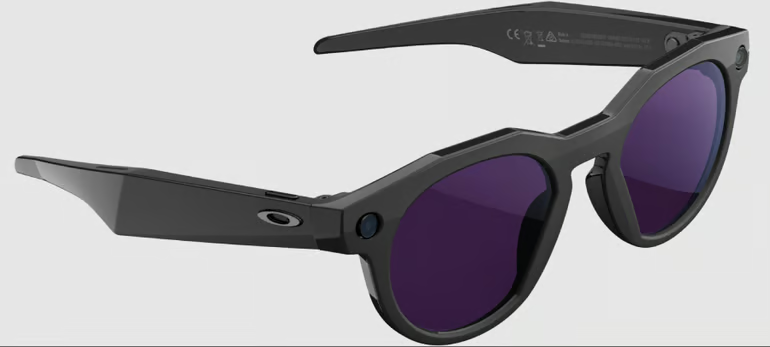
Oakley’s Prizm lens technology—including Prizm Polarized and Transitions options—delivers optical clarity that standard Ray-Ban lenses cannot match in bright, variable outdoor conditions. The IPX4 water resistance makes it viable for running, cycling, and outdoor training sessions that would risk standard Ray-Ban frames. Direct Garmin and Strava sync lets athletes overlay performance metrics on captured photos and video—a feature no other smart glasses currently offer.
Price: Starting at $399
Where it shines: The $100 premium over the Ray-Ban Meta is justified primarily by the Prizm lenses and sport-grade durability.
HTC Vive Eagle
Best for: Users who want continuous operation without taking their glasses off to recharge.
Previously available only in Asia, HTC’s Vive Eagle smart glasses are now on sale globally. They come in a range of colors and styles, though the build quality has been described as sturdy enough but thick and generic—more like a knockoff pair of Ray-Bans than a premium fashion accessory. The glasses feature a 12MP wide-angle camera and audio functions that deliver clear calls and decent music playback.
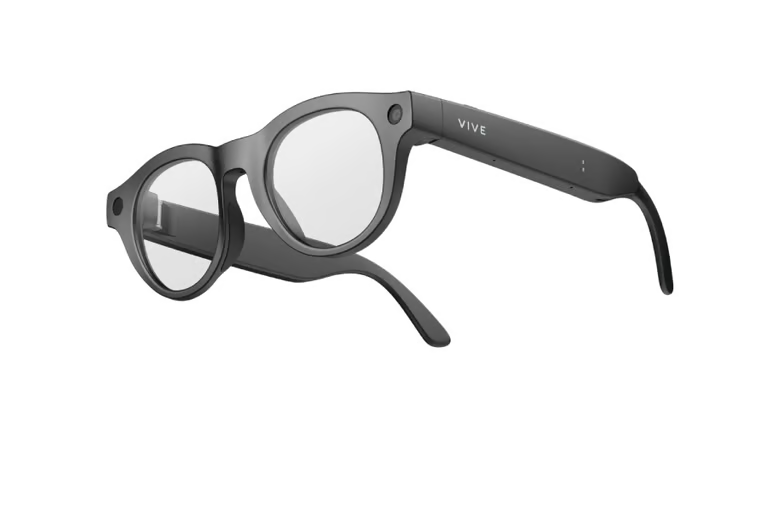
The standout feature is a separately sold $49 magnetic Power Boost battery pack that snaps onto charging pins on one arm. While Meta’s glasses must be removed and placed in their case to recharge, the Vive Eagle can keep running without being taken off, allowing for nearly continuous use if you’re willing to buy multiple battery packs. The AI service is powered by Google Gemini or OpenAI models, selectable in the glasses app, though users must use an HTC Vive account to connect.
Price: $499, plus $49 for the battery pack
Where it shines: The battery pack concept is genuinely innovative and could become a trend as companies try to solve the always-on processing challenge. The glasses also block recording if the LED light indicator on the frame is covered—a privacy feature Meta only recently added via update. However, a $3 monthly subscription is required after the two-year trial period, which some users find off-putting.
Oakley Meta Vanguard
Best for: Outdoor athletes who need the most weather-resistant smart glasses available.
The Oakley Meta Vanguard are the sportiest smart glasses on the market, designed to keep up with you even when you’re running in the rain. They’re fully dustproof and waterproof with an IP67 rating, making them the most weather-resistant smart glasses available and the only pair you can wash with a good dunk. They otherwise have all the same camera, audio, and AI features as other Oakley Meta smart glasses.
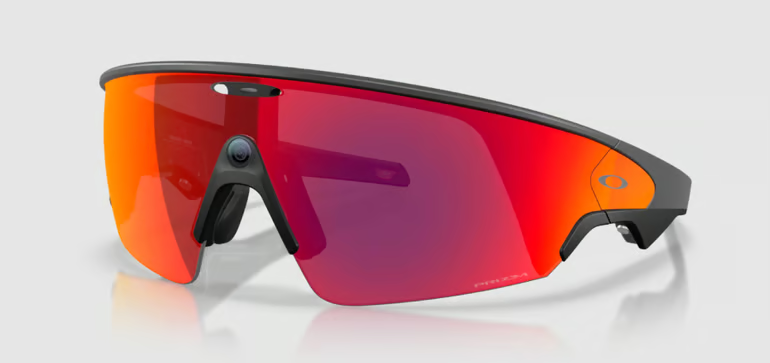
The design includes Prizm lenses engineered to enhance vision and improve contrast in any lighting condition, with seamless Garmin integration for real-time information about calories burned, heart rate, elapsed time, and speed during workouts. At 66 grams, they’re light enough for extended wear, and the IP67 rating handles sweat, rain, and dust without concern.
Price: $499
Where it shines: These are the only smart glasses you can confidently take into any weather condition. However, they capture videos in lower quality (720p) compared to the 3K Ultra HD of Ray-Ban Meta Gen 2, so there are clear trade-offs if you’re buying these primarily as a content capture device. They also clearly look like workout glasses, so if you’re looking for something discreet and casual, look elsewhere.
Viture Beast: The prism display king
Best for: Power users who need multiple virtual monitors and theater fans seeking immersion.
The Viture Beast represents the top end of prism display smart glasses, standing above the company’s Luma series thanks to its wide array of features. It’s Viture’s first pair to incorporate built-in head tracking for multiple immersive picture modes, allowing users to choose between a fixed picture, a floating virtual screen that stays put when you move your head, or a virtual ultrawide monitor equivalent to a 3,840-by-1,200 display.
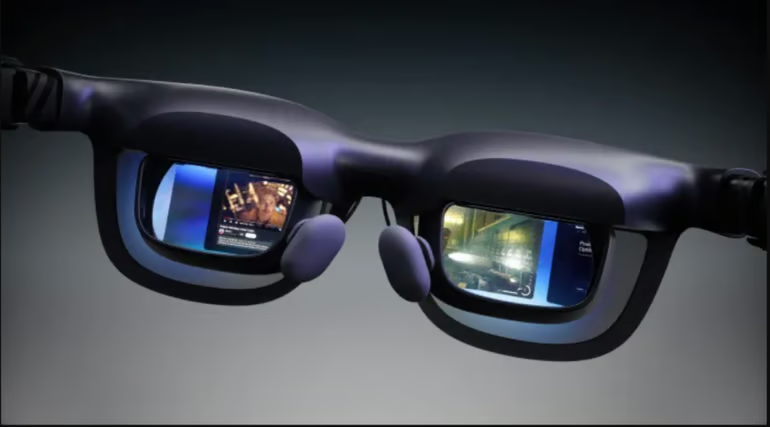
The display delivers a 58-degree field of view at 1,920 by 1,200 resolution, with bright, colorful picture quality. The glasses also include built-in head-tracking features and an ultrawide mode that makes multitasking significantly easier. However, the camera is essentially useless, and there are no focus dials for prescription users.
Price: $549
Where it shines: The ultrawide mode is transformative for getting work done on the go—it lets users research, edit, and produce content while sitting at coffee shops, giving much more screen real estate than a laptop alone.
More must-read AI coverage
- SS&C Intralinks DealCentre AI vs. Datasite: Which platform is built for the future of dealmaking?
- SS&C Intralinks FundCentre AI vs. Juniper Square: Which platform better supports modern private markets fund managers?
- Why Data, Not Models, Determines AI Success
- The Rise of the AI-Native Factory: How Physical AI Is Transforming Manufacturing
XReal a01+
Best for: Value shoppers and digital nomads who want a bright picture in an incredibly light frame.
At 2.19 ounces, the a01+ is the lightest pair of prism-display smart glasses available. It’s XReal’s first entry in its affordable X by XReal sub-brand, offering a super-bright picture (1,600 nits) and vibrant colors without the built-in head-tracking features found in flagship models. Interchangeable front plates let users change the look of the glasses.
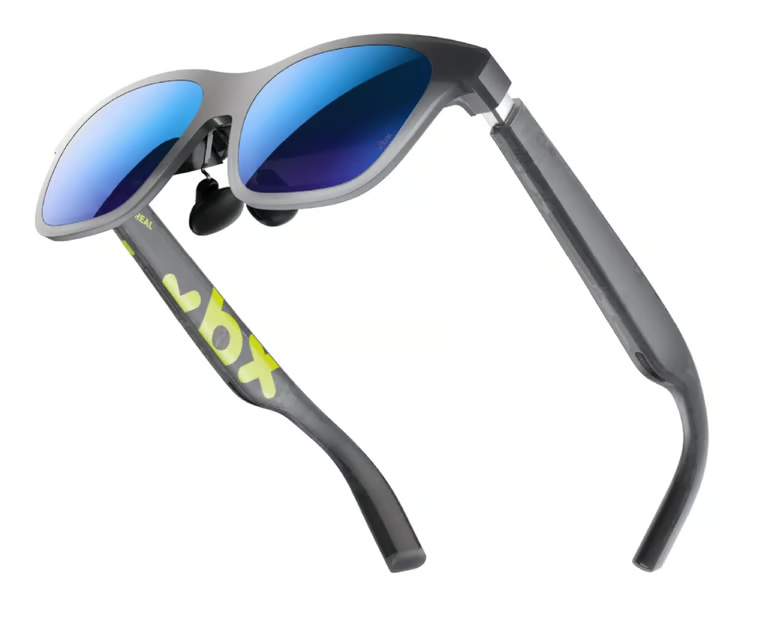
The 50-degree viewing angle and comfortable design make it a solid option for travelers and remote workers. However, HDR10 doesn’t seem to particularly improve the picture quality, so the value proposition is more about brightness and weight than advanced features.
Price: $299
Where it shines: For less money than most other models on the market, the a01+ offers an ultra-bright picture and a satisfying viewing angle. Whether you’re working at a coffee shop or watching a movie on a flight, these glasses provide a comfortably large screen for any compatible device you connect.
Even Realities G2
Best for: Professionals who want glanceable information without any audio or camera footprint.
The Even Realities G2 takes a radically different approach to the smart glasses question: no camera, no speakers, just a sharp monochrome waveguide display built into frames that pass for completely normal eyewear. Controls run through a touch strip on the temple or, better, the optional R1 smart ring, which also moonlights as a basic fitness tracker.
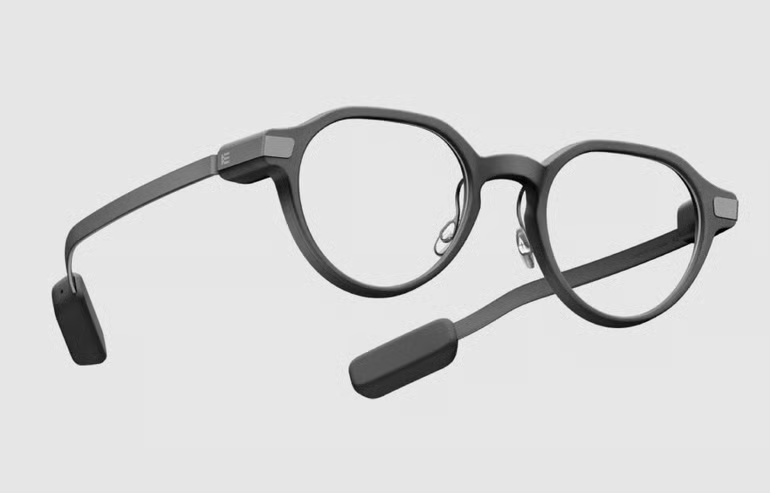
Software was thin at launch, but the arrival of the Even Hub app platform has changed that considerably. Third-party developers can now build directly for the glasses, and six months in, the catalog covers everything from live captioning and translation to sports scores and monitoring AI coding agents on the display. The glasses have been used as teleprompters for speeches, and the battery lasts roughly two days before needing a recharge.
Price: $599, or closer to $850 with the R1 ring
Where it shines: By leaving cameras and speakers out entirely, Even Realities has built the most convincing privacy-conscious alternative to Meta’s glasses currently on the market. The camera-free design sidesteps every workplace restriction and privacy concern that camera-equipped alternatives trigger. However, the touch-strip controls are fiddly without the ring, and some native features like navigation and AI summaries are still a little inconsistent.
Dymesty AI Smart Glasses
Best for: Professionals in camera-restricted workplaces, frequent travelers who need translation and all-day battery, and users who want a camera-free alternative.
Dymesty occupies a unique position in the smart glasses landscape: a full-titanium frame with zero camera hardware and a 48-hour battery life. At 35 grams, they’re lighter than every camera-equipped competitor on the market. Where Ray-Ban Meta bets on its camera ecosystem, Dymesty bets on the idea that most professionals and travelers do not want a camera on their face at all.
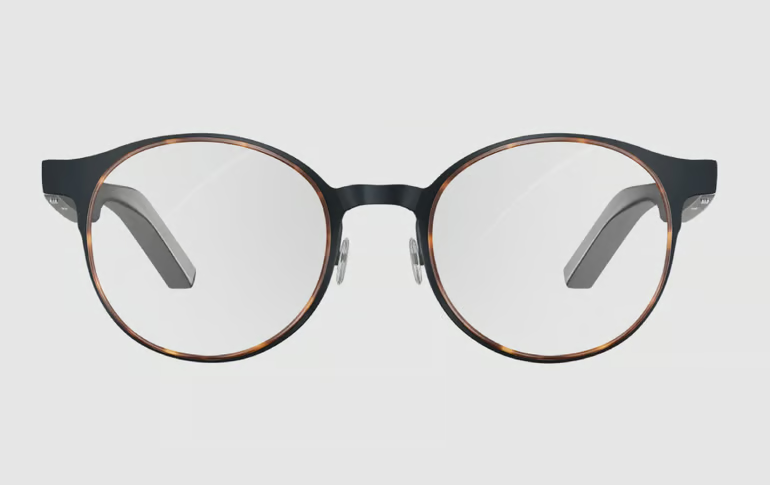
The V2.0 software update added full meeting transcription, speaker identification, one-click AI summaries, and real-time translation across 100+ languages—capabilities that position it closer to a wearable meeting device than a typical pair of sunglasses. The dual speaker system with four-mic ENC and aptX support ensures clear audio for calls and music.
Price: $299
Where it shines: No camera means no workplace restrictions, no recording LED anxiety, and no privacy confrontations in public. The trade-off is clear: you lose the ability to shoot photos and video entirely. For corporate professionals, lawyers, and healthcare workers who cannot bring camera devices into their workspace, this is exactly the point.
Chamelo Music Shield
Best for: Budget-minded outdoor fitness enthusiasts who want customizable tinting.
Chamelo makes glasses with adjustable lenses that you can dim or lighten with a simple swipe. The Music Shield’s big, flaming orange one-piece mirrored lens can be made transparent enough for indoor use or dark enough for sunny days. The glasses play audio from your phone and sound better than most competing models, though they still don’t beat decent true wireless earphones in audio quality.
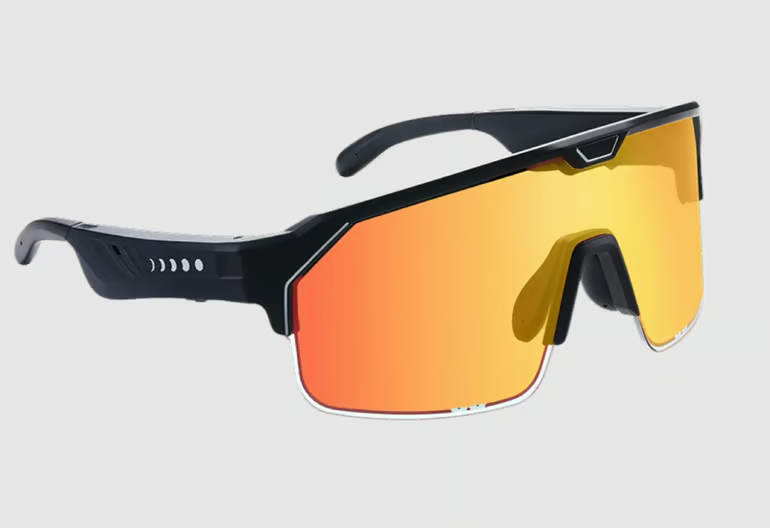
The glasses are ostensibly for active users with an IPX4 rating meaning they’re sweat-resistant, so you should be able to wear them for a jog in most weather short of a downpour. The combination of features—adjustable tint and audio—makes them unique in the market.
Price: $229
Where it shines: They’re a good choice if you want to listen to music or make calls on the go while still taking in the sounds of your environment. However, the audio comes from rear-firing speakers instead of bone conduction, and trying to pump a lot of sound out of an incredibly small space leads to distortion. The build quality has also been described as feeling cheap, with hard plastic that doesn’t feel premium.
Lucyd Lyte
Best for: Those on a budget who mainly want audio features and discreet notification.
The Lucyd Lyte offers open-ear audio with a four-speaker system and voice assistant integration at a lower price point. They’re indistinguishable from regular glasses, though they sport somewhat husky temples due to battery and electronics. You can order them with or without a prescription, or with reading lenses if you prefer to use them while reading.
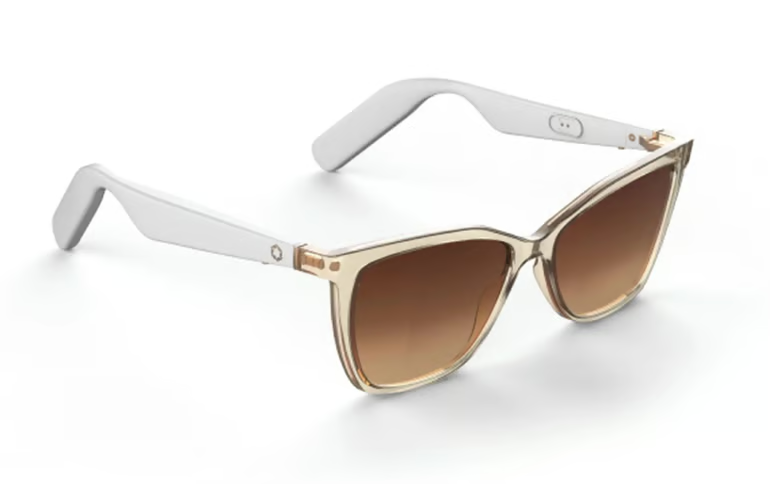
The glasses connect to ChatGPT using the mobile app, though there’s no built-in AI—you must double-click control buttons to call Siri or Google Assistant. They’re largely only useful as a pair of discreet headphones to listen to audio while going about your day. Battery life lasts up to 10 hours, and notification pings are louder than on other models.
Price: Moonrise: $99, Millennia: $149
Where it shines: These deliver the core smart-glasses experience simply and reliably. They’re an ideal choice for someone who desires to get into the smart eyewear world at a moderate cost with no risk. The open-ear audio is suitable for listening to music and podcasts, and the prescription-friendly design makes them accessible to vision-corrected users.
Nuance Audio
Best for: Individuals with mild to moderate hearing loss who prefer a discreet, stylish solution.
A collaboration between EssilorLuxottica and Nuance Audio, these smart glasses address a distinct issue: hearing loss. Disguised within a stylish pair of frames, the device is essentially a sophisticated hearing aid designed to make conversations more straightforward in noisy environments.
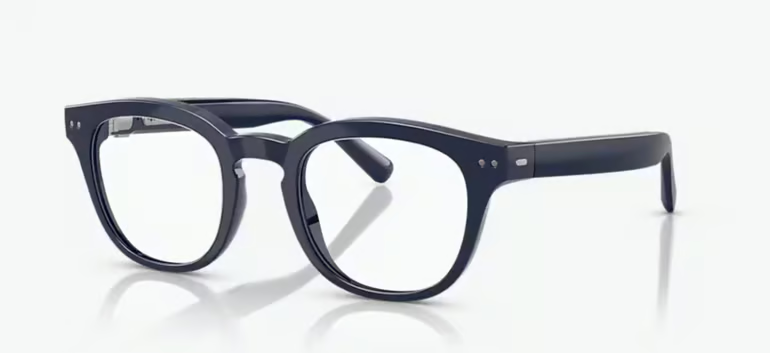
Using beamforming technology and an array of hidden microphones, the glasses can identify the person you’re speaking to and amplify their voice while filtering out background noise. The idea is to provide a solution for individuals who may not require or prefer a traditional, behind-the-ear hearing aid. By integrating the technology into a familiar and fashionable object, Nuance Audio aims to remove the stigma associated with hearing assistance devices.
Price: $699
Where it shines: These don’t require fitting by an audiologist and offer an unobtrusive way to enhance social interactions. It’s a powerful example of how smart glasses can provide genuine, life-improving utility beyond notifications and photos. However, the sound quality can be tinny and metallic, lacking natural warmth, and they’re relatively expensive compared to traditional hearing aids.
What’s coming next
The pace of new hardware hasn’t slowed down in 2026. Meta launched a self-branded Meta Glasses line starting at $299, undercutting Ray-Ban Meta Gen 2’s $379 price while still being built with EssilorLuxottica. Samsung formally revealed its first pair of smart glasses, developed with Gentle Monster and Warby Parker on Google’s Android XR platform, with access to both Gemini and Samsung’s Bixby assistant.
Meta Connect, confirmed for September 23-24 in Menlo Park, is widely expected to bring the next wave of Ray-Ban Meta hardware — rumored under the codenames Aperol and Bellini, with reported upgrades including a longer-lasting Live AI mode and a noticeably sharper camera.
Snap is also expected to bring its next-generation AR glasses, rebranded simply as Specs, to a wider audience this year. They will run on Snap’s own OS, with Google’s Gemini models available to developers. Google and Samsung’s Android XR glasses are both expected to actually start shipping this fall, alongside Google’s own co-developed pairs with Warby Parker, Gentle Monster, and XREAL.
The bottom line: Which one is right for you?
The smart glasses market is not one-size-fits-all, and the right pair depends entirely on what you want them to do.
For sheer polish, camera quality, and audio: Ray-Ban Meta Gen 2 remains the gold standard. For most first-time buyers, it’s still the easiest recommendation. Meta and EssilorLuxottica have iterated on a genuinely great format, and nothing else comes close as an all-round, do-everything pair of glasses.
But there’s a catch. Meta has faced significant privacy scrutiny this year, with reports of covert filming, facial recognition concerns, and bans in public spaces. None of that makes Ray-Ban Meta a bad product — it isn’t — but it’s a genuinely different proposition to recommend now than it was a year ago.
For privacy-conscious buyers: The Even Realities G2 is the clear winner, trading photo and video capture for peace of mind. It doesn’t have a camera at all, which sidesteps the entire issue outright, and the Even Hub updates have turned it into a genuinely capable pair of glasses in its own right.
For athletes: Oakley Meta Vanguard’s IP67 rating and Garmin integration make it the sportiest option available, while the Oakley Meta HSTN offers a more affordable entry point for runners and cyclists.
For display lovers: Viture Beast offers the most features and widest field of view.
For camera-free endurance: Dymesty’s 48-hour battery and workplace compliance make it the go-to for professionals in restricted environments.
For AI flexibility: Solos AirGo V2’s multi-AI support and swappable batteries offer the most adaptable experience for users who want to choose their AI assistant.
For budget-conscious buyers: Rokid AI Glasses Style and Lucyd Lyte both offer compelling features at accessible price points, depending on whether you prioritize camera capabilities or simply want audio and notifications.
The smart glasses market has finally matured beyond a single dominant player. Whether you prioritize style, performance, privacy, or price, there’s now a pair of smart glasses designed specifically for what you need — and you don’t have to buy Meta to get it.
Read more: As wearable cameras become harder to distinguish from ordinary eyewear, Singapore’s AI glasses boom shows why buyers and employers need to consider privacy rules alongside product features.