


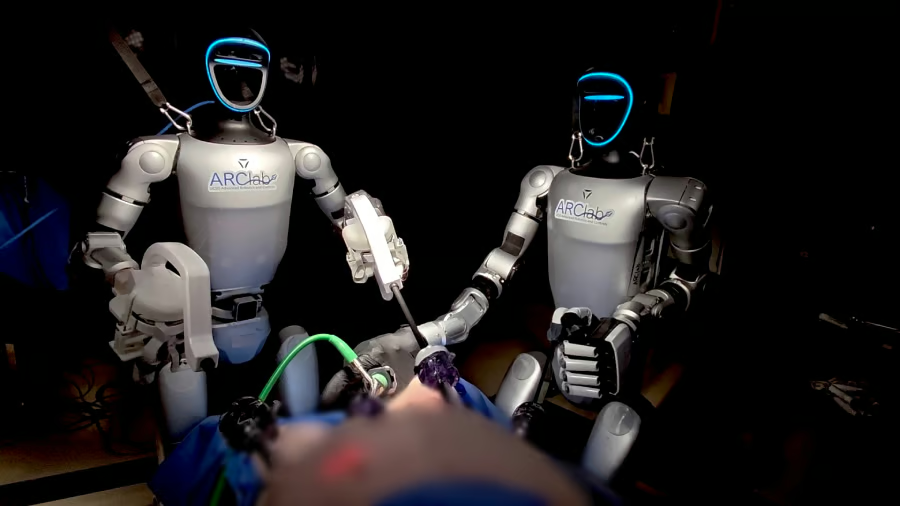
Humanoid robots have moved from simulation to live surgery. UC San Diego surgeons used Surgie to complete two gallbladder removals on pigs in what researchers called a world first.
Modified Unitree G1 robots formed the system, allowing doctors to test whether a humanoid made for many kinds of work could handle a delicate medical procedure.
Moving from laboratory exercises to living animals brought Surgie closer to real operating-room conditions. Human trials remain out of reach.
Surgeons operated through Surgie
A senior surgeon controlled Surgie from a nearby console, using a camera view from inside each pig to guide every movement. Robot arms moved tissue aside and separated the gallbladders from the liver, with medical staff staying beside the table to prepare and monitor the animals.
A second humanoid briefly held the camera and moved tissue during one case. Human assistants handled most bedside support, keeping surgeons involved throughout both procedures.
Both operations ended without a switch to conventional keyhole surgery or open surgery. No major complications occurred in the first case. Minor bile leakage and bleeding developed in the second, and the team brought both under control.
“As a proof of concept, it absolutely worked,” study co-author Ryan Broderick, interim director of UC San Diego’s Center for the Future of Surgery, told ABC News.
Why researchers chose a humanoid
Operating rooms are set up for people and the tools they use. Surgie’s human-like body allowed the robots to stand beside the table and handle instruments made for surgeons, letting the team test the system without redesigning the room around a new machine.
Researchers also see room for the same kind of robot to help with other physical work in hospitals. Pig operations covered surgery alone, leaving any wider hospital role for later studies.
More must-read AI coverage
- SS&C Intralinks DealCentre AI vs. Datasite: Which platform is built for the future of dealmaking?
- SS&C Intralinks FundCentre AI vs. Juniper Square: Which platform better supports modern private markets fund managers?
- Why Data, Not Models, Determines AI Success
- The Rise of the AI-Native Factory: How Physical AI Is Transforming Manufacturing
Smaller hospitals could benefit if Surgie advances
Clinicians involved in the study rated Surgie’s readiness for hospital use at 2.5 out of 5. Researchers still hope future versions could work in villages, on ships, or in smaller medical facilities outside major cities.
Patients served by rural hospitals or smaller medical centers could benefit most if these plans become viable. A humanoid robot capable of using familiar tools in a standard operating room could provide local teams with robotic assistance without requiring a large specialist center. Researchers have not tested Surgie in those settings, so any benefit remains unproven.
Several problems from the pig operations still stand in the way. Surgie needed repeated repositioning and recalibration, occasionally overheated, and could not yet meet the sterilization requirements for human surgery. Human staff also remained beside the animals throughout both procedures.
Any early hospital use would still depend on a full surgical team and a far more reliable system. Longer tests across more procedures must come before any trial involving people.
Also read: SpaceX’s Starship is cleared to fly again, putting its next test and Starlink ambitions back in focus.