


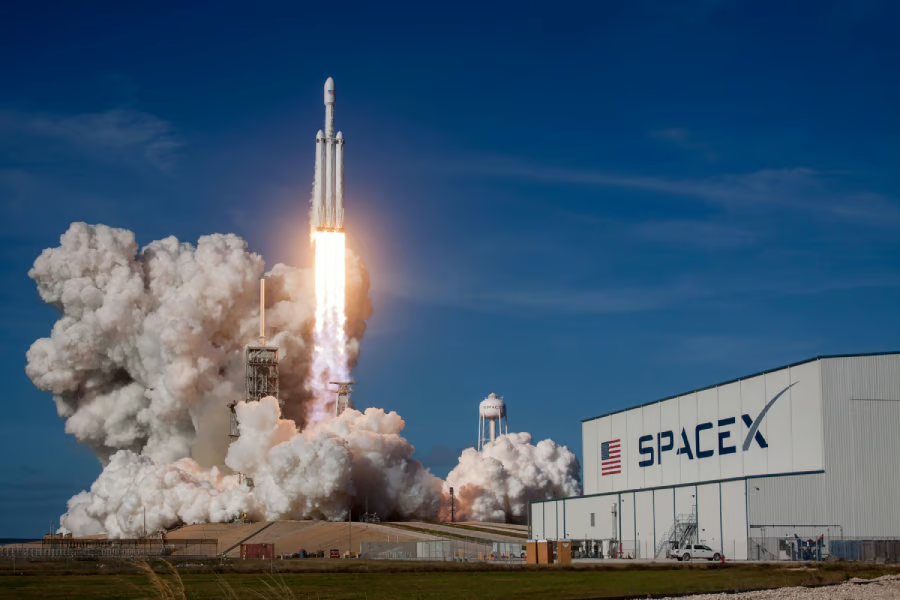
SpaceX has been cleared for launch by the Federal Aviation Administration (FAA), two months after a failure in the rocket system’s booster stage brought Starship test flights to a halt.
The aerospace and AI company plans to get the ball rolling quickly, with a SpaceX representative saying it could launch its next prototype as early as Thursday. SpaceX published details of the failure over the weekend, saying that a slight variation during engine startup caused one of the booster’s engines to fail during its May launch.
The FAA said the investigation identified heat-related propulsion issues and incorrect engine alarm settings. SpaceX has since made hardware and software modifications to improve booster reliability.
If Thursday’s launch goes ahead, it will be the second launch of the V3 Starship, which SpaceX plans to use for larger payloads, including future Starlink satellite deployments. The previous two versions were primarily used to test whether a vehicle of that size could complete missions and be fully reusable.
The Starlink expansion is back on
Even with the delay, SpaceX does not want to slow the pace of development. The next mission will remain a test flight, but SpaceX plans to deploy 20 third-generation Starlink test satellites. The satellites are expected to reenter Earth’s atmosphere after the deployment test rather than immediately join the company’s operational network.
SpaceX recently sought approval to launch as many as 100,000 of these satellites, with the goal of expanding direct-to-device connectivity that could compete with services offered by wireless carriers, such as AT&T and Verizon.
However, SpaceX now has new factors to consider, having become a public company since its last launch. Another failure could be far more damaging to its valuation than it would have been if it had remained a private company.
More about Innovation
- Sovereign AI Explained
- The Rise of the AI-Native Factory
- Why Data Determines AI Success
- SS&C Intralinks DealCentre AI vs. Datasite: Which platform is built for the future of dealmaking?
Launch failures more damaging now
SpaceX has prided itself on rapidly responding to failures, even as many launches have ended in disaster over the past decade. That culture may have to change, however, if it wants to maintain its position as one of the ten most valuable companies in the world as a public company.
The aerospace market has been hit by several failures that have stalled progress. Jeff Bezos’ Blue Origin faced a major setback after its New Glenn rocket exploded at the launch site, damaging equipment and the launchpad. This was a much larger setback than the one SpaceX faced, and Blue Origin’s hopes of completing another launch by the end of 2026 appear ambitious.
At the same time, the SpaceX IPO has supercharged the market, with many rocket companies receiving higher valuations than they had over the previous 12 months. Rocket Lab has made five acquisitions in 2026, expanding the number of fields it operates in. Meanwhile, Eric Schmidt’s rocket company, Relativity Space, is ramping up its own launch schedule and was recently selected by NASA to work on the Mars mission.
The success or failure of SpaceX’s next launch could influence investor sentiment and the commercial space market over the next 12 months. If the launch proceeds without major issues, it could move SpaceX closer to deploying operational third-generation Starlink satellites and expanding its direct-to-device services. If it fails, additional investigations, hardware changes, and regulatory reviews could delay those plans.
Also read: For more on SpaceX’s expanding ambitions beyond rockets, read our coverage of Elon Musk’s denial of reports that the company is developing an AI device and what it could mean for Starlink’s future.