


Purchase cards, also known as procurement cards or P-cards, are essential tools for streamlining routine business purchases and managing employee spending. These cards empower authorized users to buy goods or services without the need for traditional purchase orders, while giving finance teams greater oversight and control. From general-purpose corporate cards to specialized options like fuel cards, the right P-card can improve efficiency and reduce administrative costs across an organization.
How do purchasing cards work?
P-cards allow authorized employees or departments to make business-related purchases without going through the traditional purchase order process. Here’s a quick overview of how it works, followed by a shortlist of its pros and cons.
| When it’s best to use Ideal for routine expenses like office supplies, travel, and software subscriptions |
|
Standout features
|
|
Pros
| Cons
|
Differences of p-cards vs business credit cards vs debit cards
While purchasing cards may look similar to business credit or debit cards, they serve a different function and offer more specialized controls for company spending. Purchasing cards are linked to a company account and are designed with built-in spending limits, merchant category restrictions, and real-time monitoring to reduce the risk of unauthorized purchases.
Unlike debit cards, which draw funds immediately from a bank account, and credit cards, which can carry a balance, purchasing cards usually require the full balance to be paid each billing cycle. They also connect more easily with accounting and expense management software, making them ideal for frequent, low-value purchases across teams.
Top purchasing cards for businesses
The best purchasing cards for your business help streamline transactions and purchase tracking, while also providing cost-saving features for your primary business spending. Here are the top seven choices for the best P cards for business:
Ramp Card: Best overall purchasing card with cash back rewards
Rippling Spend: Best for an all-in-one management of employee spending, expenses, and payroll
Emburse Spend Card: Best for earning 1% cash back on all purchases
Coast Fuel Card: Best for businesses managing fleets or frequent travel operations that want to streamline fuel expenses
Citi® Purchasing Card: Best for custom analysis and payment optimization strategy
JP Morgan Purchasing Card: Best for building long-term value
| Best for | Annual fee | Best feature | ||
|---|---|---|---|---|
 | Best overall purchasing card with cash back rewards | $0 | Up to 1.5% cash back on purchases | Apply Now |
 | Best for an all-in-one management of employee spending, expenses, and payroll | None, only $8 per user, per month | 1.75% cash back on all purchases + rewards for every dollar spent with no cap and no expiration | Apply Now |
 | Best for earning 1% cash back on all purchases | $0 | 1% cash rebate when qualifying spend volumes are met | Apply Now |
 | Best for businesses managing fleets or frequent travel operations that want to streamline fuel expenses | None, only $4 per active user per month | 1% cash back on non-fuel purchases and 4 - 10 cents off every gallon on your statement | Apply Now |
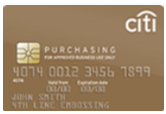 | Best for custom analysis and payment optimization strategy | None — but there may be customized costs for each business | Provides access to CitiManager Portal allowing authorized users to manage and review account statements | Apply Now |
 | Best for building long term value | Undisclosed | Has a dedicated team to help with card management | Apply Now |
Ramp Card: Best overall purchasing card with cash back rewards
 |
|
|---|---|
Pros
| Cons
|
Card details
Rewards
|
|
Why I like the Ramp Card
The Ramp Card is a standout option because it combines smart financial controls with simplicity and transparency. I appreciate that it charges no annual or foreign transaction fees and still offers up to 1.5% cash back on every purchase, making it a straightforward way for businesses to earn while they spend.
What really sets Ramp apart is its built-in expense management platform, which helps streamline approval workflows, automate receipt matching, and integrate seamlessly with popular accounting tools. The ability to issue unlimited virtual and physical cards with customizable controls also makes it ideal for scaling teams. For businesses that prioritize operational efficiency and financial discipline, Ramp delivers both without unnecessary complexity.
Other features
In addition to its financial benefits, the Ramp Card includes a variety of operational features that help businesses manage spend with greater accuracy, control, and efficiency. Key capabilities include:
- Advanced automation tools: Automates expense reporting through receipt capture, real-time alerts, and transaction categorization
- Data-driven insights: Provides analytics to flag spending inefficiencies and recommend cost-saving opportunities
- ERP and accounting integrations: Seamlessly connects with platforms like NetSuite, QuickBooks, and Xero to eliminate manual data entry
- Centralized administration: Offers a dashboard for managing user roles, permissions, and departmental controls across growing teams
- Real-time visibility: Enables proactive monitoring of employee purchases and policy compliance across the organization
Rippling Spend: Best for an all-in-one management of employee spending, expenses, and payroll
|
|
|---|---|
Pros
| Cons
|
Card details
Rewards
|
|
Why I like the Rippling Spend Card
The Rippling Spend Card stands out because it offers an all-in-one solution for managing employee spending, expenses, and payroll within a single platform. I like that it’s deeply integrated into Rippling’s broader workforce management system, which allows businesses to link spending controls directly to roles, departments, or locations.
This makes it incredibly easy to automate policy enforcement and tailor card access based on an employee’s position or status. The ability to manage expenses and payroll from the same dashboard streamlines back-office operations and improves financial visibility across the organization. For companies looking to consolidate tools and simplify their finance stack, Rippling delivers impressive control and convenience in one unified system.
Other features
In addition to its seamless integration with payroll and employee management, the Rippling Spend Card offers a robust set of features that boost financial visibility, control, and automation. Key capabilities include:
- Granular spending rules: Configure limits based on employee roles, departments, or locations to align with internal policies
- Real-time tracking and categorization: Monitor spend as it happens, with automated expense tagging and receipt capture
- Streamlined reconciliation: Reduce manual work and accelerate month-end close through accounting system integrations
- Centralized administrative controls: Manage team permissions and card access from a single dashboard
- Proactive financial oversight: Receive intelligent alerts and policy flags that help finance teams stay ahead of irregular activity
Emburse Spend Card: Best for earning 1% cash back on all purchases
|
|
|---|---|
Pros
| Cons
|
Card details
Rewards
|
|
Why I like the Emburse Spend Card
The Emburse Spend Card is a strong choice for companies that want to simplify expense management while maintaining tight control over spending. I especially like that it combines user-friendly tools with financial incentives, including a flat 1% cash back on all purchases, which adds meaningful savings for businesses with frequent expenses.
The card’s real-time transaction tracking, customizable spending rules, and integration with popular accounting platforms make it easy to enforce policies and reconcile expenses without added complexity. For teams seeking a straightforward solution that rewards spending and enhances visibility across departments, Emburse delivers both functionality and financial value.
Other features
Beyond its cash back rewards and core spending capabilities, the Emburse Spend Card includes a suite of features that help businesses gain more control and reduce administrative overhead. Key features include:
- Customizable virtual and physical cards: Issue cards with tailored spending limits and merchant restrictions by role or department
- Automated workflows: Streamline receipt capture, approvals, and transaction reviews to minimize manual oversight
- Real-time visibility: Monitor transactions as they occur, making it easier to manage budgets and flag irregular activity
- Accounting system integrations: Connect with tools like QuickBooks and NetSuite for faster reconciliation and cleaner reporting
- Modernized expense management: Simplifies processes without adding complexity, making it ideal for growing or agile teams
Coast Fuel Card: Best for businesses managing fleets or frequent travel operations that want to streamline fuel expenses
|
|
|---|---|
Pros
| Cons
|
Card details
Rewards
|
|
Why I like the Coast Fuel Card
The Coast Fuel Card is an excellent option for businesses looking to bring more control and visibility to their vehicle-related expenses. It’s best for businesses managing vehicle fleets or travel operations that need to manage fuel expenses, offering the flexibility to fuel up at nearly any gas station, plus built-in controls to track and limit purchases.
Coast also makes it easy to assign cards to drivers, set spending limits, and monitor transactions in real time, all from a user-friendly dashboard. It’s a modern solution that fits the pace and complexity of today’s mobile teams.
Other features
In addition to fuel tracking and spend controls, the Coast Fuel Card delivers a range of features designed to simplify fleet expense management and enhance operational oversight. Key features include:
- Customizable card issuance: Provide virtual or physical cards with tailored rules for spending categories, times, and locations
- Real-time alerts and logs: Flag suspicious activity immediately and maintain a clear audit trail of all transactions
- GPS-enabled purchase verification: Add an extra layer of security to ensure transactions are location-appropriate
- Fleet and accounting integrations: Sync fuel expenses with systems like QuickBooks and Fleetio to streamline reporting
- Centralized interface: Manage all driver and vehicle-related spending from one intuitive control panel
Citi® Purchasing Card: Best for custom analysis and payment optimization strategy
|
|
|---|---|
Pros
| Cons
|
Card details
Rewards
|
|
Why I like the Citi® Purchasing Card
The Citi Purchasing Card is a solid option for businesses that want more than just transactional efficiency — it delivers meaningful insights and tools that help optimize spending. What I like most is how the card provides custom analysis and payment optimization, giving finance teams access to detailed reporting that can identify patterns, reduce waste, and support better budgeting decisions.
Through the CitiManager platform, users can monitor activity in real time, generate tailored expense reports, and manage multiple users with customized controls. This level of data visibility empowers organizations to fine-tune their procurement strategy while maintaining centralized control over spending. For companies that value strategic expense management, Citi offers a well-rounded solution.
Other features
The Citi Purchasing Card is built to do more than just facilitate transactions — it helps organizations bring structure and clarity to the entire purchasing process. Key features include:
- Granular spending controls: Set detailed limits by user, vendor category, transaction size, and time frame to enforce policy compliance
- CitiManager platform access: Centralized account management with real-time transaction data, downloadable statements, and custom reporting tools
- Individual or departmental cards: Allocate cards by employee or team to monitor decentralized spending with ease
- Procurement simplification: Streamlines purchasing for routine business needs, cutting down on manual processing and paperwork
- Support for long-term planning: Provides visibility and control needed for both operational execution and strategic budgeting
JPMorgan Purchasing Card: Best for building long-term value
|
|
|---|---|
Pros
| Cons
|
Card details
Rewards
|
|
Why I like the JPMorgan Purchasing Card
The JPMorgan Purchasing Card stands out as a powerful tool for organizations that view procurement as more than just a transactional process. What I appreciate most is how this card supports long-term value creation by combining robust spend controls with deep data insights and flexibility for a growing business. The card program can be customized to fit evolving needs, gain real-time visibility into spending trends, and use detailed reporting to inform strategic purchasing decisions.
It’s especially effective for companies with complex vendor relationships and large teams, offering the kind of oversight and optimization that compounds in value over time. For enterprises focused on operational efficiency and smart financial planning, JPMorgan delivers both the tools and support to build sustainable value.
Other features
Built for large-scale organizations, the JPMorgan Purchasing Card delivers a robust feature set that supports strategic procurement and operational control. Key features include:
- SmartData platform access: Offers customizable dashboards, automated expense categorization, and advanced analytics for auditing and forecasting
- User-level policy enforcement: Enables granular controls such as transaction limits, merchant category restrictions, and approval workflows
- ERP and finance software integration: Connects with enterprise systems to streamline transaction data into broader financial reporting
- Global program support: Includes multi-currency capabilities and centralized management for businesses with international or distributed teams
- Strategic spend management: Equips finance leaders with the tools needed to drive consistency, visibility, and long-term value across departments
My Methodology: How I chose the best p-cards
To determine the best p cards for business use in 2025, I analyzed a wide range of providers using a structured approach focused on real-world usability, financial efficiency, and security. The cards featured in this guide were selected based on the following criteria:
- Expense controls: Availability of spending limits, merchant restrictions, and real-time monitoring tools
Software integration: Compatibility with accounting platforms and ERP systems for streamlined reconciliation - Fee structure: Evaluation of annual fees, per-card charges, and potential hidden costs
- Rewards and rebates: Cash back, fuel discounts, or other incentives that offer financial value
- Ease of use: User interface quality, mobile access, and administrative management features
- Customer support: Responsiveness and accessibility of provider support teams
- Business suitability: Alignment with needs of small businesses, mid-sized companies, or large enterprises
- Security features: Fraud protection, card controls, and reporting transparency
- Scalability: Ability to grow with the organization and support multi-user deployment
When to consider an alternative to a purchasing card
While purchasing cards offer significant efficiency for routine business spending, they are not a one-size-fits-all solution. In certain operational or financial situations, alternative payment tools may be more appropriate:
- Large Capital Expenditures: For one-time, high-cost purchases such as IT infrastructure, equipment, or real estate, a business loan or line of credit may provide more favorable terms and greater flexibility than a purchasing card.
- Recurring Expenses: Organizations managing frequent, predictable payments — like software subscriptions, utilities, or telecom services — may benefit from automated payment platforms or corporate credit cards optimized for recurring transactions and rewards.
- Vendor Acceptance Issues: Some suppliers, especially smaller or international vendors, may not accept purchasing cards. In these cases, ACH transfers, wire payments, or check disbursements may be required to maintain procurement continuity.
- Flexible Repayment Needs: Purchasing cards often require full payment each cycle. If your organization needs to manage cash flow over longer terms, a business credit card with revolving credit options may offer better financial agility.
- Category-Specific Rewards: Businesses looking to maximize returns on spend in targeted areas like travel, cloud services, or advertising may find greater value in a business credit card designed with enhanced category-specific cash back or rewards programs.
Frequently asked questions (FAQs)
What is a P-card, and how does it work?
A P-card is a type of company charge card that allows employees to procure goods and services without using the traditional purchasing process. These cards are typically issued to employees who are expected to follow their organization’s policies and procedures related to its use, including reviewing and approving transactions according to a set schedule.
What types of purchases are suitable for P-cards?
P-cards are best suited for small-dollar, high-frequency purchases such as office supplies, travel expenses, and software subscriptions. They streamline the procurement process for these routine transactions, reducing the need for purchase orders and invoices.
What are the benefits of implementing a P-card program?
Implementing a P-card program can lead to several benefits, including streamlined purchasing processes, reduced administrative costs, improved expense tracking, and enhanced control over employee spending. P-cards also provide real-time transaction data, aiding in better budgeting and financial oversight.
What controls can be put in place to prevent misuse of P-cards?
Organizations can implement various controls to mitigate the risk of P-card misuse, such as setting spending limits, restricting merchant categories, requiring transaction approvals, and conducting regular audits. Additionally, employee training on P-card policies and procedures is essential to ensure compliance.
Bottom line
The best p cards offer a powerful way for businesses to streamline routine spending, reduce administrative overhead, and gain better control over employee purchases. Whether your organization is looking for tighter expense management, faster reconciliation, or improved integration with financial systems, the right P-card can deliver measurable value.