
.webp "Dell Logo")
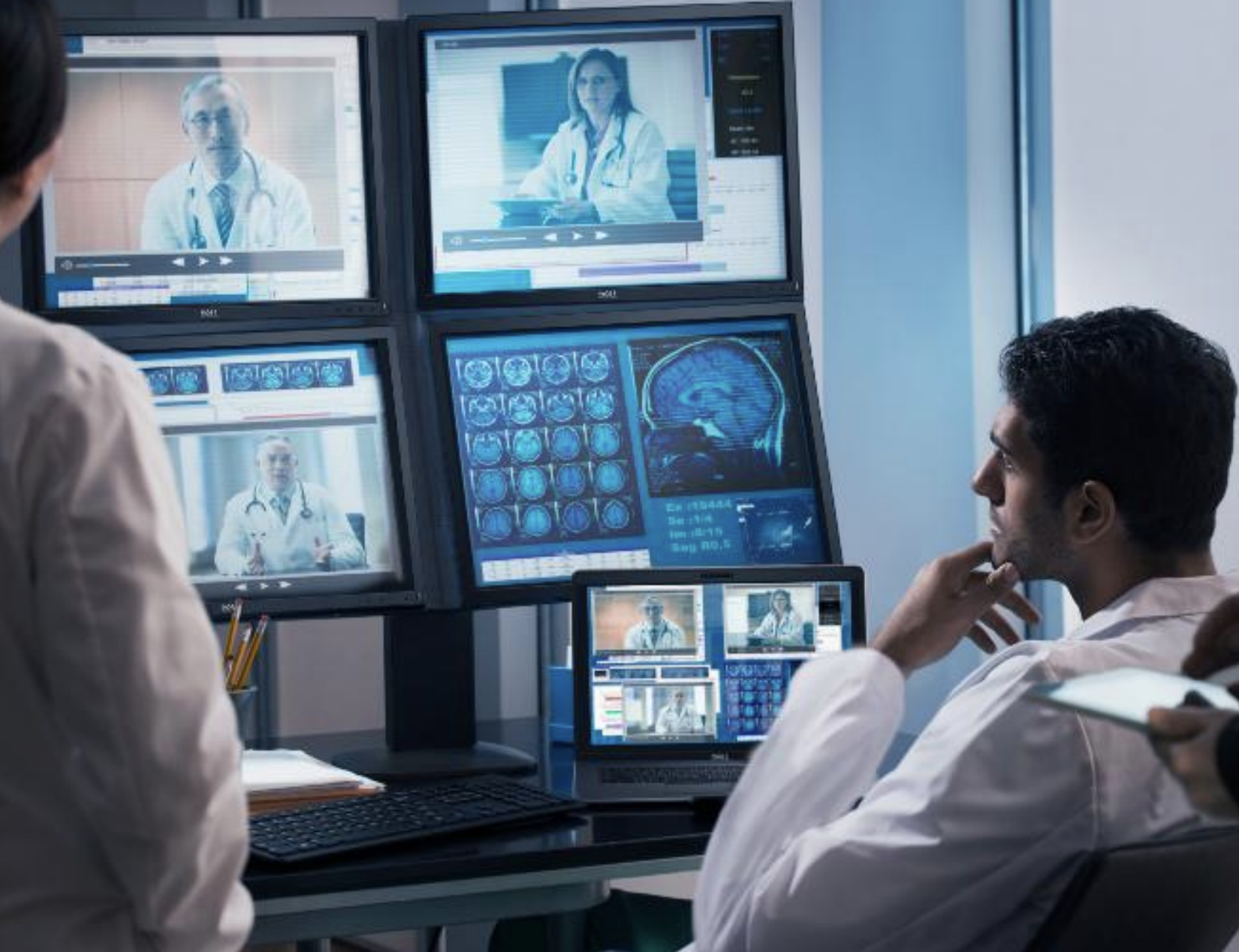
Healthcare organizations face a fundamental tension: AI agents that can transform clinical workflows, analyzing patient records, identifying care gaps, predicting protein structures, consume massive volumes of tokens. But patient data governed by HIPAA and institutional policy cannot be routed through public cloud APIs without significant compliance risk.
Agentic AI workloads are fundamentally different from the chatbot era. These agents don't just answer a single prompt. They chain prompts, retrieve data, call tools, and collaborate with other agents, all on their own. A single agentic clinical workflow can consume 10,000 to 500,000+ tokens, and without guardrails, those autonomous loops can silently burn through your token budgets.
The math is simple: Cloud token costs scale with how much work your agents do — not how many users you have. You can't budget it cleanly. You can't forecast it reliably. And you don't see the problem until the invoice shows up.
The answer: Bring the intelligence to the data.

Dell Deskside Agentic AI Healthcare Agent
A multi-agent clinical workflow that queries and summarizes synthetic FHIR patient records, identifies care gaps, generates clinical analysis, and runs protein structure prediction locally with OpenFold3, all coordinated through a multi-agent architecture running entirely on-premises.
A coordinator agent works with specialist agents on local GPU, keeping patient records and analysis close to the user while OpenFold3 protein structure prediction runs locally for interactive, expert-reviewed results.
Explore the playbook to see how our Dell Pro Max with GB10 workstation enables secure, on-premises healthcare agents that keep sensitive data local while accelerating clinical analysis, care-gap identification, and scientific discovery with AI.
One Desk, Complete Solution
- Dell Pro Max with GB10: The local token engine. Runs the coordinator agent and specialist sub-agents, FHIR record retrieval, care gap analysis, OpenFold3 protein prediction, with sub-second local inference. Designed as a shared companion device supporting clinician workstations across a department.
- Dell Precision Mobile Workstation: The clinician’s or researcher’s primary interface. Accesses the HER, review agent-generate summaries, visualizes protein structures, and manages workflows. Mobile for rounding and lab-to-clinic flexibility.
- Dell UltraSharp KVM Monitor, Keyboard & Mouse: Unified workspace across the Pro Precision and GB10 outputs with UltraSharp KVM monitors; one screen for clinical dashboards, FHIR record summaries, and agent-generate insights. Single-input control across both compute surfaces for keyboard and mouse. No toggling. No friction.
The Software Stack: Secure, Integrated, Production-Ready
This is not a workstation with software on it. It is a validated solution – runtime, models, and security deployed in a single integrated stack.
Layer | Component | What It Does |
|---|---|---|
| Agent Framework | OpenClaw | Persistent, multi-step clinical agent orchestration running locally |
| Secure Runtime | NVIDIA OpenShell | Isolates agents in policy-enforced sandboxes with strict privacy and governance controls |
| Models | NVIDIA Nemotron + OpenFold3 | Clinical reasoning and protein structure prediction |
| Security | CrowdStrike Falcon | Continuous behavioral monitoring — securing threats below the operating system and across the full agent runtime stack, from firmware to sandboxed workloads |
| Orchestration | NVIDIA Agent Toolkit | Build, orchestrate, and manage long-running clinical agents |
| Application & Tools | NVIDIA Nemotron, OpenShell, OpenClaw, FHIR, OpenFold3, Docker |
How It Works: A Day in the Life
Time | What Happens |
|---|---|
| 7:15 AM | Dr. Vasquez arrives at her clinic workstation. Her Dell Pro Precision 7 Series mobile workstation is docked to the Dell UltraSharp 52 Thunderbolt Hub Monitor (U5226KW). Its built-in KVM lets her seamlessly control both the workstation and companion device from one keyboard and mouse. The shared GB10 supporting her six-physician pod is already running — it never stops. |
| 7:30 AM | She queries the healthcare agent for her first complex patient. The agent retrieves the patient's FHIR records, cross-references lab history, imaging reports, and medication lists, then generates a clinical summary with identified care gaps – all locally. No patient data leaves the facility. |
| 9:00 AM | A research colleague flags a protein target related to a patient's rare condition. Dr. Vasquez activates the OpenFold3 agent on the same shared GB10. It runs protein structure prediction locally, presenting results for her expert review within minutes — not hours. |
| 11:30 AM | Three more physicians in the pod have queued their own clinical agent workflows on the shared GB10. No contention. No cloud bill. No waiting. |
| 2:00 PM | For a population-level cohort study requiring analysis across thousands of patient records, the team scales the workload to the data center via OpenShell — same governance framework, same orchestration, seamless handoff. |
Why This Runs Locally: Not in the Cloud
Challenge | How Deskside Solves It |
|---|---|
| Data Sovereignty | Patient records — FHIR data, clinical notes, imaging — processed locally. Compliance isn't a setting. It's a deployment decision. |
| Cost Predictability | Agents consume 10K–500K+ tokens per workflow. Running locally eliminates per-token cloud metering — your cost scales with hardware, not with how much work your agents do. |
| Latency | Sub-second clinical inference. No cloud round-trip during a 15-minute patient encounter. |
| Security | Policy-enforced sandboxes plus hardware-level protection with CrowdStrike Falcon — from firmware to sandboxed workloads. |
| Shared Economics | Policy-enforced sandboxes plus hardware-level protection with CrowdStrike Falcon — from firmware to sandboxed workloads. |
Dell Services: From Ambition to Outcomes
Dell Services help customers move from interest to agentic AI to real, repeatable outcomes at the deskside, with the right guardrails in place.
- Strategize: Identify high-value clinical use cases, assess data readiness, and design security safeguards
- Implement: Deploy Deskside AI workstations and NVIDIA NemoClaw, and securely configure with validated data
- Adopt: Integrate agents into clinical workflows, validate results, and refine agent behavior based on clinician feedback
- Scale: Continuously optimize and provide ongoing support to ensure optimal agent behavior and scalability
Powered by: Dell Pro Max with GB10
AI in Action
A non-profit healthcare system in the Midwest brought AI-assisted care to communities with the Dell Pro Max with GB10.
- Extended clinical AI support across ~130 locations spanning a 14-hour service area
- Eliminated ongoing per-token costs with on-premises AI inference and development
- Secured patient data by running all AI workloads locally – no cloud dependency
“AI in clinical settings requires more than capability. It requires trust, security, and the ability to operate where the data lives. Our role is to provide the infrastructure that makes that possible — on-premises, at scale, and built around how care is actually delivered.”
What You’re Buying: The Complete Solution
| Hardware | Dell Pro Max with GB10 powered by Grace Blackwell Superchip (shared) + Dell Pro Precision mobile workstation + Dell KVM Monitor + Keyboard & Mouse |
| Software | NVIDIA NemoClaw (OpenClaw + OpenShell + NVIDIA Nemotron + NVIDIA Agent Toolkit) + OpenFold3 + CrowdStrike Falcon |
| Services | Dell Services for Agentic AI — Assessment → Deployment → Optimization → Ongoing Support |
| Scale Path | What you deploy at the deskside carries forward to the data center via OpenShell — no re-architecture required |
Three Constraints. One Answer.
Every healthcare organization hits the same wall: long-running autonomous agents, sensitive patient data, and rising token costs. Whether you're running clinical reasoning, protein prediction, or ambient documentation — if you have data you can't move, workloads that run overnight, or costs that compound — the answer is always the same: bring the intelligence to the data.