


Banks in Singapore cannot outsource accountability for AI risks, even when outside technology companies develop or operate their systems.
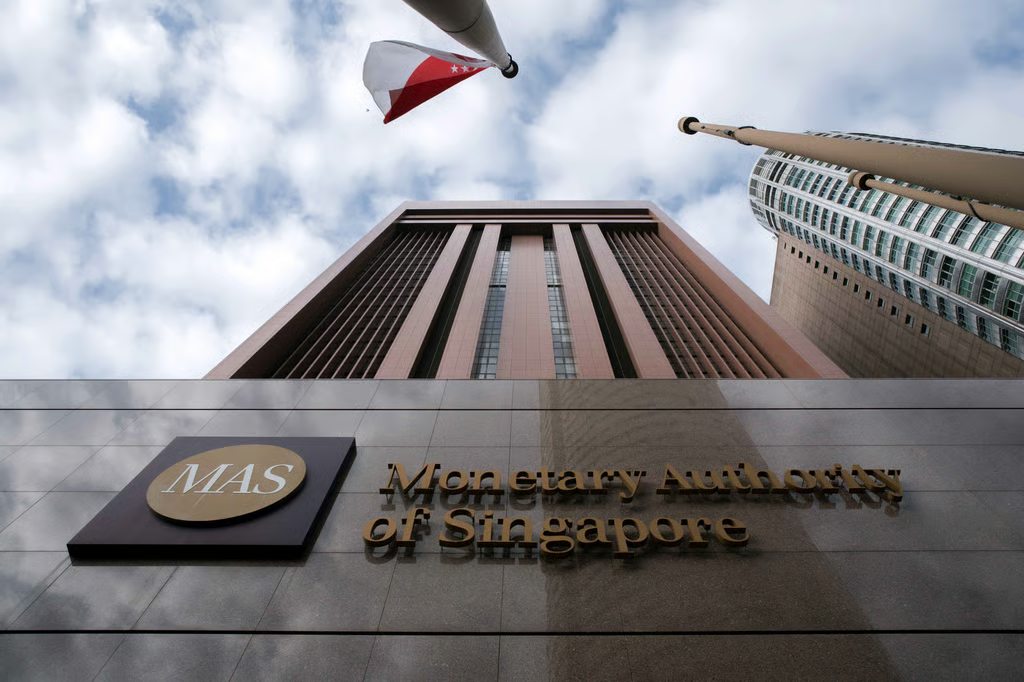
The Monetary Authority of Singapore (MAS) issued new AI risk management guidelines on October 7, 2026, setting expectations for financial institutions to manage risks associated with AI used in their services, including third-party tools. The guidelines cover banks, insurers, payment providers and other MAS-regulated institutions, with implementation beginning October 7, 2027.
Under the new supervisory framework, institutions should obtain sufficient assurances from AI vendors and assess whether their systems are suitable for their intended use. If risks cannot be adequately managed, firms should consider restricting, suspending or replacing the service.
Third-party AI faces tighter oversight
The MAS guidelines call for oversight throughout the AI lifecycle, from initial assessments to ongoing monitoring. Institutions should maintain inventories of their AI use, evaluate individual applications and apply safeguards proportionate to their potential risks.
Vendor assessments must extend beyond system performance and functionality. Financial institutions should also evaluate whether external AI tools can operate within their risk limits, including when providers control the underlying models.
Safeguards may include data governance, testing, human oversight, cybersecurity protections and change management. Such controls are especially relevant as Singaporean enterprises face AI-related data security risks, including sensitive information entering unauthorized external tools.
Customer-facing applications present particular concerns. Chatbots could provide inaccurate financial information or expose sensitive data, while flawed credit assessments and insurance underwriting systems could affect customers’ access to financial products. MAS expects stronger safeguards where failures could have greater consequences.
Boards and senior management are expected to oversee AI risks by defining responsibilities, setting risk appetite and establishing appropriate risk management procedures. Existing governance structures may suffice if they provide adequate supervision, although accountability gaps in enterprise AI remain a concern as automated systems gain access to sensitive information.
Compliance begins in October 2027
MAS has established two implementation milestones. Financial institutions should meet the expectations in Sections 3 and 4 by October 7, 2027, followed by Sections 5 and 6 by October 7, 2028.
The phased approach follows a public consultation launched in November 2025. Institutions may tailor safeguards to the scale, nature and risks of their AI deployments.
Singapore’s requirements also affect foreign financial institutions operating through MAS-regulated entities. For multinational banks using shared AI platforms across Southeast Asia, Singapore-regulated operations will need to meet MAS’ supervisory expectations regardless of where those systems are developed or procured.
The guidelines do not automatically apply to banks operating solely in other ASEAN markets. However, multinational firms sharing technology infrastructure across borders may need to adjust vendor assessments for Singapore operations. The UK has taken a different approach through direct oversight of major cloud providers serving financial institutions, while retaining banks’ responsibilities for operational resilience.
MAS also plans further consultation in 2027 on agentic AI systems capable of operating autonomously and accessing external tools. Ahead of the first deadline, financial institutions will need to identify third-party AI deployments, assign responsibility for their risks and assess existing vendor controls.
Want to learn more AI tips, tricks, and prompting techniques? Let us teach you How to Talk to AI for free! Try our six-minute course at The Neuron Academy, our practical learning platform designed to help professionals use AI more confidently at work.
Learn a few simple ways to write better prompts and get more useful results from AI, or browse our other AI course for free for seven days. eWeek readers get free 7-day access. Check out all the lessons here →