Image: Yurii/Adobe
From humanoids to hyper-TPUs, the week’s biggest headlines prove automation is moving faster than management manuals can keep up.

Robots used to be the punchline to sci-fi jokes. This week, they rewrote the script and slipped into your cubicle while you were laughing.
XPeng unveiled a menagerie of mechs, Apple penciled in a $133 billion robo-business, and Unitree outperformed Russia’s stumbling AIdol.
Meanwhile, a German supermarket hired a tireless chef who flips 120 plates an hour, Google planted an Ironwood TPU forest to feed AI’s power hunger, and pink slips crossed the million-mark as automation tightened its grip.
In short, if November had a ringtone, it would be the whir of servos.
ICYMI, read all of this week’s Daily Tech Insider news:
China’s XPeng treated its AI Day like a tech piñata, unveiling three robotaxi models, a curvy second-generation IRON humanoid, and two flying cars before lunch.
The robotaxis pack four in-house Turing chips and a Vision Language Action (VLA) 2.0 model that required just one intervention in a 49-minute city loop, while Tesla’s Full Self-Driving racked up seven. IRON struts on 82 degrees of freedom, runs on solid-state batteries, sports customizable synthetic skin, and heads for tour-guide duty ahead of a 1,000-unit run in 2026.
Upstairs, a modular van launches its own two-seat flyer, and a tilt-rotor A868 promises 310-mile hops at 224 mph.
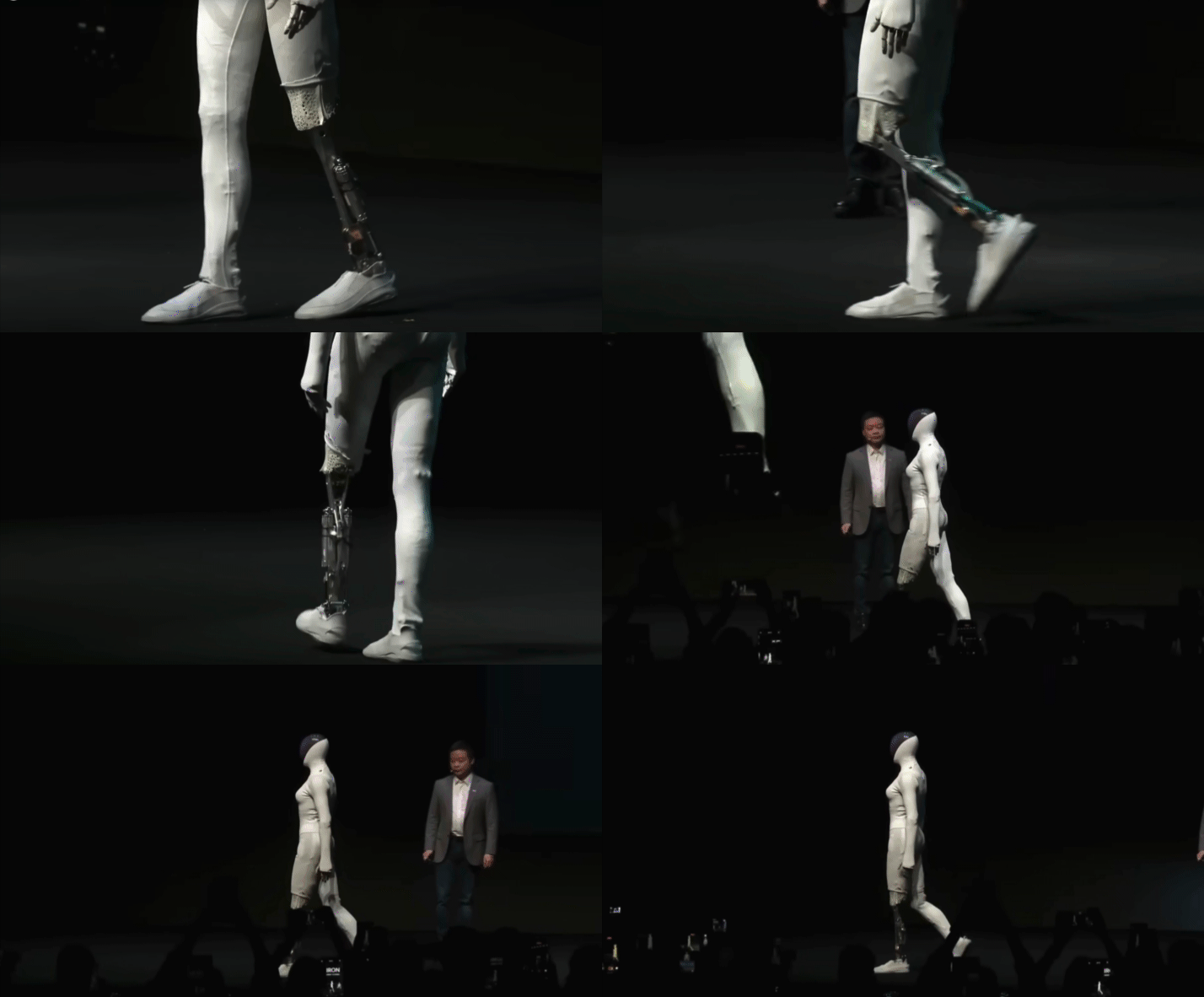
Volkswagen will license the VLA stack, while Alibaba’s Amap will hail the cabs, proving China’s EV makers now build mobility platforms, not just cars. Musk’s $1 trillion robot army just met a well-funded rival, and the subsequent transport war will be fought on road, air… and office lobby.
Morgan Stanley says Apple Robotics could match today’s App Store haul by 2040, generating $133 billion annually on just 9% of a projected trillion-dollar humanoid market. The first gear, likely a motorized tabletop “Pixar lamp” (seen below) with an iPad face, may swivel onto counters in 2027, followed by full humanoids once Apple Silicon and that 2.3-billion-device data moat hit cruising speed.
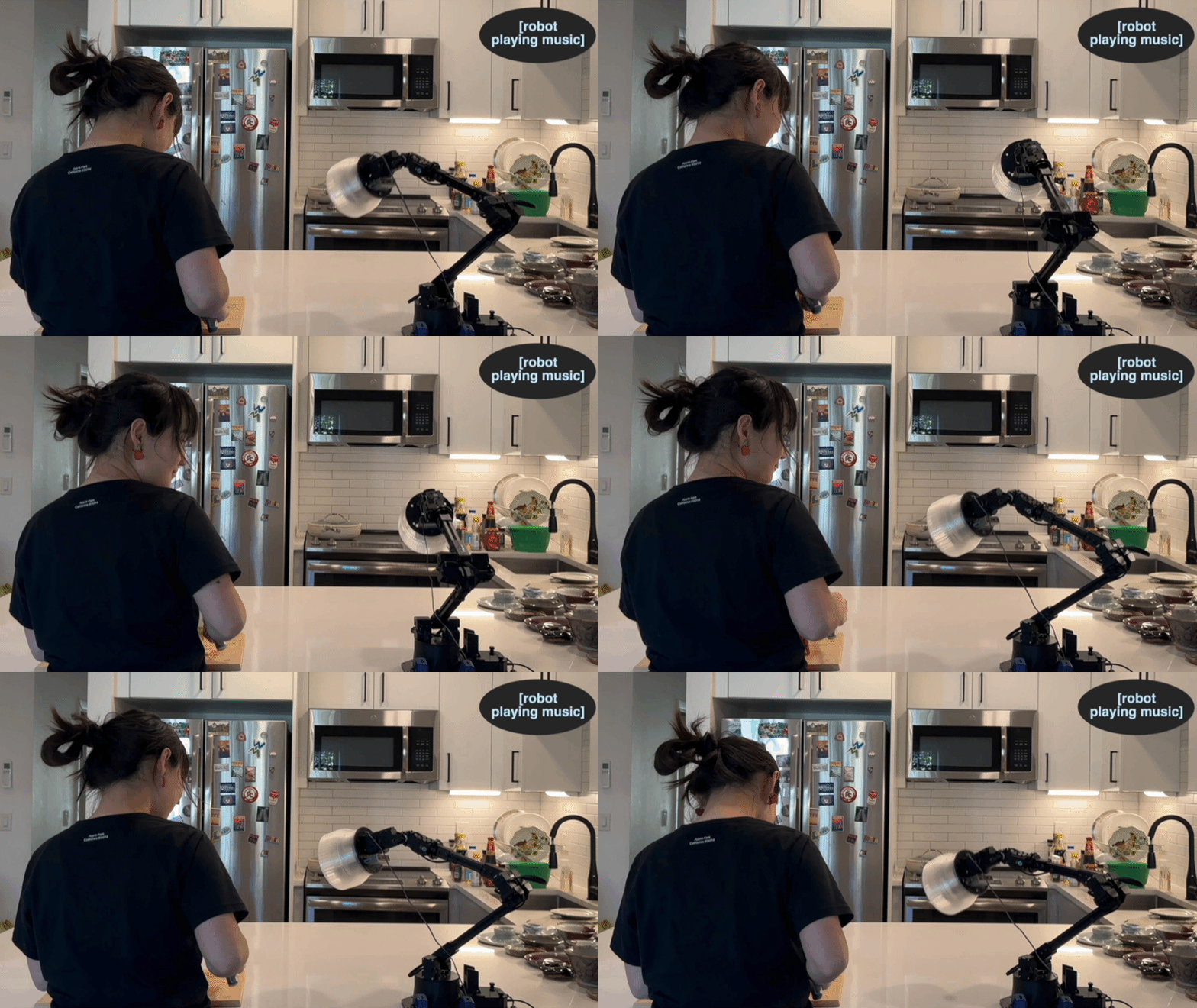
Early blueprints reveal Apple’s shelved self-driving car secrets, including advanced machine vision and privacy-centric on-device AI. Analysts predict a future humanoid price of around $ 30,000, which is expected to decrease as supply rises.
Amazon, Tesla, XPeng, Figure, and 1X already crowd the starting blocks, but Apple’s hardware-software lock-in (and war chest) could make “Hey Siri” sound a lot more like “Pass the coffee, please.”
If Cupertino nails a lovable droid, expect an ecosystem stickier than a caramel Apple.
China’s Unitree H2 humanoid pirouetted, kickboxed, and cat-walked with mannequin composure. Meanwhile, Moscow’s AIdol lurched out to the “Rocky” theme, waved, and promptly nosedived under a black sheet.
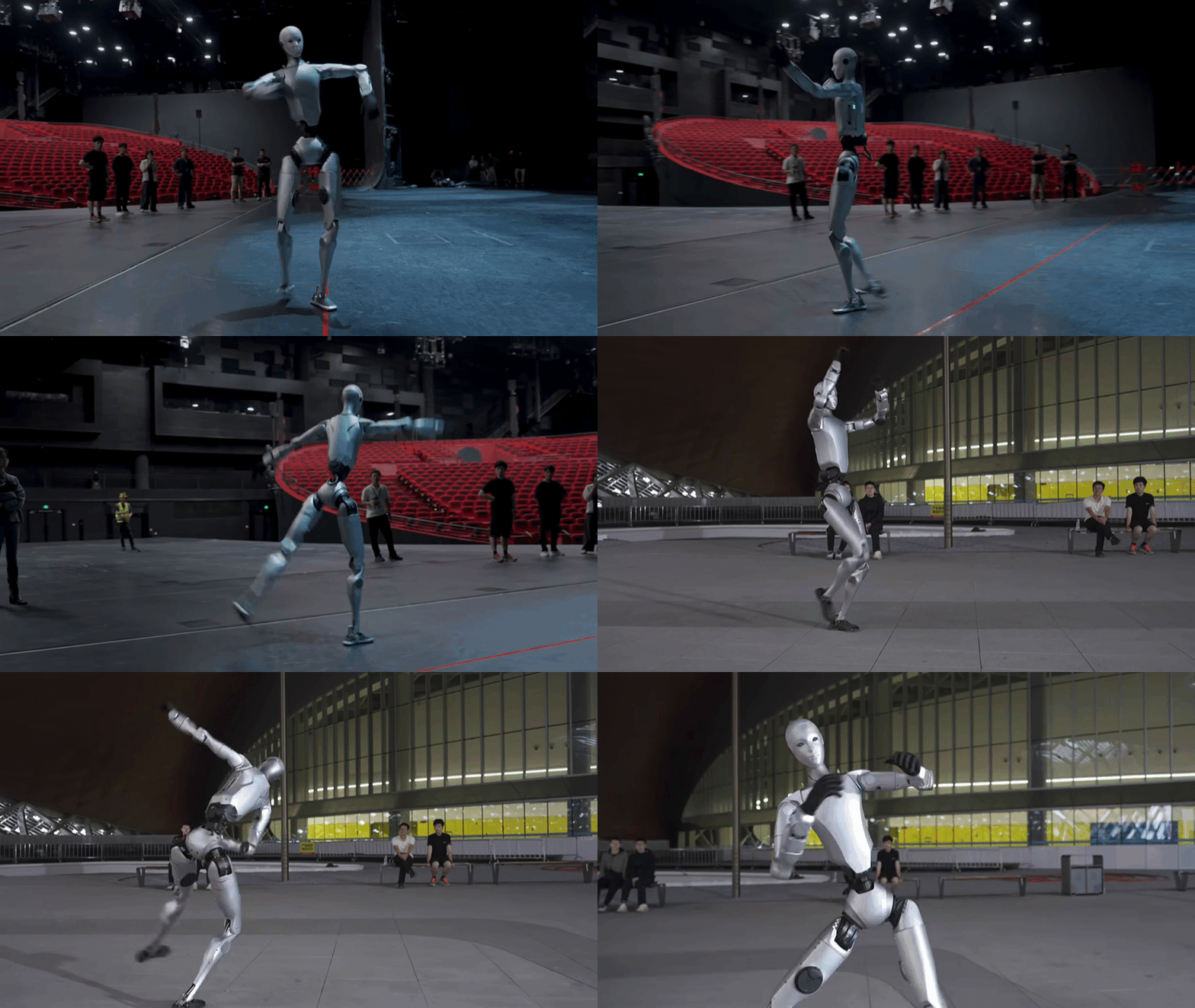
The stark contrast highlights why torque math outperforms marketing hype; China’s H2 predecessor, the H1, won four golds at the World Humanoid Games, while Russia heads back to calibration school.
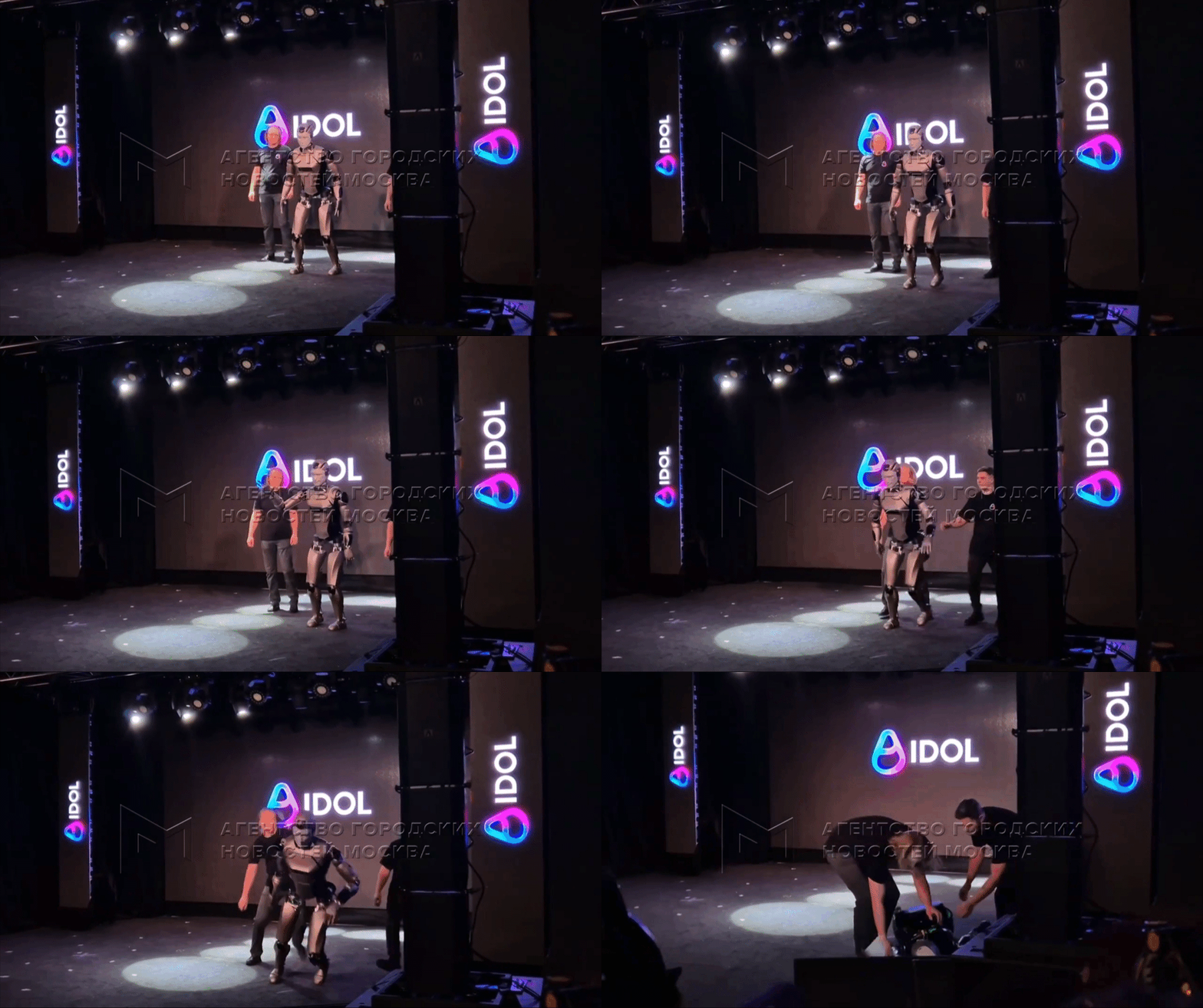
Bionic grace requires deep pockets… and deeper code.
German grocery chain REWE installed Circus SE’s CA-1 kitchen-in-glass, which features twin arms that plate bowls every 30 seconds, swap grippers magnetically, and even run a self-wash cycle. Early tasters called the curry “great” and the pasta “could have been a bit warmer,” which, honestly, beats most break-room microwaves.
Predictive software slashes food waste, labor drops up to 95%, and the café’s new staffer never clocks out or calls in sick.
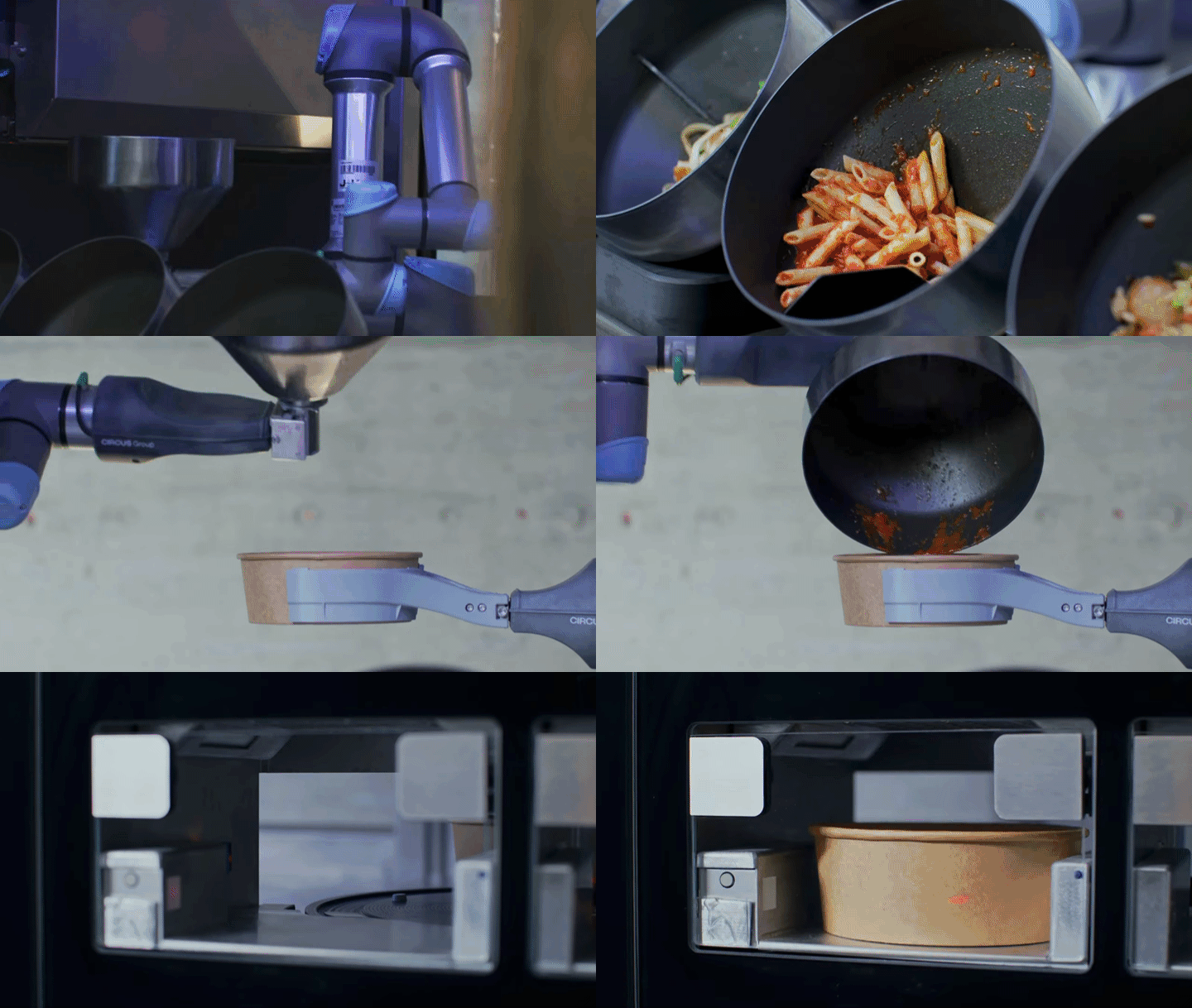
XPeng’s IRON robot isn’t the only “Iron” in recent news, but this one is all brain.
Google’s seventh-generation Ironwood TPU plants liquid-cooled silicon trees across a 9.6 Tbps fabric, weaving 9,216 chips into a superpod that spits out 42.5 exaflops of FP8 muscle, or four times last year’s Trillium. Anthropic already booked a cool million chips, locking in a gigawatt of capacity by 2026 to keep Claude well-fed.
Supporting cast: Axion Arm VMs promise twice the price-performance over x86 for prep workloads, and C4A Metal offers bare-metal Arm for auto and Android devs. Together they form Google’s “AI Hypercomputer,” boasting a 353% three-year ROI for early adopters, while Project Suncatcher plots solar-powered TPU clusters in orbit by 2027.
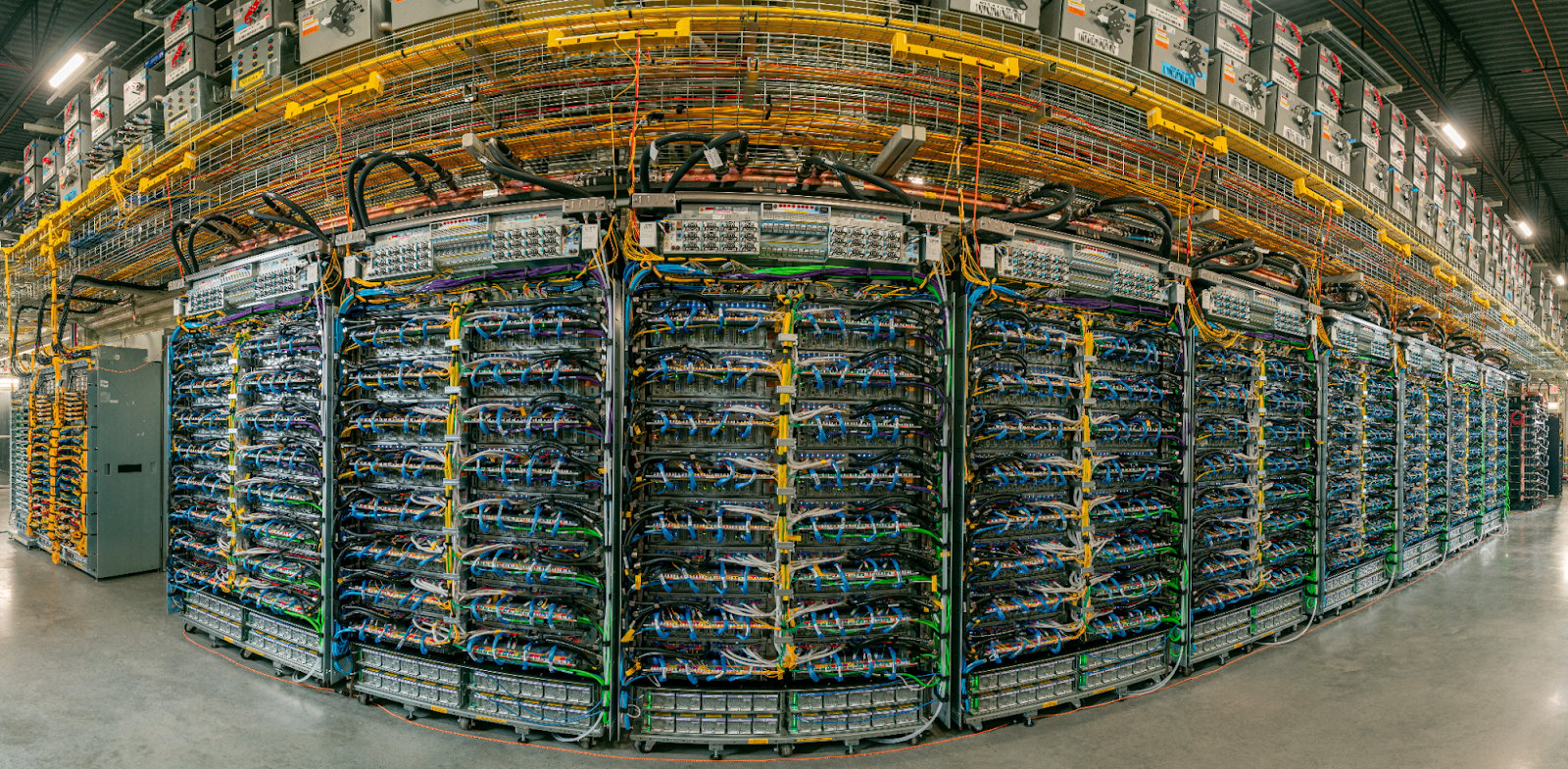
Translation: training was yesterday’s buzzword; inference is today’s power play. After all, a robot army needs a “hypercomputer” for a command center.
Outplacement firm Challenger, Gray & Christmas tallied 153,074 job cuts in October, hoisting 2025’s total above 1.1 million. That’s up 65% year-over-year. Big names include Amazon, UPS, Meta, Paramount Skydance, and GM.
AI restructuring drove 31,000 of those pink slips, second only to generic “cost-cutting.” Tech and warehousing took the heaviest blows, while seasonal hiring sits at its lowest since 2012. And November is already adding to the pain, with new cuts announced by IBM, Oracle, Salesforce, Microsoft, and Wells Fargo, and more expected from Verizon.
Résumé tip: sprinkle “collaborates with robots”… and then maybe learn how to reboot one.
Want these tech intel jolts delivered daily? Subscribe to Daily Tech Insider and stay a step ahead of the bots—before they start writing your emails for you.
Justin Meyers previously ran Gadget Hacks, Null Byte, Next Reality, and WonderHowTo under TechnologyAdvice. With a deep focus on Apple devices and software, he specializes in creating in-depth guides and uncovering hidden features across iOS, iPadOS, macOS, and beyond to help users get the most out of their gadgets. A recognized Apple expert with over a decade in the field, he also has a strong background in Android, cybersecurity (white hat hacking), and emerging tech (AR, VR, MR, AI, etc.), delivering clear and practical insights for tech enthusiasts of all levels.

