


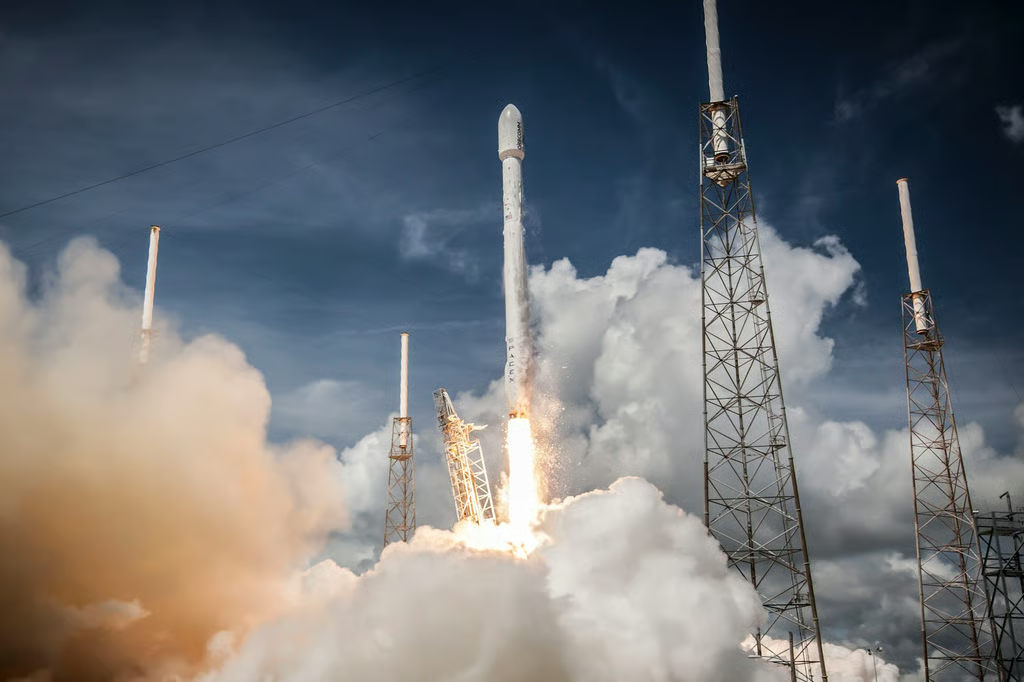
Google has put AI chips on a SpaceX rocket and into orbit, turning the idea of space-based data centers from a futuristic pitch into a real-world engineering test.
Google has begun testing whether the hardware behind its AI systems can survive and compute in orbit, launching four Tensor Processing Units (TPUs) aboard a SpaceX Falcon 9 as part of Project Suncatcher.
The refrigerator-sized satellite, called MVP and developed with Planet, launched Oct. 1 from California’s Vandenberg Space Force Base during SpaceX’s Transporter-18 rideshare mission. The experiment is not an attempt to operate a useful AI data center yet. Instead, Google wants to find out whether specialized AI chips can function reliably in one of the harshest computing environments possible.
The immediate goal is to measure how the TPUs perform under orbital radiation and thermal conditions. The broader project explores whether space-based AI infrastructure could eventually become practical and economically competitive. For IT leaders, the significance is whether orbital computing could eventually ease energy and capacity constraints on Earth.
The Earth problem Google is trying to escape
AI data centers are becoming increasingly demanding in their use of electricity, land and water. Google estimates that solar panels in a suitable orbit could be up to eight times as productive as panels on Earth, benefiting from near-continuous sunlight.
That creates an intriguing proposition: instead of continually expanding large data centers on the ground, some AI computing could eventually happen in orbit using solar power.
Matthew Weinzierl, author of Space to Grow, said, per Fast Company, “The costs of data centers on Earth are rising, while the costs of data centers in space will fall, and at some point those curves will cross.” But that point is far from certain.
Google has a much harder infrastructure problem in orbit
The first hurdle is heat. Space has no air to carry heat away from processors, forcing Google to use a specialized thermal system. The current design allows the chips to operate for roughly 15 minutes before they need to cool, according to Fast Company.
Radiation presents another risk. Google has already exposed its TPUs to radiation at UC Davis, simulating years of exposure before sending the hardware into orbit. Then comes networking. Google plans two more satellites in 2027 to test laser communications. Future orbital data centers would need fast links between satellites, while also keeping spacecraft close enough to communicate and far enough apart to reduce collision risks.
The bigger question is whether space can scale
This is where Suncatcher becomes more than a hardware experiment. A few chips in orbit are manageable. Scaling to large satellite constellations would introduce additional challenges, including launch costs, orbital debris, congestion, solar storms, and emissions from launches and reentries.
Researcher Juan A. Fraire told Fast Company that his research suggests orbital data centers would need roughly five to six years of operation to match the emissions profile of greener terrestrial facilities.
What this means for AI infrastructure
Google’s experiment could ultimately be less about replacing today’s data centers than creating another option for future AI workloads.
If cooling, communications, radiation protection and launch economics can be solved, orbital infrastructure could give AI companies access to energy and physical space that are difficult to obtain on Earth. If those problems prove too expensive or complex, the experiment will have demonstrated something equally useful: that abundant sunlight alone isn’t enough to make a space data center practical. For IT leaders, the milestones to watch are sustained computing performance, reliable satellite links, and evidence that total costs can compete with terrestrial infrastructure.
Read more: Google’s orbital experiment comes as power access limits expansion with Texas pausing new data-center grid approvals amid surging electricity requests.