


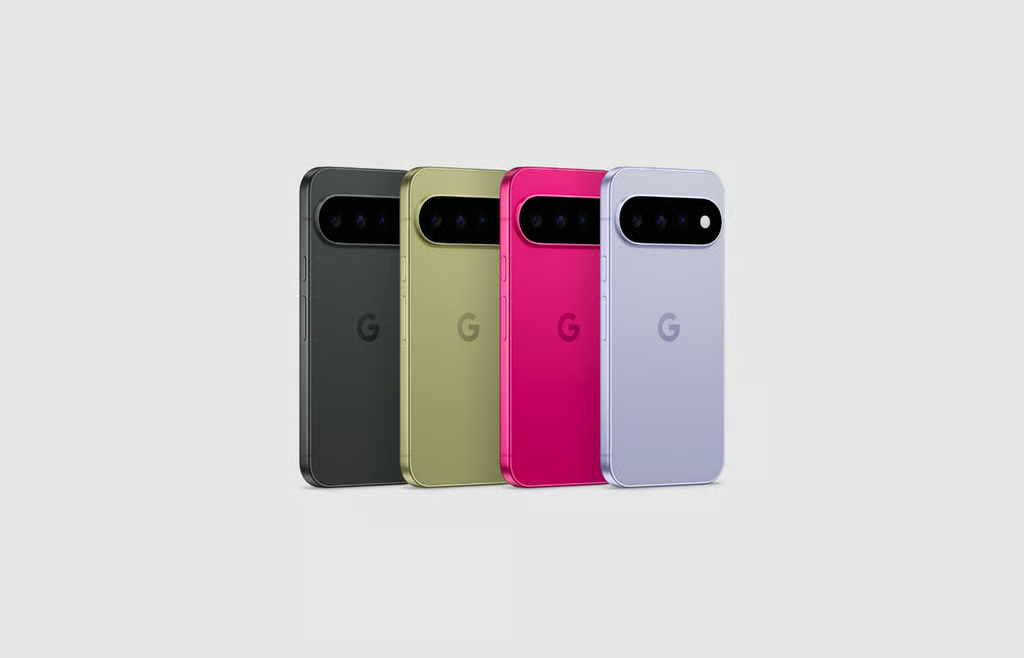
Google’s Pixel 11 lineup refreshes its flagship phones with new hardware, camera upgrades, and expanded Gemini features across Pixel 11, Pixel 11 Pro, and Pixel 11 Pro XL.
Choosing between them is where things get more interesting. Plenty is shared across the lineup, but each model has its own reasons to consider it depending on what you care about most in a phone.
This cheat sheet covers the key differences, pricing, availability, and which Pixel 11 model may suit you best.
Pixel 11, Pixel 11 Pro, and Pixel 11 Pro XL at a glance
| Size and weight | 152.8 × 72 × 8.6 mm; 197 g | 152.7 × 71.9 × 8.4 mm; 204 g | 162.7 × 76.5 × 8.5 mm; 226 g |
| Display | 6.3-inch Actua OLED; 1080 × 2424; 60–120Hz; up to 3,000 nits | 6.3-inch Super Actua LTPO OLED; 1280 × 2856; 1–120Hz; up to 3,600 nits | 6.8-inch Super Actua LTPO OLED; 1344 × 2992; 1–120Hz; up to 3,600 nits |
| Memory and storage | 2GB RAM; up to 512GB | 12GB or 16GB RAM; up to 1TB | 12GB or 16GB RAM; up to 1TB |
| Cameras | 48MP main, 13MP ultrawide, 10.8MP 5x telephoto; 10.5MP front; up to 30x Super Zoom | 50MP main, 48MP ultrawide, 48MP 5x telephoto; 42MP front; up to 120x Pro Zoom | Same camera system as Pixel 11 Pro |
| Battery and charging | 4,985mAh; up to 55% in about 30 minutes; 25W Pixelsnap | 4,850mAh; up to 55% in about 30 minutes; 25W Pixelsnap | 5,115mAh; up to 75% in about 30 minutes; 25W Pixelsnap |
| Connectivity | Wi-Fi 6E; Bluetooth 6; NFC | Wi-Fi 7; Bluetooth 6; NFC; UWB; Thread | Wi-Fi 7; Bluetooth 6; NFC; UWB; Thread |
Source: Google US Store.
Key features across the lineup
Design and display
A few physical differences can affect which Pixel 11 feels right in everyday use:
- Size and handling. Pixel 11 and Pixel 11 Pro are almost identical in size, and both have 6.3-inch displays. Pro is slightly heavier at 204 g, but the difference should be modest. Pixel 11 Pro XL moves to a 6.8-inch screen and a taller, wider body, giving you more room for maps, video, documents, and larger controls at the cost of taking up more space in your hand or pocket.
- Display. All three phones adjust their refresh rate automatically, but the Pro models can slow the screen much further when little is moving. That can reduce power use during activities such as reading or using the always-on display, while all three still reach 120Hz for smooth scrolling. The Pro screens also get brighter for easier viewing outdoors.
- Design and colors. Google has slimmed down the rear camera bar, giving all three phones a flatter profile. Pixel 11 comes in Frost, Pistachio, Hibiscus, and Obsidian, while Pixel 11 Pro and Pro XL are available in Canyon, Olive, Fog, and Obsidian.
Overall, the three phones share the same design language, with the Pro models adding more advanced screen hardware.
Performance, memory, and storage
Processor performance alone is not a reason to move up to a Pro model as all three phones use Tensor G6.
Memory and storage create more distinction between the configurations:
- Memory. Every model starts with 12GB of RAM. The 512GB and 1TB Pro configurations increase to 16GB. The extra memory gives you more room if you regularly keep several heavier apps running at once.
- Storage. All three start at 256GB. Pixel 11 goes up to 512GB, while the Pro models extend to 1TB. More capacity is worth considering if you keep lots of video, games, offline media, or work files directly on your phone.
Tensor G6 also works with Google’s Titan M3 security chip, protecting sensitive data and ensuring that the phone starts with trusted software.
Cameras
All three phones include a 5x telephoto camera, so you can photograph distant subjects without stepping up to a Pro model.

- Pixel 11 covers everyday photography well, including telephoto shots and up to 30x digital zoom.
- Pixel 11 Pro and Pro XL share the same upgraded camera system, with larger sensors for tougher lighting, a wider front camera for group shots, and extra video options such as Pro Stable Video and 8K recording through Video Boost.
- Across the lineup, Magic Capture and Camera Looks add tools for catching moving subjects and choosing a photo style before you shoot.
If camera quality is your main priority, the smaller Pixel 11 Pro gets the same camera hardware as Pro XL.
Battery and charging
Google gives all three phones a 30-plus-hour battery estimate, but your own day will have the final say. Factors such as navigation, video calls, games, camera use, screen brightness, and weak cellular reception can all change how quickly a phone runs down.
Pro XL is the better fit if short charging windows are common for you. It can recover more battery during a roughly 30-minute wired charge, handy when you realize you are low just before leaving home or between appointments.
Pixelsnap comes with every model. Google’s Qi2.2 magnetic system helps a compatible wireless charger line up correctly, while stands, grips, and other magnetic accessories can attach without a special magnetic case.
Software and AI
Pixel 11 phones share most of Google’s latest Gemini features below. HiLight, however, is available only on Pixel 11 Pro and Pro XL.
- Gemini Intelligence uses supported information from your phone to give more context-aware help across tasks.
- Rambler turns spoken thoughts into cleaner written text, handy when talking through a message or note is faster than typing it.
- Live Translate translates supported audio and video content in other languages.
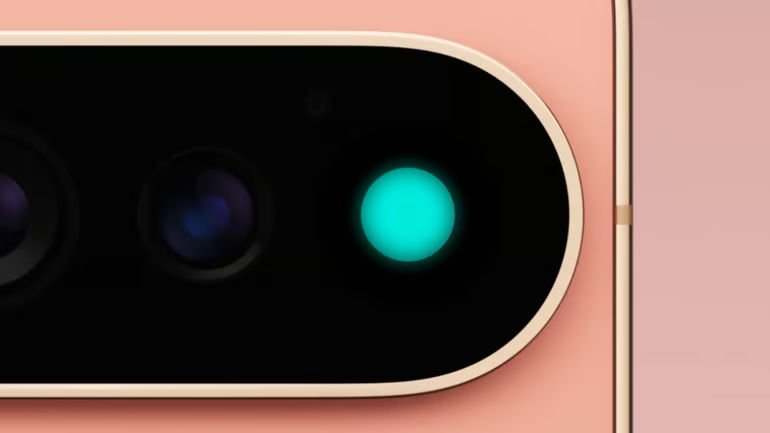
- HiLight uses colored lights around the rear camera for selected calls and Gemini activity while the phone is face down.
Feature availability varies by country, language, account, and age. Android 17 ships on the Pixel 11 lineup, and Google promises seven years of operating system, security, and Pixel Drop updates.
Price and availability
US pricing for the Pixel 11 lineup is as follows:
| Model | |||
|---|---|---|---|
| Pixel 11 | $899 | $1,019 | — |
| Pixel 11 Pro | $1,099 | $1,219 | $1,449 |
| Pixel 11 Pro XL | $1,299 | $1,419 | $1,649 |
Preorders opened last Aug. 12, 2026, and all three phones go on sale Aug. 20 through the Google Store and retail partners.
Choosing the right Pixel model
If you are still deciding, start with what you actually care about when you pick up your phone every day. You may find that the model that best suits you once you stop comparing every specification.
- Choose Pixel 11 if you want the main Pixel experience without paying for features you may rarely use. You still get the new processor, a telephoto camera, Pixelsnap, Gemini features, and the same long support window. If you mostly take everyday photos and do not need the Pro display or longer-range zoom, the standard model covers a lot.
- Choose Pixel 11 Pro if you want the better cameras without carrying a bigger phone. If you take a lot of photos, spend plenty of time outdoors, or want more memory in a higher-storage configuration, Pro comes with those upgrades while staying relatively compact.
- Choose Pixel 11 Pro XL if you want a large screen and less time plugged in. The extra room can be nicer for video, reading, editing photos, and larger controls. Quicker wired charging also helps if you tend to top up in short bursts. Pro XL also charges considerably faster, with Google claiming up to 15 hours of battery life after just 15 minutes plugged in.
If you are torn between the two Pro models, think about which size you would rather hold and carry every day. If you are choosing between Pixel 11 and Pixel 11 Pro, ask whether you need the brighter display, upgraded cameras, or extra memory for the apps and tasks you use most.
Read our comparison of Pixel Tag and AirTag 2 for the key differences that could decide which one you buy.