


Super Bowl LX wasn’t just about football. It was also a big stage for artificial intelligence, as tech companies used some of the game’s priciest ad slots to show how AI fits into everyday life.
From coding tools and chatbots to smart assistants and wearables, the commercials suggest the industry is moving past the hype and skepticism and is betting on mainstream AI adoption. With 30-second spots averaging about $8 million, companies like OpenAI, Anthropic, Google, Amazon, and Meta used the broadcast to explain what their technology does and why it matters to consumers and businesses alike.
OpenAI highlights builders over bots
OpenAI ran a 60-second commercial during NBC’s Super Bowl LX broadcast that focused on people rather than algorithms. The spot showed hands sketching, writing, designing, and guiding robotic arms, ending with the line “You Can Just Build Things” and a reference to Codex, OpenAI’s software-building tool.
“We shot the ads with real people, on film, who use our tools,” OpenAI chief marketing officer Kate Rouch said in an interview with Variety. “The core message is that people are actually the heroes. The result is a technology that extends what’s possible for people,” Rouch added.
Anthropic draws a hard line on advertising
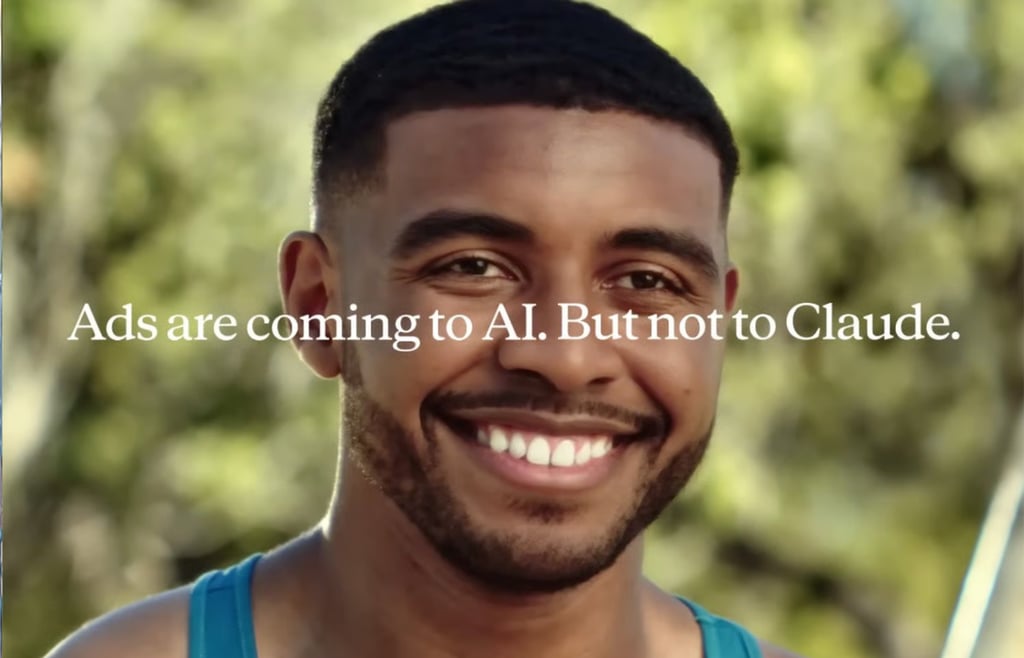
Anthropic used its Super Bowl ads to take a direct swipe at ad-supported AI models. Each commercial ended with the message, “Ads are coming to AI. But not to Claude,” showing that its chatbot is an alternative for users wary of AI’s commercial influence.
According to Variety, Anthropic’s research reported that the average consumer has “not locked in any choice” when it comes to their preferred AI provider. Anthropic’s brand marketing head, Andrew Stirk, said that “consumers are enjoying exploring what this technology can do, but the openness to switch is equally high.”
Google presents AI as a creative helper
Google’s Super Bowl ad for Gemini showed a mother and son using AI to reimagine layouts and designs for their new home. The commercial featured Nano Banana Pro, showing the pair upload photos of empty rooms and transform them into personalized spaces with simple text prompts.
Rather than spotlighting technical features, the ad emphasized familiarity and collaboration. TechCrunch noted that the approach reflects Google’s broader effort to integrate generative AI into everyday products and workflows without overwhelming users.
Amazon leans on humor to sell Alexa+
Amazon took a comedic approach with a Super Bowl ad starring Chris Hemsworth. TechCrunch said the spot played on common AI anxieties with a satirical “AI is out to get me” premise. Hemsworth humorously accuses Alexa+ of plotting against him, with escalating mishaps like the smart assistant closing the garage door on his head and shutting the pool cover mid-swim.
Beneath the dark comedy, the Amazon ad showcased Alexa+ as an upgraded assistant with enhanced capabilities for managing smart home devices and planning vacations. The new version officially launched to all US users on Wednesday after being available in early access for over a year.
Meta and Ring showcase applied AI
Meta used its airtime to promote Oakley-branded AI glasses designed for sports and action, featuring skydivers, mountain bikers, and celebrities like IShowSpeed and Spike Lee capturing epic moments hands-free.
TechCrunch explained that the glasses enabled slow-motion basketball dunks and even instant Instagram posts. The ad also doubled down on Meta’s focus on AI-powered wearables, following last year’s Super Bowl featuring Ray-Ban Meta glasses.
TechCrunch emphasized that Ring took a more practical approach with its “Search Party” feature, which uses AI to help reunite lost pets with their owners. The ad showed a girl searching for her dog by uploading a photo to the app, where AI identifies matches and taps into nearby Ring cameras and the user community to find missing pets.
For more insight into how AI is moving from experimentation to real-world use, see TechRepublic’s breakdown of enterprise AI adoption trends.