


Amazon wants Alexa to do more than hear you, and its new Echo devices give the assistant more ways to understand you.
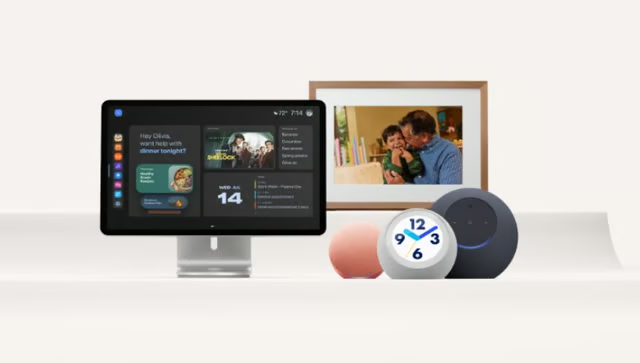
The company announced five new or upgraded Alexa-powered devices on Oct. 28, including a camera-equipped Echo Studio, a smart bedside clock, an AI-powered photo frame, an updated Echo Dot, and a redesigned 16-inch Echo Show.
Together, the products extend Alexa into visual assistance, sleep-aware alarms, photo management, and home monitoring, moving the assistant beyond the voice commands that helped establish the Echo product line.
The shift also reflects Amazon’s broader effort to make Alexa more useful across everyday activities rather than limiting it to isolated requests such as playing music or setting timers.
Available features depend on the device and supported services. Certain capabilities require Alexa+, which is included with Prime. In the US, customers without Prime can subscribe for $19.99 per month.
Alexa is getting eyes, not just ears
Amazon is giving Alexa a new way to understand the world around its users by adding a camera to its Echo Studio speaker, letting the assistant respond to visual information, not just spoken commands.
The new Echo Studio with Home Camera can recognize objects users show it, such as a cereal box, and help them reorder products or explain board-game rules. Its camera also supports Live View through the Alexa app, allowing users to check on their homes while away. At the same time, Amazon says the speaker’s audio system can adapt to the room and adjust volume as people move around.
The addition reflects a broader shift in how AI assistants can interact with people: instead of relying solely on what users say, they can use visual context to provide more relevant help.
More ways to manage the connected home
The new Echo Dot combines a smart speaker, a smart-home hub, and an extender for an existing eero Wi-Fi network in one compact device.
The Echo Dot runs on Amazon’s AZ3 chip, which includes an AI accelerator for on-device processing intended to improve voice detection and filter background noise. It also supports compatible lights, locks, and thermostats. At the same time, its built-in eero extender can add up to 1,000 square feet of coverage to an existing eero Wi-Fi network.
The rest of the lineup targets more specific household needs.
Amazon says the camera-free Echo Time uses optional sleep sensing to estimate when users are in lighter sleep and select a wake-up time within 10 to 60 minutes of the scheduled alarm. The Alexa Photo Frame uses Amazon Photos to intelligently display and select pictures.
Meanwhile, the redesigned Echo Show 16 pairs a 16-inch Full HD display with built-in Fire TV, customizable home screens for home activities, and a camera with night vision, positioning it as both an entertainment screen and a central dashboard for connected-home controls.
Pricing and availability
The new Echo Dot, with its range of abilities, has a price tag of $99.99; the Echo Studio with Home Camera is $249.99; Echo Time is $199.99; and the Alexa Photo Frame starts at $199.99.
The redesigned Echo Show 16 starts at $499.99, with a Nanomatte anti-glare display option priced at $569.99.
Amazon says Echo Dot, Echo Studio with Home Camera, Echo Time, and Alexa Photo Frame are available now. Echo Show 16 is available for preorder and will begin shipping later this year. Buyers should check device availability and Alexa+ support in their market before ordering.
What's hot at TechRepublic
- Blackpoint Cyber vs. Arctic Wolf: Which MDR Solution is Right for You?
- Why AWS Sellers Choose Deepgram Over Other Voice AI Tools
- SS&C Intralinks DealCentre AI vs. Datasite: Which platform is built for the future of dealmaking?
- SS&C Intralinks FundCentre AI vs. Juniper Square: Which platform better supports modern private markets fund managers?
- Verito vs. Rightworks: Which IT Provider Is Best for Your Firm?
What buyers should consider before bringing Alexa home
The useful starting point is which problem a new device would solve. Echo Dot combines several functions, but its Wi-Fi extension only adds value for buyers with an existing eero network. Someone who already has reliable coverage and a compatible smart-home hub should assess whether the speaker’s other changes justify replacing working hardware.
Camera-equipped models require a different decision. Echo Studio’s visual assistance and Echo Show 16’s Live View offer reasons to enable a camera, but buyers should consider what it could capture. In a home office, that could include work screens, documents, or conversations. Check employer policies before placing either device near confidential work.
Amazon provides controls to disable microphones and cameras. Buyers who want the Studio’s audio features without room monitoring can also consider the camera-free Echo Studio, which remains available for $219.99. Keeping a camera disabled is another option, although that reduces the value of paying for camera-dependent features.
Service access matters as much as hardware. Confirm that the features you want are supported in your market and check whether your existing Prime membership includes the required Alexa+ access. Echo Dot’s on-device processing should not be taken to mean that every Alexa interaction stays on the device.
For existing Echo owners, the strongest upgrade case is a recurring task their current setup cannot handle. Compare the total cost, compatibility requirements, and privacy settings against that task before buying. Combining several functions in one device is useful when those functions will actually be used.
Read more: If dedicated home monitoring is your priority, compare Amazon’s new Blink cameras, including their prices, 4K video options, and wireless-range limitations.