


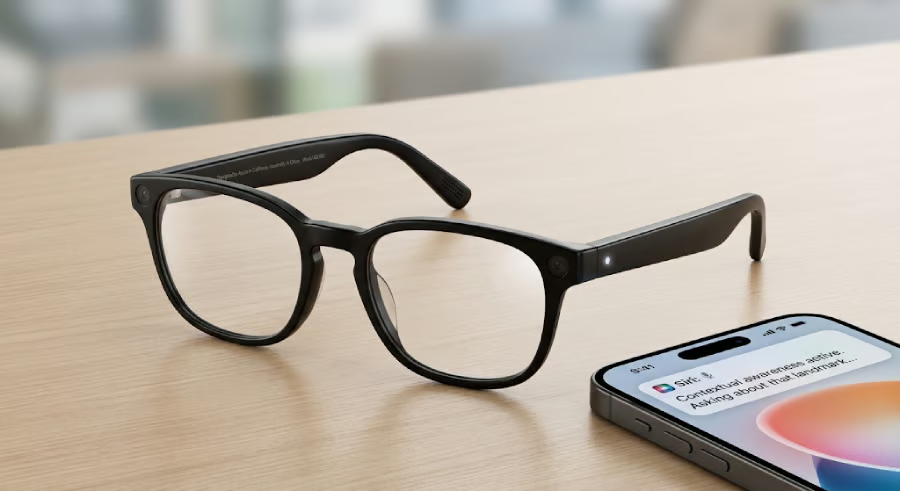
Apple’s next AI wearable may give Siri a view of your surroundings without adding another screen.
Chinese equipment supplier Quick Intelligent Equipment said during its Nov. 10 briefing on third-quarter results that it had participated in Apple AI glasses and new smart earphone projects.
According to a Securities Times report carried by iFeng, the supplier expects these initiatives to drive demand for its precision welding, assembly, and machine-vision inspection tools.
Apple is reportedly exploring screen-free wearables alongside its broader wearable redesign efforts. Separate reporting points to a possible late-2027 launch for its first smart glasses, but the supplier’s comments do not establish a launch date for either product.
| Project | What the supplier reportedly disclosed | What remains unconfirmed |
|---|---|---|
| AI glasses | Participation in an Apple AI glasses project | Final specifications, production volumes, and launch date |
| New smart earphones | Participation in an Apple smart earphone project | AirPods branding, cameras, final features, and launch date |
The supplier’s reported comments do not confirm cameras in the earphones. Separate reporting on software references and a leaked demonstration has linked Apple’s earbud development to Visual Intelligence, but the supplier statement does not establish which model is involved.
What the supplier’s comments leave unanswered
Participation in a development project does not establish that a device is ready for sale. The reported disclosure leaves several important details unanswered:
- Production status: It does not establish whether either product has entered mass production.
- Commercial commitments: It does not disclose Apple-related contract values or production volumes.
- Product readiness: It provides no confirmed specifications, battery-life figures, or launch dates.
What IT teams should check before allowing AI wearables
For IT teams, the practical question is how visual AI would operate around workplace information. If these devices reach market with cameras, their usefulness would need to be weighed against what they could capture from screens, documents, meetings, and restricted spaces.
Apple’s device management guidance describes restrictions administrators can apply to enrolled Apple devices. Businesses should not assume those controls would extend to the rumored wearables. Before approving a pilot, organizations should seek answers in four areas:
- Sensor activation: When would cameras and microphones activate, and how would wearers and nearby people know?
- Data handling: Would information be processed on the wearable, a paired iPhone, or a cloud service? What would be stored, and could it be deleted?
- Administrative controls: Could IT restrict capture or AI features, manage business accounts, and enforce workplace policies?
- Practical compatibility: Which phones, operating systems, languages, and network connections would supported features require?
Any pilot should begin with a defined task, such as retrieving hands-free instructions in an approved setting. Teams could then assess accuracy, battery life, comfort, and whether the device saves enough time to justify its cost.
Read more: Camera-equipped wearables are only one approach to hands-free AI. Explore how Meta’s reported camera-free smart glasses could change the workplace privacy equation.