
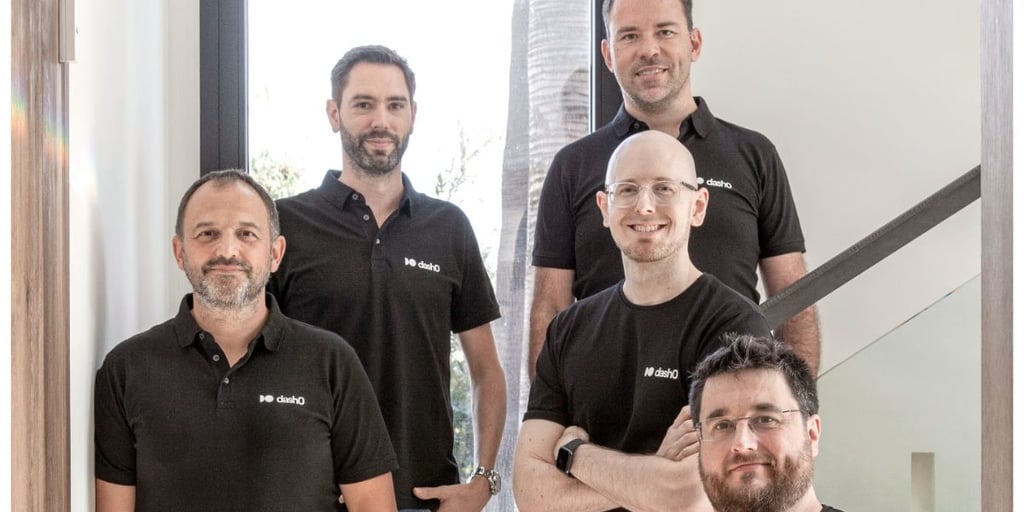


Dash0 announced that it raised $35 million in a Series A funding round co-led by Accel and Cherry Ventures, with participation from DIG Ventures.
The New York–based startup is developing what it calls the first AI-native observability platform. It is centered on its new product, Agent0, an AI operations copilot designed to help software engineers and operators detect, diagnose, and resolve infrastructure issues more quickly.
The funding will accelerate product development and international growth as Dash0 seeks to bring automation and intelligence to an area that has long been criticized for its complexity and high costs.
AI-native observability moves from insight to action
Dash0’s platform is built on its Spam filter, Ingest, Filter, and Triage (SIFT) framework, which the company said already serves hundreds of customers. By combining this foundation with OpenTelemetry and other industry standards, Agent0 aims to transform observability from a reactive process into a proactive system that can act autonomously on insights.
Chief Executive Officer Mirko Novakovic said the goal is to address long-standing pain points. He noted that observability has become “too noisy, too expensive, and too complex.” He added that Agent0 represents a shift toward a system that can enrich data, surface root causes, and help users resolve issues in real time.
Dash0 said the new capital will be used to expand research and development and grow its presence in the US and Europe.
Investor confidence underscores a fast-growing market
Accel partner Harry Nelis said Dash0’s rapid adoption, more than 270 customers within nine months of launch, and its AI-driven approach position the company as a contender in the next wave of observability platforms. Cherry Ventures partner Christian Meermann said the team’s experience and the integration of AI at the core of its design demonstrate a forward-looking model for how monitoring and troubleshooting will work in the AI era.
The funding comes at a time when observability is increasingly central to modern DevOps and site reliability engineering practices. As organizations deploy complex, distributed applications, the ability to automatically detect and act on performance data has become essential.
Dash0’s approach suggests a broader shift in the market toward embedding AI copilots directly into operational workflows rather than using them as separate analytical tools.
Why this matters for enterprise IT
Dash0’s funding round reflects growing investor belief that AI will fundamentally change how companies manage application performance and infrastructure reliability.
If Agent0 delivers on its promise, it could lower operational costs and reduce mean time to resolution by automating many tasks currently handled manually by SRE teams. For enterprise leaders, this represents an accelerating shift toward autonomous operations — a model in which systems both monitor and repair themselves with minimal human oversight.
More must-read AI coverage
- SS&C Intralinks DealCentre AI vs. Datasite: Which platform is built for the future of dealmaking?
- SS&C Intralinks FundCentre AI vs. Juniper Square: Which platform better supports modern private markets fund managers?
- Why Data, Not Models, Determines AI Success
- The Rise of the AI-Native Factory: How Physical AI Is Transforming Manufacturing
The bigger picture
Dash0’s Series A marks a milestone in the evolution of observability technology. By embedding intelligence at the core of system monitoring, the company joins a cohort of startups seeking to redefine how infrastructure is managed in an AI-centric era.
The challenge ahead will be turning early traction into long-term differentiation as established players add similar AI capabilities. Still, Dash0’s funding signals continued momentum in AI infrastructure software, a space where innovation is now moving from dashboards and alerts to autonomous action.