


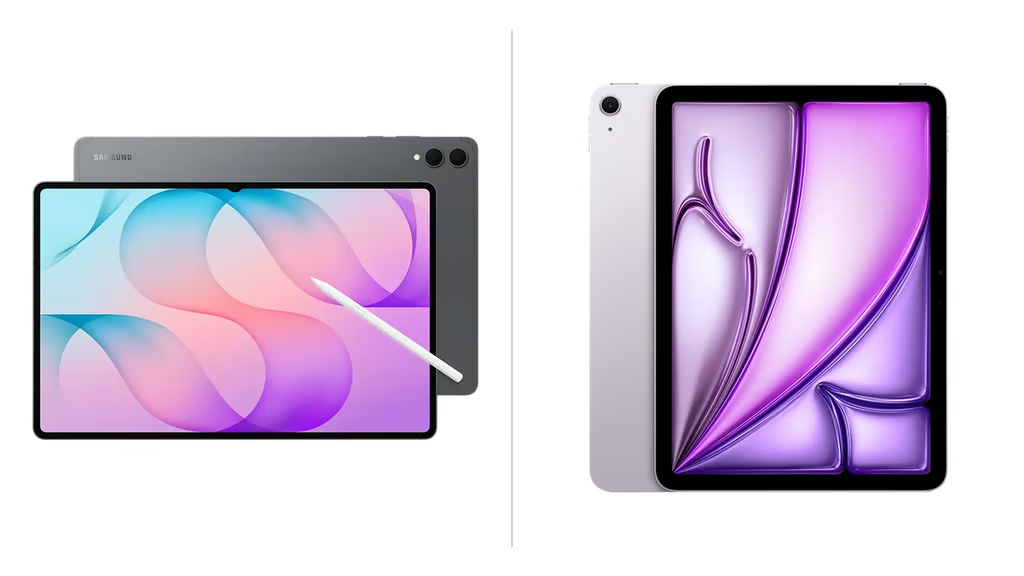
A tablet can handle emails, video calls, and documents. Replacing a laptop for a full workday is a much harder test.
Samsung is making that case with its Galaxy Tab S12+, which became available in the United States on October 7, 2026. Starting at $1,199.99, the Android tablet brings an included S Pen, expandable storage, and desktop-style multitasking to a market where Apple’s 13-inch iPad Air M4 offers an alternative at a lower price.
The two tablets take different approaches to getting work done. Samsung emphasizes flexible window arrangements, while Apple pairs its M4 processor with improved iPadOS multitasking. The question is which delivers a better working experience — and whether Samsung’s extra features justify the higher cost.
How we compared them: We evaluated US pricing, manufacturer specifications, multitasking capabilities, storage, accessories, and published performance information. Recommendations prioritize business workflows and total setup costs. Without matched head-to-head testing, neither tablet can be declared the overall performance winner.
Multitasking and performance
Samsung’s Galaxy Tab S12+ launch details confirm a 12.6-inch Dynamic AMOLED 2X display, Android 17 with One UI 9, and an included S Pen. The tablet uses a MediaTek Dimensity 9500 processor with 12GB of RAM.
Samsung’s Multi Window tools support split-screen applications, while its updated desktop-style interface supports organizing work across an external display. The experience differs from earlier versions of Samsung DeX, which also powers compatible Android desktop-style setups.
Apple’s iPadOS 26 multitasking system supports resizable windows, tiling, Stage Manager, and external displays. Users can arrange documents, email, and other applications across available screens.
The M4 iPad Air also has 12GB of unified memory. Apple reports performance improvements of up to 30% over the previous M3 model, but that does not establish an advantage over Samsung’s processor.
Both offer capable multitasking tools, although their interfaces and application ecosystems differ. Professionals should verify that their essential software supports the workflows they intend to use.
Storage, accessories, and cost
The tablets differ most in display technology, expandable storage, and accessory costs.
| Feature | Galaxy Tab S12+ | 13-inch iPad Air M4 |
|---|---|---|
| US price, 256GB Wi-Fi | $1,199.99 | $1,049 |
| Processor | Dimensity 9500 | Apple M4 |
| Memory | 12GB | 12GB |
| Display | 12.6-inch AMOLED, 120Hz | 13-inch Liquid Retina LCD, 60Hz |
| Storage options | 256GB, 512GB | 128GB to 1TB |
| Expandable storage | microSD up to 2TB | None |
| Stylus | S Pen included | Apple Pencil sold separately |
| Keyboard | Optional | Optional Magic Keyboard |
| Water and dust resistance | IP68 | No published IP rating |
US list prices as of October 9, 2026, before promotions. Apple’s 13-inch iPad Air specifications confirm its storage options, display, and hardware features.
Samsung’s 120Hz AMOLED panel offers smoother scrolling and pen interaction, while Apple’s slightly larger LCD provides more screen space. Samsung also supports microSD cards up to 2TB, giving users additional local storage without upgrading the tablet.
Accessories narrow the cost difference. Samsung’s Pro Keyboard lists for $349.99, bringing its tablet-and-keyboard setup to $1,549.98, with the S Pen included. Apple’s 13-inch Magic Keyboard costs $319, while its Pencil Pro costs $129. Adding both brings the iPad Air package to $1,497, or $52.98 less than Samsung’s comparable setup.
Buyers requiring full desktop applications can also explore Windows detachable alternatives. Those with simpler needs may find sufficient functionality among tablets under $500.
Samsung offers expandable storage, an included stylus, and a 120Hz AMOLED display for a higher price. Apple’s iPad Air M4 costs less, even with the Magic Keyboard and Pencil Pro added. For business deployments, application compatibility and device-management requirements should ultimately determine the purchase.
Also read: For buyers considering more powerful models, the Galaxy Tab S12 Ultra and iPad Pro M5 comparison examines the performance, display, and accessory trade-offs of both companies’ premium tablets.