

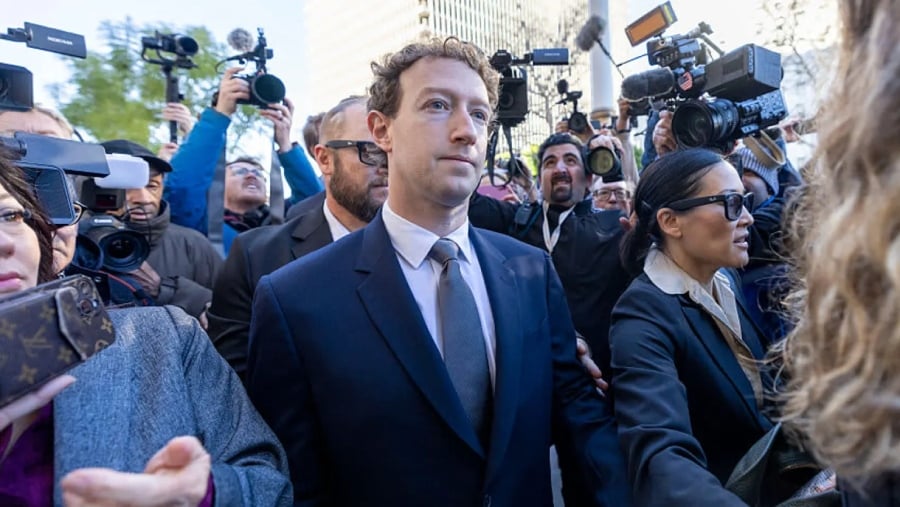
Meta CEO Mark Zuckerberg appeared in a Los Angeles court on Wednesday and defended against claims that Instagram is designed to harm children, in a landmark case over whether social media is addictive.
The trial centers on a 20-year-old plaintiff known in legal filings as KGM and her mother, Karen, who allege that KGM’s social media use began when she was 10, and led to “dangerous dependency on [the social media companies’ platforms], anxiety, depression, self-harm, and body dysmorphia.”
Google’s YouTube is also a defendant. TikTok and Snapchat, which were also named in the lawsuit, settled shortly before the trial was scheduled to start. Terms of the settlements were not disclosed.
An escape for mental health struggles
Earlier, in his opening statement, Paul Schmidt, one of Meta’s attorneys, said the company does not dispute that KGM experienced mental health struggles, but maintained that Instagram did not play a significant role in them.
He pointed to medical records that showed KGM had a chaotic home life, and, along with an attorney representing YouTube, argued that she turned to their platforms to escape her mental health struggles.
A sustainable community
Zuckerberg told the court he is focused on building a “sustainable community,” in response to a question about whether Meta wants people to be addicted to its social media platforms, NBC News reported.
“If you do something that’s not good for people, maybe they’ll spend more time [on Instagram] short term, but if they’re not happy with it, they’re not going to use it over time,’’ Zuckerberg said.
Historically, social media platforms have largely been protected by a provision added to the Communications Act of 1934 that states internet companies are not liable for content users post.
The plaintiff’s attorney, Mark Lanier, drilled Zuckerberg about a comment he made during a congressional hearing, where he said Instagram employees are not given goals to incentivize people to spend more time on Instagram.
Lanier presented internal documents that seemed to contradict that statement, according to the Associated Press. In response, Zuckerberg acknowledged that employees were once given time goals, but he and other company officials decided to back off on that. Instead, he said he believes people are more likely to use something if they find value in it.
What's hot at TechRepublic
- Blackpoint Cyber vs. Arctic Wolf: Which MDR Solution is Right for You?
- Why AWS Sellers Choose Deepgram Over Other Voice AI Tools
- SS&C Intralinks DealCentre AI vs. Datasite: Which platform is built for the future of dealmaking?
- SS&C Intralinks FundCentre AI vs. Juniper Square: Which platform better supports modern private markets fund managers?
- Verito vs. Rightworks: Which IT Provider Is Best for Your Firm?
Instagram’s age restrictions
Lanier spent a good amount of time questioning Zuckerberg on the company’s age verification policies.
After a lot of back and forth, Zuckerberg said, “I don’t see why this is so complicated,” and reiterated that users under 13 are not allowed to use Instagram, according to the company’s policy. He also said that officials work to flag users who have lied about their ages to bypass restrictions.
Zuckerberg’s testimony comes a week after that of Adam Mosseri, the CEO of Instagram, who said in the courtroom that he doesn’t believe people can be clinically addicted to social media platforms. Mosseri claimed that Instagram works hard to protect young people using the platform, and said it’s “not good for the company, over the long run, to make decisions that profit for us but are poor for people’s well-being.”
The case is being closely watched, and the outcome could impact how thousands of similar suits brought against social media giants play out.
“A trial like this one will hopefully uncover the disconnect between what companies say publicly to drive up business and engagement and what is actually going on behind the scenes,” UCLA law professor and tech justice attorney Melodi Dinçer told CBS News senior business and technology correspondent Jo Ling Kent.
Also read: Meta and YouTube are still facing trial pressure even after Snap settled in the broader social media addiction lawsuit.