


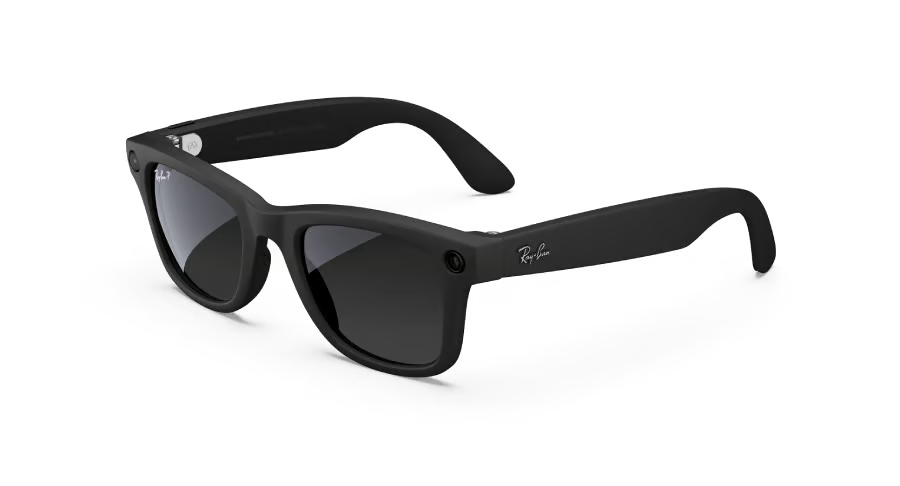
Courts across England and Wales will no longer allow Meta smart glasses inside court buildings, with security staff instructed to confiscate the devices on entry and return them when visitors leave.
The ban was introduced by His Majesty’s Courts & Tribunals Service (HMCTS), which oversees criminal, civil and family courts throughout England and Wales. The move follows a similar decision announced last month by New York’s court system.
“There are clear restrictions on taking images or videos within courts and tribunals which is why the use of Meta glasses is prohibited,” an HMCTS spokesperson told The Guardian.
Taking unauthorized images or video inside court buildings in England and Wales is prohibited and can result in legal penalties, including contempt of court proceedings. Smartphones remain permitted, provided they are not used to record hearings, but HMCTS is not extending the same exception to smart glasses because the glasses can record while being worn.
The policy comes amid growing scrutiny of wearable cameras in public spaces. Meta’s Ray-Ban smart glasses can record photos and video while being worn, raising concerns that court proceedings, witnesses or jurors could be filmed without obvious signs that recording is taking place.
According to The Guardian, visitors who bring Meta glasses into court buildings will be required to surrender them before entering.
The issue has already surfaced in a UK courtroom. Earlier this year, a claimant in a High Court case was accused of using smart glasses to receive “coaching” while giving evidence during cross-examination. He denied the allegation and said the glasses were not connected to his phone.
What's hot at TechRepublic
- Blackpoint Cyber vs. Arctic Wolf: Which MDR Solution is Right for You?
- Why AWS Sellers Choose Deepgram Over Other Voice AI Tools
- SS&C Intralinks DealCentre AI vs. Datasite: Which platform is built for the future of dealmaking?
- SS&C Intralinks FundCentre AI vs. Juniper Square: Which platform better supports modern private markets fund managers?
- Verito vs. Rightworks: Which IT Provider Is Best for Your Firm?
A wider backlash against smart glasses
This judicial crackdown is part of a much wider societal pushback. Venues ranging from pubs to high-end restaurants and theaters have banned the glasses over privacy concerns — earning them the unflattering moniker of “pervert glasses” in the UK.
Meta sold roughly 7 million pairs of these glasses last year, suggesting the device is moving from a niche gadget to a mass-market accessory. Yet the court bans reveal a critical business and consumer tradeoff: the glasses’ core utility—seamless, hands-free recording—directly conflicts with the social and legal need for ambient consent.
The company counters that a pulsing LED light activates during recording and that tamper-detection technology prevents users from covering it. But for courts, relying on a small light to enforce contempt law is a non-starter. The risk of unauthorized recordings of proceedings, witnesses or jurors outweighs the utility of the hardware in court.
For consumers, this means wearable tech faces a fragmentation problem. What is perfectly acceptable in a public park may be illegal or confiscated in a pub, theater, or courthouse. The biggest risk for Meta is institutional inertia: if the world’s busiest legal systems treat your product like a covert surveillance tool rather than a fashion accessory, the hardware hurdle for mainstream acceptance grows significantly higher.
Read more: New York’s court system introduced similar restrictions to prevent smart glasses from being used to record proceedings discreetly.