


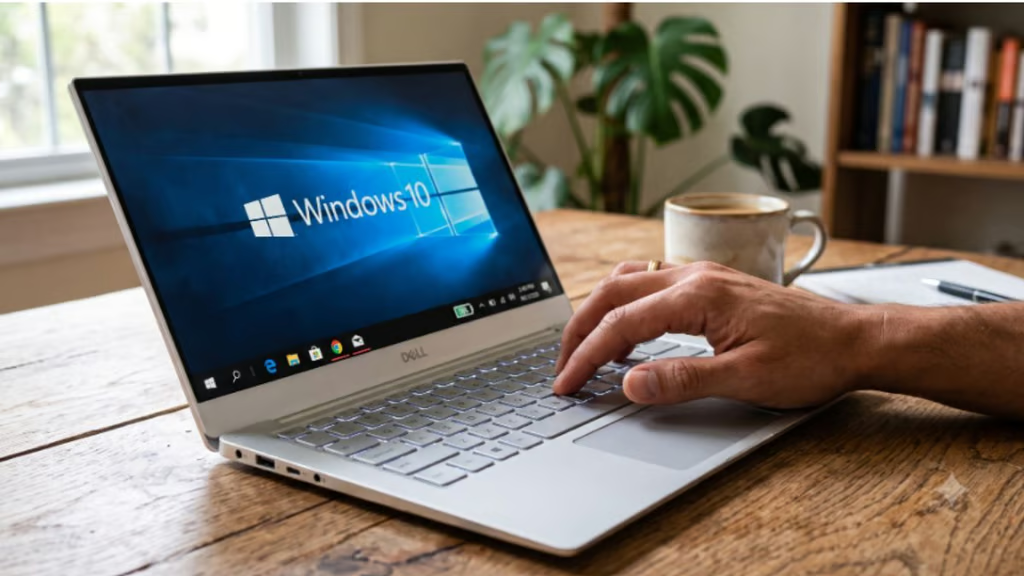
Windows 10 users just got more breathing room.
Microsoft has extended its Windows 10 Extended Security Updates program for personal devices by another year, moving coverage to October 12, 2027. The change gives consumers more time to move to Windows 11 or buy a new PC while still receiving critical security patches.
It also highlights a stubborn upgrade problem: many users and small businesses remain on Windows 10 due to hardware requirements, device costs, and slower PC replacement cycles.
Windows 10 gets another year of security updates
BleepingComputer reported that Microsoft quietly updated its Windows 10 ESU documentation and added an editor’s note to a Windows Experience Blog post confirming the new date.
“Coverage will now be available through October 12, 2027. This gives customers more time and flexibility to find the best PC for their needs while keeping them protected,” Microsoft told BleepingComputer.
Microsoft ended regular Windows 10 support on October 14, 2025. After that date, the company stopped providing standard technical support, feature updates, and security updates for most operating system editions.
The ESU program was originally intended to provide consumers with one extra year of critical security patches, ending in October 2026. The updated support language now says users can enroll until October 12, 2027. People already enrolled do not need to take any action, as their coverage will continue automatically.
PCMag said that users can enroll by paying $30, redeeming 1,000 Microsoft Rewards points, or syncing Windows Backup to Microsoft OneDrive. The OneDrive option may require extra storage because free accounts include 5GB by default.
Why Windows 10 still has 26% of the Windows market
The extension comes as Windows 10 still holds a large share of the PC market. PCMag cited StatCounter data showing Windows 11 at 71.69% of the worldwide Windows market in May 2026, while Windows 10 remained at 26.36%.
Ars Technica noted that Windows 11’s hardware requirements have slowed upgrades because some older PCs cannot move to the newer operating system without replacement. Windows 11 requires specific CPU support and a Trusted Platform Module, which left some otherwise usable devices behind.
Cost is another factor. Higher device prices can make some consumers and small businesses more likely to delay replacement purchases, especially when their current Windows 10 PCs still work.
More Microsoft news
- Inside Microsoft’s Real-Time War Against Cybersecurity Threats
- Project Ire: Microsoft Tests AI That Autonomously Detects Malware
- Microsoft Targets ‘Critical AI Talent’ from Meta to Dominate Next AI Breakthroughs
- Windows 10 Support Ends Soon, Though Extended Security Updates Offers Are Available
What the extension changes
The extension helps reduce immediate security risk for personal Windows 10 devices, especially for users whose PCs cannot upgrade to Windows 11. It gives consumers more time to check device eligibility, compare ESU enrollment options, and decide whether to keep using an older PC or replace it.
The tradeoff is that the extension may also slow Windows 11 adoption.
Users who receive another year of security patches may feel less urgency to upgrade, even though Windows 10 is still approaching the end of its supported life.
For businesses, the extension should not be treated as a permanent reprieve. Microsoft’s free ESU extension applies to personal devices, not managed business PCs joined to Active Directory, Microsoft Entra, or mobile device management systems.
Technology teams should review which devices cannot move to Windows 11, estimate replacement costs, and decide whether paid enterprise ESU coverage is worth it while they phase out older hardware. Personal users should also check whether their PC meets Windows 11 requirements and compare the ESU enrollment options before assuming the extension is the cheapest path.
Also read: Windows 11 26H2 is on the way, and Microsoft has shared new details on what users can expect.