


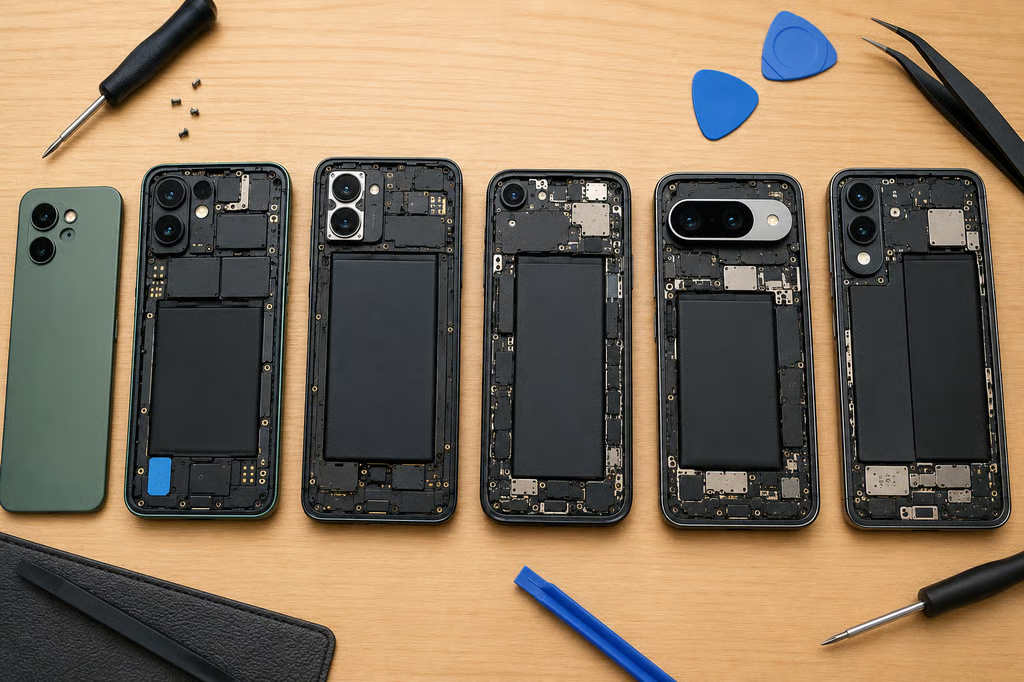
A phone becomes expensive to own when a worn battery, cracked screen, or damaged charging port turns into a complicated repair.
In 2026, some manufacturers make those jobs considerably easier, but repairability still varies widely between models.
Fairphone has centered its phones on modular, owner-replaceable hardware for more than a decade. HMD has adopted similarly repair-friendly designs, while Apple and Google have made common repairs easier on some mainstream models.
For this comparison, we prioritized current phones with independent iFixit repairability scores, available parts or repair documentation, and practical access to components such as batteries, displays, and charging ports.
Most repairable phones at a glance
| Phone | iFixit score | Best for | Main drawback |
|---|---|---|---|
| Fairphone Gen. 6+ | Gen. 6 design: 10/10 | Most replaceable components | Limited availability compared with major brands |
| HMD Skyline | 9/10 | Easier DIY repairs | Shorter software support |
| iPhone 17e | 7/10 provisional | Apple buyers | USB-C repair remains difficult |
| Google Pixel 10 | 6/10 provisional | Android buyers | Display still relies heavily on adhesive |
iFixit changes its scoring methodology over time, so the scores are useful indicators rather than perfectly standardized measurements across every phone generation.
Fairphone Gen. 6+ offers the most modular design
The Fairphone Gen. 6+ keeps the modular construction of the Gen. 6, which earned 10/10 in an iFixit teardown.
Owners can replace 12 modules, including the battery, display, cameras, and USB-C port. The battery and screen avoid adhesive, and Fairphone sells replacement parts directly.
The Gen. 6+ also carries a five-year warranty and software support through 2033. That combination addresses both sides of device longevity: replacing worn hardware and keeping the phone supported after the repair.
HMD Skyline also performs strongly on hardware repairability. iFixit gave it 9/10, citing its screw-assisted opening mechanism, replaceable display, accessible battery, and modular charging port.
Its shorter software-support period is the main trade-off. Buyers planning to keep a phone for several years should compare repairability with current software support windows before choosing a model.
iPhone 17e and Pixel 10 bring easier repairs to major brands
The iPhone 17e received a provisional 7/10 from iFixit. Its dual-entry design lets technicians reach internal components from either side, while Apple’s electrically releasable battery adhesive makes battery replacement easier.
Apple also publishes repair manuals and sells replacement parts. The USB-C port remains a more involved repair because several components must be removed to reach it.
Google’s Pixel 10 received a provisional 6/10. Its back panel can be removed without heat, battery removal is easier than on previous Pixels, and the USB-C board is replaceable.
The display still relies heavily on adhesive, limiting the Pixel’s score. Google offsets some of that hardware complexity with seven years of OS, security, and Pixel Drop updates.
Samsung’s self-repair program does not eliminate hardware complexity
Samsung’s US Self-Repair program provides genuine parts, tools, and documentation for supported Galaxy phones. One UI 9 is also making repair support easier to access from the device.
Recent Galaxy hardware remains more difficult to work on than the highest-scoring phones in this comparison. The Galaxy S25 Edge received a provisional 5/10 from iFixit despite improvements to battery removal and a modular USB-C port.
Its display and back cover still rely heavily on adhesive. Samsung therefore offers stronger access to DIY repair resources than its hardware repairability score alone might suggest.
An independent iFixit score for the Galaxy S26 series was not available when this article was written, so we have not ranked those models alongside independently tested phones.
Which repairable phone should you buy?
The Fairphone Gen. 6+ offers the most repair-friendly hardware in this group, with 12 replaceable modules, readily available spare parts, and software support through 2033.
HMD Skyline provides similarly accessible hardware but a shorter software-support period. The iPhone 17e is the strongest option here for Apple buyers, while Pixel 10 combines improved repair access with seven years of updates.
For long-term ownership, we recommend checking four things before buying: whether the battery and display can be replaced without excessive adhesive, whether high-wear components such as the charging port are modular, whether spare parts and manuals are available, and how long software updates will continue.
Also read: Samsung is reportedly exploring self-healing display glass for the Galaxy S27 Ultra, which could reduce surface damage without necessarily making the phone easier to repair.