
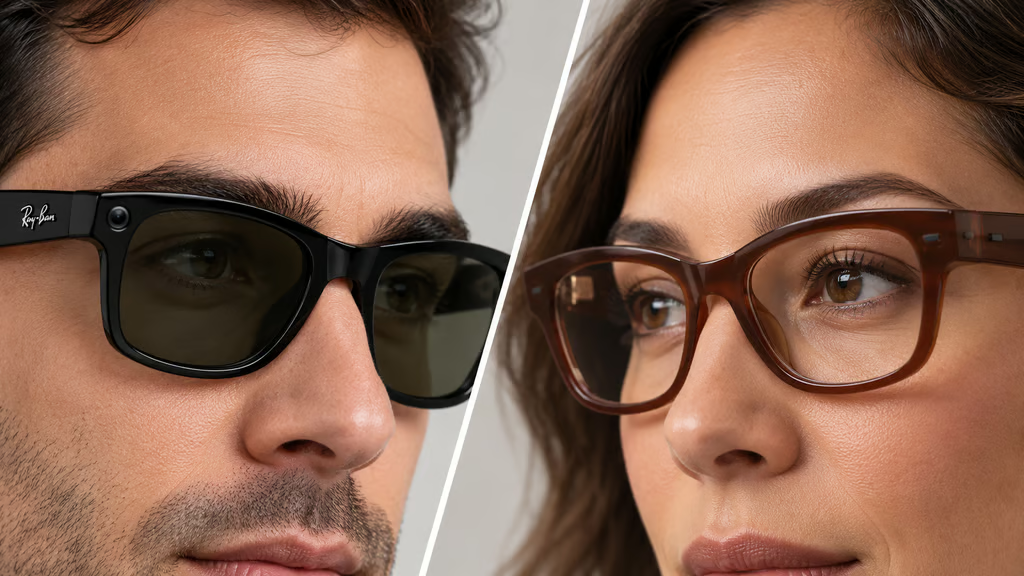


Smart glasses are getting better at listening, but that does not mean they are equally good at helping you hear. Ray-Ban Meta Gen 3 packs six microphones and improved open-ear audio, while Nuance Audio Plus was designed specifically around hearing assistance.
The difference became clearer this week after Meta announced FDA-cleared Hearing Enhancement for adults with mild to moderate hearing loss. Engadget reported, however, that Ray-Ban models will not support the feature at launch. For buyers comparing the $449 Ray-Ban Meta Gen 3 with the $829 Nuance Audio Plus, hearing support is therefore less evenly matched than the hardware might suggest.
Ray-Ban Meta vs Nuance Audio Plus: Key differences
Ray-Ban Meta Gen 3 and Nuance Audio Plus may look like similar smart glasses, but they serve different purposes. Meta built Gen 3 as a multipurpose AI wearable with cameras, open-ear audio, calls, and Meta AI. Nuance Audio Plus puts amplification, directional listening, and hearing controls at the center of the product.
| Feature | Ray-Ban Meta Gen 3 | Nuance Audio Plus |
|---|---|---|
| Starting price | $449 | $829 |
| Primary focus | AI smart glasses | Hearing assistance |
| Microphones | 6 | Directional microphones |
| Battery | Up to 9 hours | Up to 10 hours |
| Hearing-aid feature | Not available on Ray-Ban at launch | Built in |
| Camera | 12 MP, 3K video | None |
| Prescription lenses | Supported | Supported |
Nuance Audio Plus is built around hearing
According to Nuance Audio, Plus uses directional microphones and hidden open-ear speakers to amplify sound without placing anything inside the ear. The company said the latest version offers stronger amplification, clearer audio in noisy environments, and improved perception of the wearer’s own voice.
Nuance also gives users physical volume controls and directional listening options designed to make conversations easier to follow. The company rates battery life at up to 10 hours, while current U.S. models start at $829.
Ray-Ban Meta offers more smart features
Ray-Ban Meta Gen 3 starts at $449 and offers up to nine hours of battery life. Its six-microphone array can reduce more than 90% of background noise for clearer calls and voice commands, according to Meta.
Its six-microphone array is designed to improve calls and voice commands in noisy environments, while a 12 MP camera supports 3K video recording. The glasses also include Meta AI, open-ear audio, calls, messaging, music, and translation.
That makes Ray-Ban Meta the broader smart-glasses platform of the two, even though its hearing-assistance capabilities are more limited at launch.
Design updates extend beyond the electronics. PhoneArena reported that Gen 3 is slimmer than its predecessor, adds an extra hour of battery life, and includes changes intended to improve fit and comfort.
Meta’s hearing-aid feature is coming later
Engadget said that Meta’s new Hearing Enhancement is FDA-cleared for people with mild to moderate hearing loss and can be set up at home without a prescription. The feature will cost $149 as a one-time purchase or be available through Meta One.
Ray-Ban models will not support Hearing Enhancement at launch, according to Engadget. Meta plans to bring the feature to supported smart glasses later in 2026.
The report also distinguished Hearing Enhancement from Meta’s existing Conversation Focus feature. Conversation Focus can make speech easier to hear in noisy surroundings, while Hearing Enhancement is the FDA-cleared feature intended for people who may otherwise use a hearing aid.
Which smart glasses make more sense for hearing?
For buyers primarily looking for hearing assistance today, Nuance Audio Plus is the more purpose-built option. Hearing support is already central to the product, with directional amplification, physical controls, and longer advertised battery life.
Ray-Ban Meta Gen 3 offers considerably more outside hearing, including AI, cameras, calls, music, and translation, while also costing less.
Meta’s Hearing Enhancement feature could narrow that gap once it reaches supported Ray-Ban models. For now, buyers should not choose Gen 3 expecting the same hearing-focused experience that Nuance Audio Plus already provides.
For buyers still weighing other options, see our roundup of the 12 best Ray-Ban Meta alternatives to buy in 2026, with key features, prices, privacy considerations, sports use cases, display options, and trade-offs.