


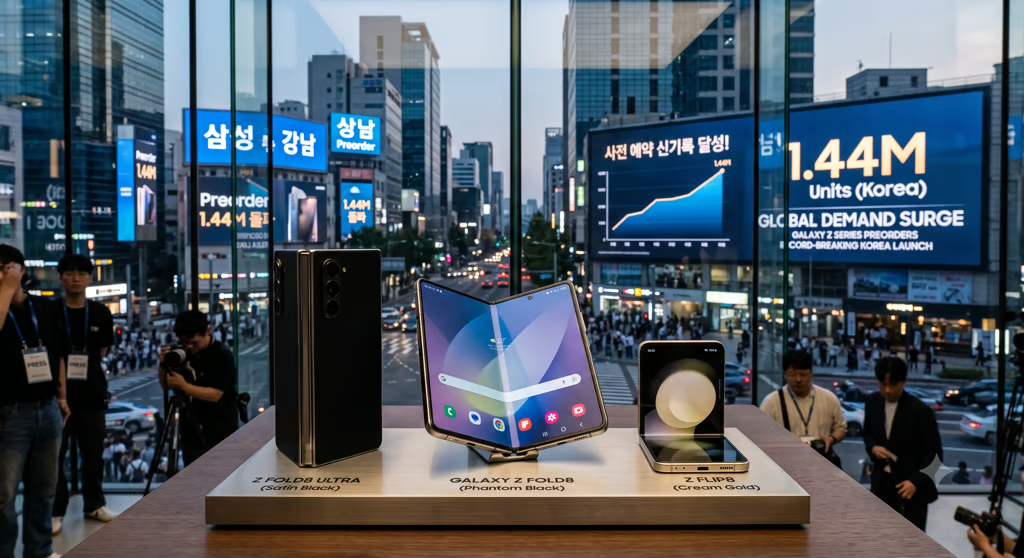
Samsung’s latest foldables are drawing record early demand despite their premium prices.
US demand for the Galaxy Z Fold8 Ultra, Fold8, and Flip8 is running 30% above the previous Galaxy Z high, according to figures shared with Mashable. Galaxy Z Fold8 accounts for nearly half of reservations.
Price has not kept buyers away from the book-style model, at least during the preorder window.
Preorder totals still need context
Korean customers placed 1.44 million preorders across the three models in seven days, according to Mashable. This tops the Galaxy Note10’s 1.38 million total from 2019. European preorders also reached a new high.
Exact unit totals for Europe and the US have not been revealed. General sales begin Aug. 7 across 106 markets, and preorder deals can pull purchases forward. Full-price sales and return rates will offer a better read after release.
What Samsung’s preorder record actually shows
Starting at $1,899, the Galaxy Z Fold8 costs $700 more than the Galaxy Z Flip8 and $200 less than the Fold8 Ultra. Buyers get the larger book-style format without paying for the Ultra’s eight-inch display and upgraded cameras.
A wider cover screen gives Fold8 more familiar proportions when closed, while the 7.6-inch inner display opens into a roomier 4:3 layout. At 201 grams, it is the lightest Galaxy Fold to date, according to the official launch details. Owners of the previous generation can judge the redesign by how the phone feels closed and after several hours in hand.
Crease and durability concerns remain. The Flex Titanium display structure is designed to reinforce the folding panel and reduce crease visibility, but only months of everyday use will reveal how well it holds up over time.
Checks before switching to Fold8
A separate company figure shows more than three times as many Flip users moving to Fold models as in earlier generations. Galaxy Z Flip owners considering the same move should compare the trade-in-adjusted price with repair coverage, then decide whether the larger screen would change how they use the phone each day.
Anyone considering a switch from iPhone to Samsung should keep their old device until banking apps and workplace logins work on Fold8. Android 17’s expanded transfer tools can move more account data during setup, but some apps may still need fresh sign-ins. Confirm eSIM service before trading anything in.
IT teams considering Fold8 for company use should test core apps on both screens and confirm device-management support before adding it to an approved device list. Compatibility checks will tell employers more than launch-week demand.
Related News: Read our Galaxy Z Flip8 vs Razr Ultra comparison for a feature-by-feature look at two very different flip phones.