


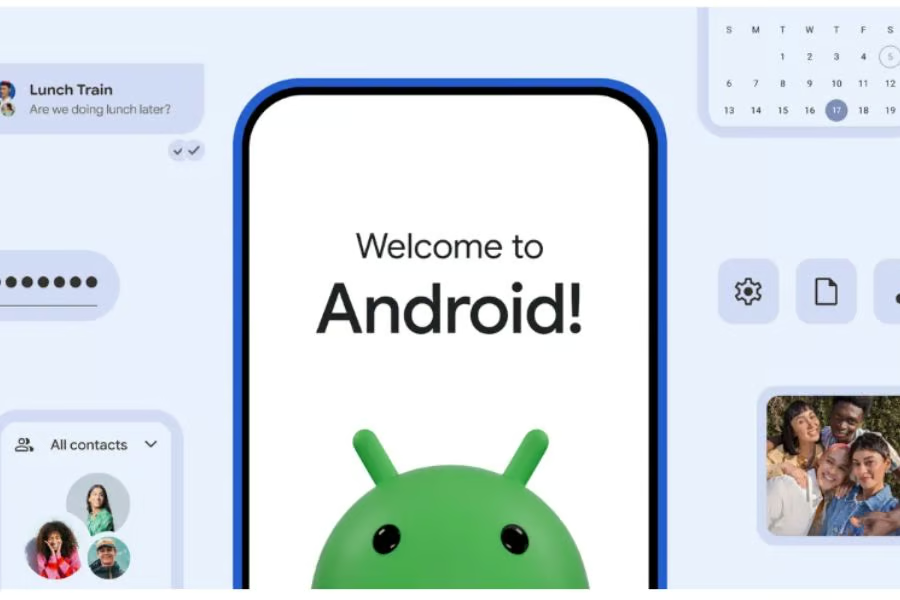
Google announced Wednesday that Android 17 now includes a native wireless migration experience designed to make switching from an iPhone easier and faster.
The new system is built directly into Android 17, removing the need to download a separate transfer app during setup.
According to Google, users can wirelessly transfer data from an iPhone to an Android device.
In a company announcement, Google said the feature lets users transfer “photos, videos, contacts, messages, and calendar” data, while also adding support for “your Google Account, passwords, Wi-Fi credentials, and even your eSIM.”
The rollout has already started for select Pixel devices and is also available on Samsung’s newly launched Galaxy Z Flip8 and Galaxy Z Fold8 smartphones.
Previous migration tools focused primarily on personal content such as photos, contacts, and messages. The Android 17 upgrade expands that scope by including account credentials and device settings that often create friction when moving between mobile platforms.
Reports from Digital Trends indicate the updated transfer process can also move items such as passkeys, apps, files, and home screen layouts, reducing the amount of manual setup required after switching devices. The feature works wirelessly, eliminating the need for cables in many migration scenarios.
Competition for iPhone users
The move comes as Google continues trying to attract users from Apple’s ecosystem.
Simplifying onboarding and supporting additional data types could lower some of the barriers that have historically discouraged people from changing smartphone platforms.
Switching costs are often measured in time and inconvenience rather than hardware prices alone. Re-entering passwords, reconnecting Wi-Fi networks, setting up eSIMs, and restoring account settings can turn a device upgrade into a lengthy process.
By automating more of those tasks, Google is attempting to make Android devices more approachable for iPhone owners considering a change.
Regulatory pressure also played a role
The timing reflects broader industry changes driven by regulation.
Both Apple and Google have been required to improve cross-platform data portability under the European Union’s Digital Markets Act. The law aims to reduce ecosystem lock-in by making it easier for consumers to move their data between competing platforms. The legislation has also pushed the companies to simplify eSIM transfers and offer built-in migration options that do not rely on standalone apps.
More Google coverage
- New Google Search AI Mode is ‘Total Reimagining,’ Says CEO Sundar Pichai
- In Major Ruling, Judge Finds Google ‘Willfully Acquired and Maintained Monopoly Power’ Over Digital Ad Market
- Google’s Big Bet on Nuclear Energy: ‘The Race to Power AI-Driven Data Centers is Accelerating’
- Computer History Museum Releases Original AlexNet Code: Why It Matters
What this means for consumers
For consumers, the biggest benefit is convenience. A migration process that includes passwords, Wi-Fi credentials, and eSIM information can significantly shorten the setup process on a new device.
There are still some limitations. Digital Trends reported that support for transferring photo albums is listed as coming later, and Google has not provided a timeline for when the new migration experience will reach all Android devices.
Even so, Android 17’s built-in switching tool signals that smartphone makers are increasingly competing not just on hardware and AI features, but on how easy they make it for users to leave a rival ecosystem.
Also read: Android 17 QPR2 beta brings Pixel fixes for performance, connectivity, and device stability.