


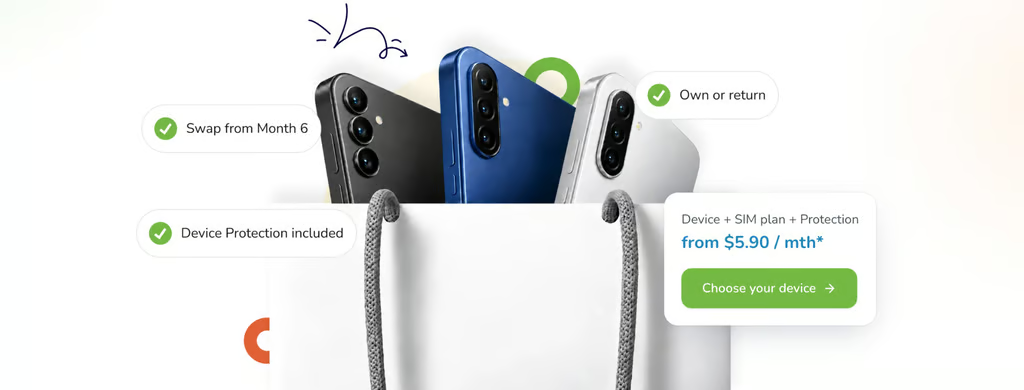
Singapore’s Swap Mobile is giving smartphone users a new way to upgrade: switch to another eligible handset every six months without having to sell the old one.
Launched in October 2026, the mobile virtual network operator offers 24-month handset subscriptions and customizable plans on StarHub’s 4G and 5G networks. Customers can change phones after six months by returning their existing device and starting a new two-year agreement.
The service offers an alternative to buying smartphones outright, particularly for frequent upgraders. Monthly pricing, device-return requirements and ownership terms will determine how it compares with a conventional purchase.
How Swap Mobile’s six-month upgrades work
Under Swap Mobile’s device subscription program, customers can request another eligible handset through the company’s app after completing at least six months. A courier collects their existing phone and delivers the replacement, which begins a fresh 24-month subscription.
Customers satisfied with their current phone can continue their original agreement. HardwareZone reports that qualifying six-month exchanges carry no early termination penalty, although cancelling a subscription outright is subject to separate charges.
Available replacement models depend on Swap Mobile’s catalog. Customers considering Android devices can compare software support, security updates and features in this Android cheat sheet before choosing another handset.
Standalone SIM-only plans have no long-term contracts, but handset subscriptions require a bundled mobile plan costing at least S$15 (approximately US$11.74) monthly. Subscribers can adjust their data, calls, SMS and roaming allowances while maintaining that minimum.
Operated by Malaysia-headquartered Swap Asia Group, Swap Mobile uses StarHub’s existing infrastructure instead of building its own network. This allows the operator to compete in Singapore through handset flexibility and bundled services rather than network ownership.
What the subscription costs — and who owns the phone
Swap Mobile advertises introductory bundles starting at S$5.90 (approximately US$4.62) monthly for selected devices. Its published offers include a smartphone, SIM service and Swap Protect Pro coverage. The GST-inclusive promotion is limited to eligible new subscribers and selected devices, with regular rates applying after three months. The advertised introductory price already includes SIM service rather than requiring a separate S$15 charge on top.
Regular subscription prices vary by handset and plan. Customers considering premium phones can compare specifications and purchase prices in the iPhone 18 Pro cheat sheet before weighing the subscription cost.
Swap Mobile’s protection information describes coverage for accidental damage, cracked screens, liquid damage and certain theft incidents. Benefits depend on the package, and repairs or replacements may involve service fees.
At the end of 24 months, customers can return their handset, pay an applicable ownership fee or continue making payments toward ownership. Completing the initial contract does not automatically transfer ownership of the phone. The company’s official FAQ explains that payments from month 25 reduce the outstanding ownership fee until the device becomes theirs.
Swap Mobile says subscribed devices are subject to a device lock under the contract. Overdue payments or account issues may also lead to restricted device access until the account is reinstated. Cancelling early can incur charges, although the company does not clearly disclose its calculation in the public FAQ.
Customers prioritizing lower overall costs can also compare budget smartphones under $500 against the full two-year subscription expense. An outright purchase may suit those who keep their devices longer.
Swap Mobile removes the need to independently resell a phone whenever an eligible exchange is made. It does not remove the financial commitment, which can restart every six months.
Also read: Changing smartphone brands may require transferring passwords, settings and other data. Android 17’s iPhone-switching features explain the available transfer tools and their device limitations.