


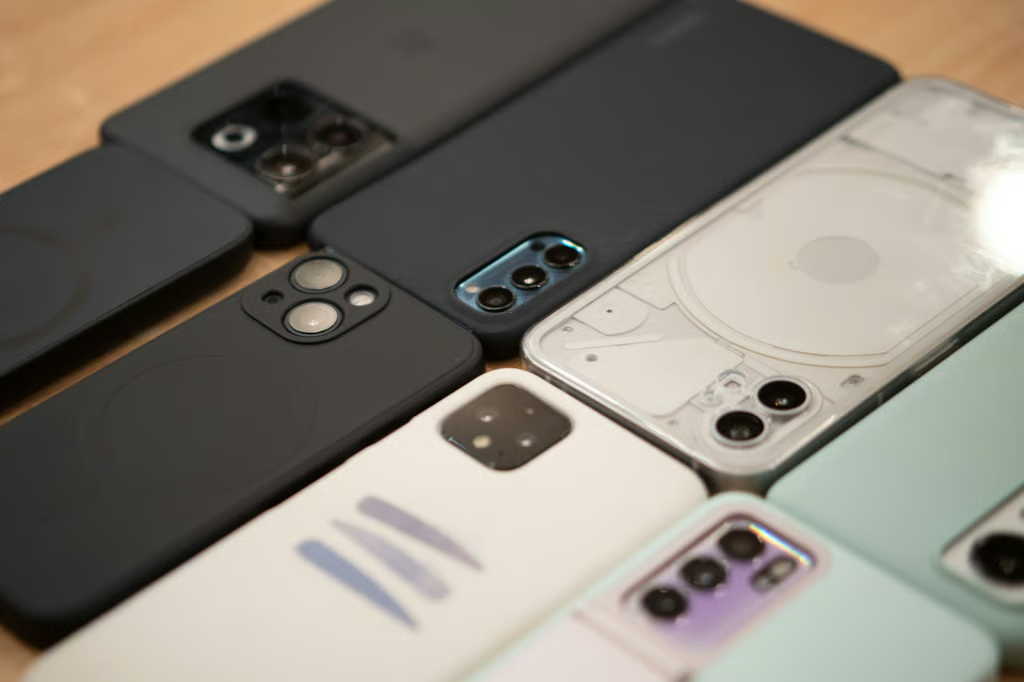
Flagship phone prices seem to climb every time you look, and paying close to four figures can be tough to justify when most days come down to messages, maps, work apps, streaming, photos, and the occasional game.
Good news: you still have plenty of options below $500. I’ve rounded up phones that can handle everyday use without feeling cheap, from familiar US choices to international models that trade easy local availability for bigger batteries, faster chips, or more ambitious cameras.
Here are seven of the best budget smartphones for 2026, with picks for battery life, photography, performance, software support, and tighter budgets.
- Best budget smartphones in 2026 at a glance
- Google Pixel 10a: Best for balanced everyday use
- HONOR X9d: Best for durability and battery life
- Motorola Moto G Power 2026: Best for spending under $300
- Nothing Phone (4a) Pro: Best for zoom photography
- OnePlus Nord 6: Best for performance
- Samsung Galaxy A37 5G: Best for long software support
- Redmi Note 15 Pro 5G: Best for camera and display
- Which budget smartphone should you buy?
Best budget smartphones in 2026 at a glance
| Google Pixel 10a | Balanced everyday use | $499 | 5,100mAh | 48MP | 128GB | US and other regions |
| HONOR X9d | Durability and battery life | About $373 (SAR 1,399) | 8,300mAh | 108MP | 256GB | Asia-Pacific, Middle East and Europe; imports in the US |
| Motorola Moto G Power 2026 | Spending under $300 | $299.99 | 5,200mAh | 50MP | 128GB | US and other regions |
| Nothing Phone (4a) Pro | Zoom photography | $499 | 5,080mAh | 50MP | 128GB | US and other regions |
| OnePlus Nord 6 | Performance | About $452 (₹42,999) | 7,500mAh | 50MP | 256GB | Asia-Pacific and Middle East; no new US or European rollouts |
| Samsung Galaxy A37 5G | Long software support | $449.99 | 5,000mAh | 50MP | 128GB | US and other regions |
| Redmi Note 15 Pro 5G | Camera and display | About $473 (£349) | 6,580mAh | 200MP | 256GB | Asia-Pacific, Europe, Latin America and Middle East; imports in the US |
Note: Prices and specifications were accurate at the time of writing and may change.
Google Pixel 10a: Best for balanced everyday use
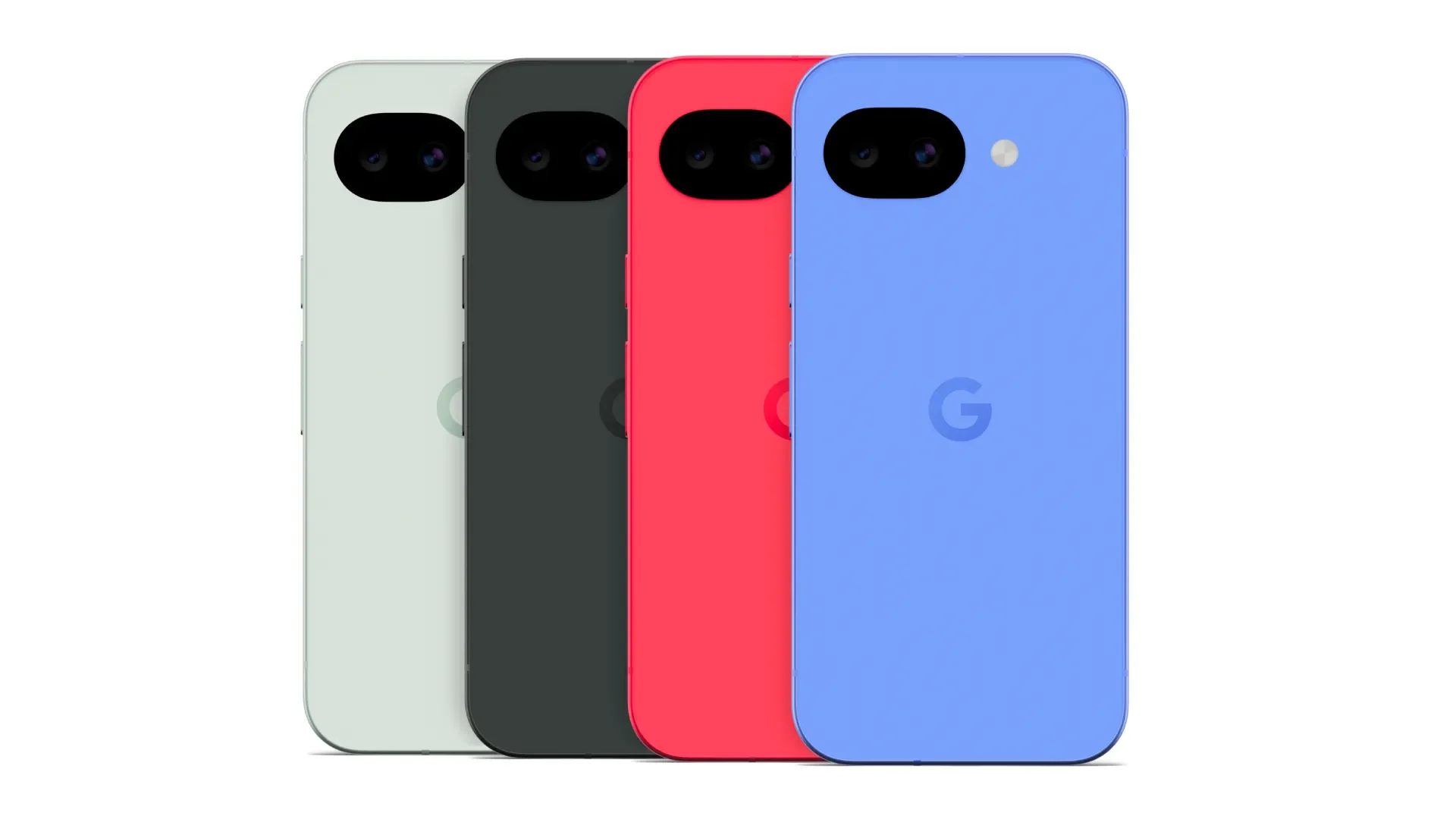
Google’s Pixel 10a covers the basics well for someone who wants a phone that can handle work apps, photos, streaming, navigation, and regular multitasking without much fuss. Its 6.3-inch 120Hz OLED screen, 5,100mAh battery, and Qi wireless charging also add a few day-to-day comforts.
Qi charging is handy if you would rather drop the phone onto a charging pad at your desk or bedside than plug in a cable. A stabilized 48MP main camera covers everyday photos, with a 13MP ultrawide available when you need to fit more into the frame.
Storage is the main compromise. The $499 model starts at 128GB, and there is no dedicated telephoto camera for optical zoom. Google does promise seven years of operating system and security updates, so buyers planning to keep their phone for several years have plenty of software life ahead.
Price: $499
What you’ll like: A well-rounded Android experience with long support, capable cameras, and conveniences such as wireless charging.
HONOR X9d: Best for durability and battery life

HONOR puts endurance front and center with the X9d. An 8,300mAh battery can stretch past three days under HONOR’s stated test conditions, which could be welcome on trips, long workdays, or weekends when a charger is nowhere nearby.
Durability goes further than basic splash protection. HONOR tested the phone for drops from up to 2.5 meters and for IP69K water resistance under controlled conditions. Rain, dust, and the occasional accident should therefore be less stressful than with a more delicate handset.
Performance comes from a midrange Snapdragon 6 Gen 4 chip, so social apps, video, navigation, messaging, and moderate gaming are its comfort zone. Users focused on demanding games have a better choice further down the list. Buying the X9d in the US usually means sourcing an international model, with after-sales support depending more heavily on the seller.
Price:About $373 (SAR 1,399)
What you’ll like: A huge battery and tougher construction for days when your phone needs to keep going without much attention.
Motorola Moto G Power 2026: Best for spending under $300

Moto G Power 2026 leaves plenty of room in a $500 budget. Motorola pairs a 5,200mAh battery with 128GB of storage and microSD expansion up to 1TB, so you can keep downloaded shows, music, photos, and other files locally without paying for a higher-storage model.
Motorola estimates up to two days between charges under its testing, and IP68/IP69 protection adds reassurance around dust, spills, and rain. A 120Hz display also keeps scrolling smoother than the price might suggest, although it uses LCD technology instead of the OLED panels found on several phones here.
Software longevity is the bigger compromise. Motorola phones have had uneven update commitments across the lineup, and the company currently schedules Moto G Power 2026 security updates only through January 2029. Buyers who keep phones for many years may prefer the longer support periods from Google or Samsung.
Price: $299.99
What you’ll like: Long battery life, expandable storage, and solid weather protection without getting close to the $500 limit.
Nothing Phone (4a) Pro: Best for zoom photography
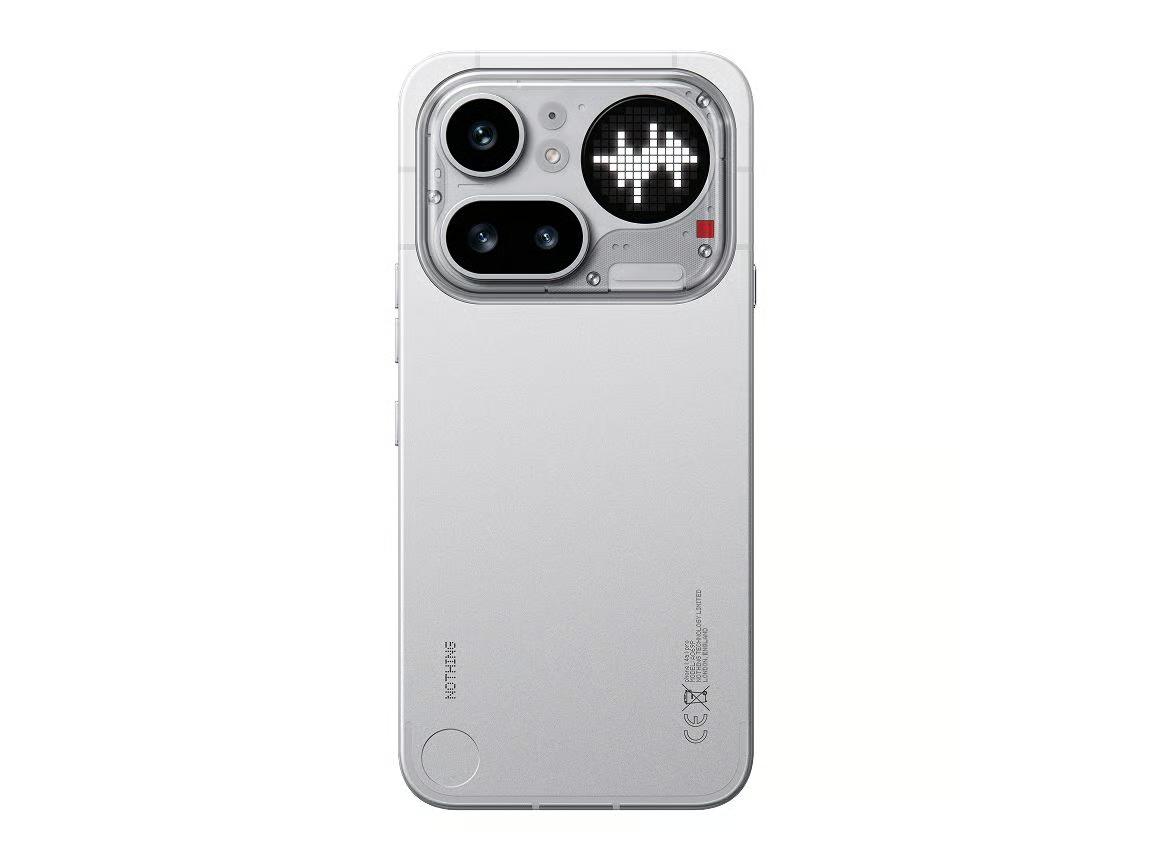
Nothing Phone (4a) Pro stands apart from most sub-$500 phones with a 50MP periscope camera offering 3.5x optical zoom. You can get closer to pets, performers, buildings, or people across a room without relying entirely on digital cropping.
A separate 50MP stabilized main camera handles regular shots, and the Snapdragon 7 Gen 4 has enough headroom for everyday multitasking and gaming. Nothing OS 5.0 is also scheduled for Phone (4a) Pro, keeping the handset in the company’s current software lineup.
Regular US pricing limits the amount of storage you can get within our ceiling. The $499 version comes with 128GB, but the 256GB configuration costs more than $500. IP65 protection is also lower than the water-resistance ratings on several alternatives.
Price: $499 for 8GB of RAM and 128GB of storage.
What you’ll like: Real optical zoom lets you take better shots when moving physically closer to your subject is not an option.
OnePlus Nord 6: Best for performance
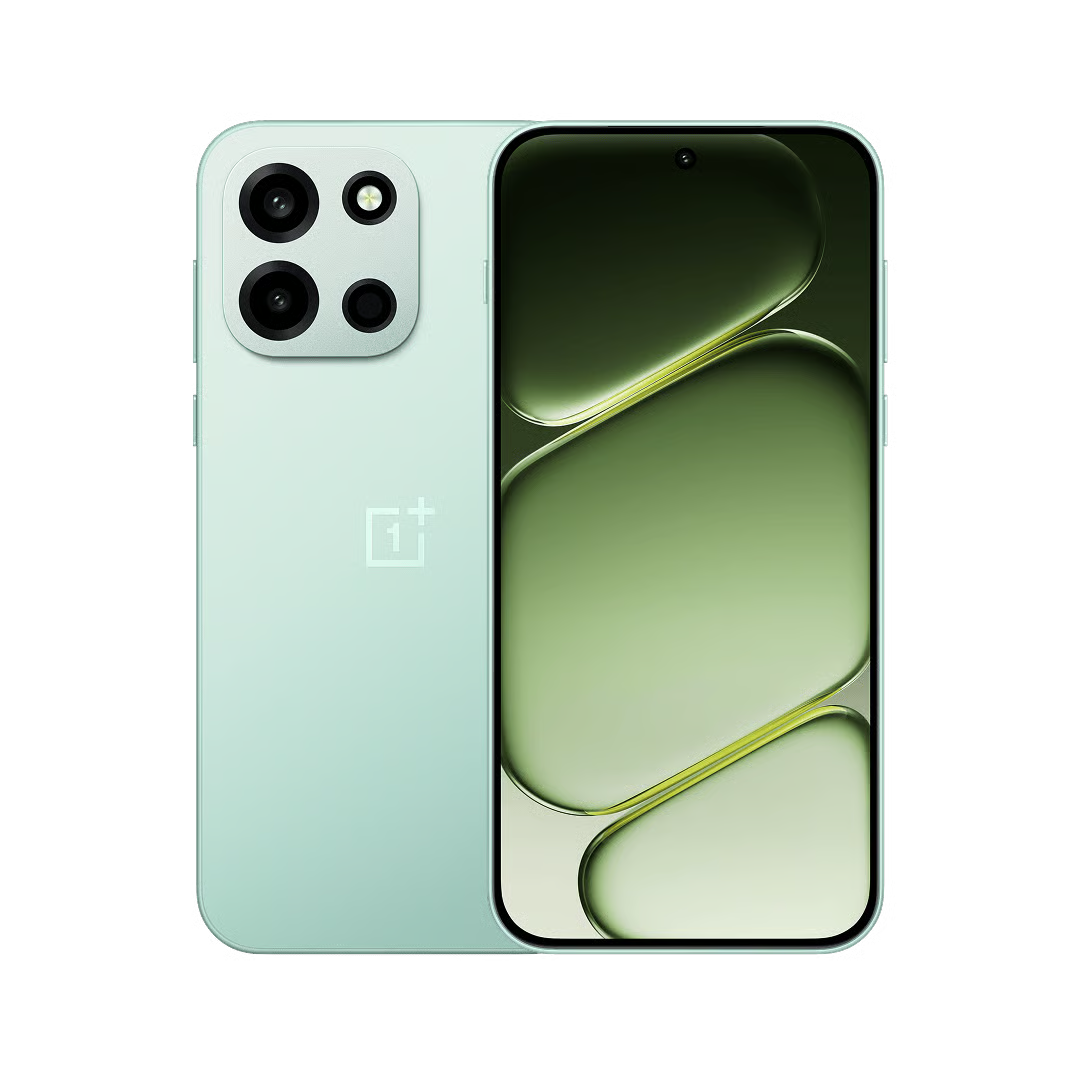
OnePlus Nord 6 is the performance pick if you play mobile games, jump between heavier apps, or expect your phone to keep up with more demanding workloads. A Snapdragon 8s Gen 4 chip, fast UFS 4.1 storage, and a 165Hz AMOLED display deliver considerably more horsepower than most phones in this price class.
A 7,500mAh battery on the global model also leaves plenty of capacity for gaming and long days away from a charger. When power does run low, 80W charging can refill it far faster than several US-focused rivals.
Availability is where Nord 6 asks for compromise. OnePlus has ended new product rollouts in North America and Europe, so US shoppers will need to import this model. Older OnePlus stock may still surface domestically, but Nord 6 itself doesn’t have a normal US launch.
Price: Starting at about $452 (₹42,999) for 8GB of RAM and 256GB of storage.
What you’ll like: Plenty of speed for gaming and heavier multitasking, backed by a large battery and fast charging.
Samsung Galaxy A37 5G: Best for long software support
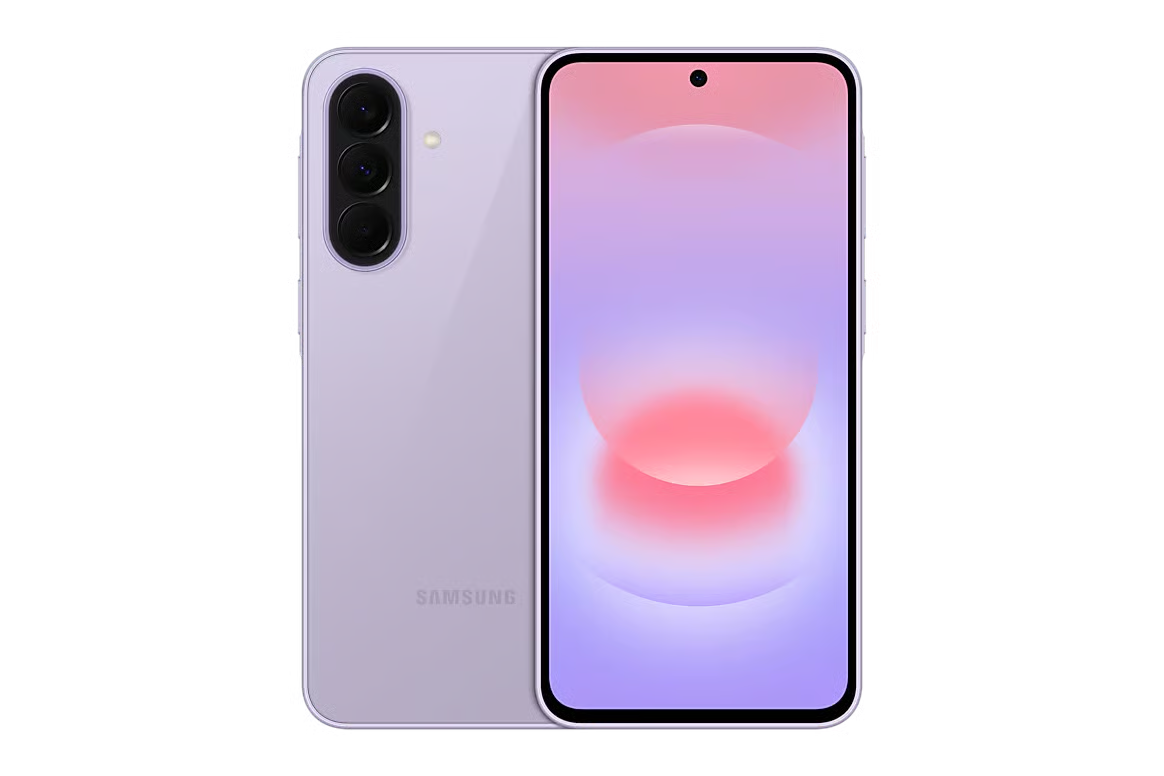
Galaxy A37 5G is worth a look if you tend to keep the same phone for several years. Samsung promises six generations of OS upgrades and six years of security updates, giving the handset a long runway before software support becomes a reason to replace it.
A 6.7-inch 120Hz AMOLED screen offers plenty of room for video, reading, maps, and split-screen use. IP68 protection also helps with spills and wet weather, while the stabilized 50MP main camera handles the everyday photos most owners take.
Storage is where the budget bites. Samsung charges $449.99 for 128GB, but 256GB pushes the phone above the $500 budget. Long-term buyers should consider whether 128GB will still suit them several years from now, since software support can outlast the storage needs that seemed sufficient at purchase.
Price: $449.99 for 128GB.
What you’ll like: Years of software coverage and familiar Galaxy features without paying for one of Samsung’s flagship phones.
Redmi Note 15 Pro 5G: Best for camera and display
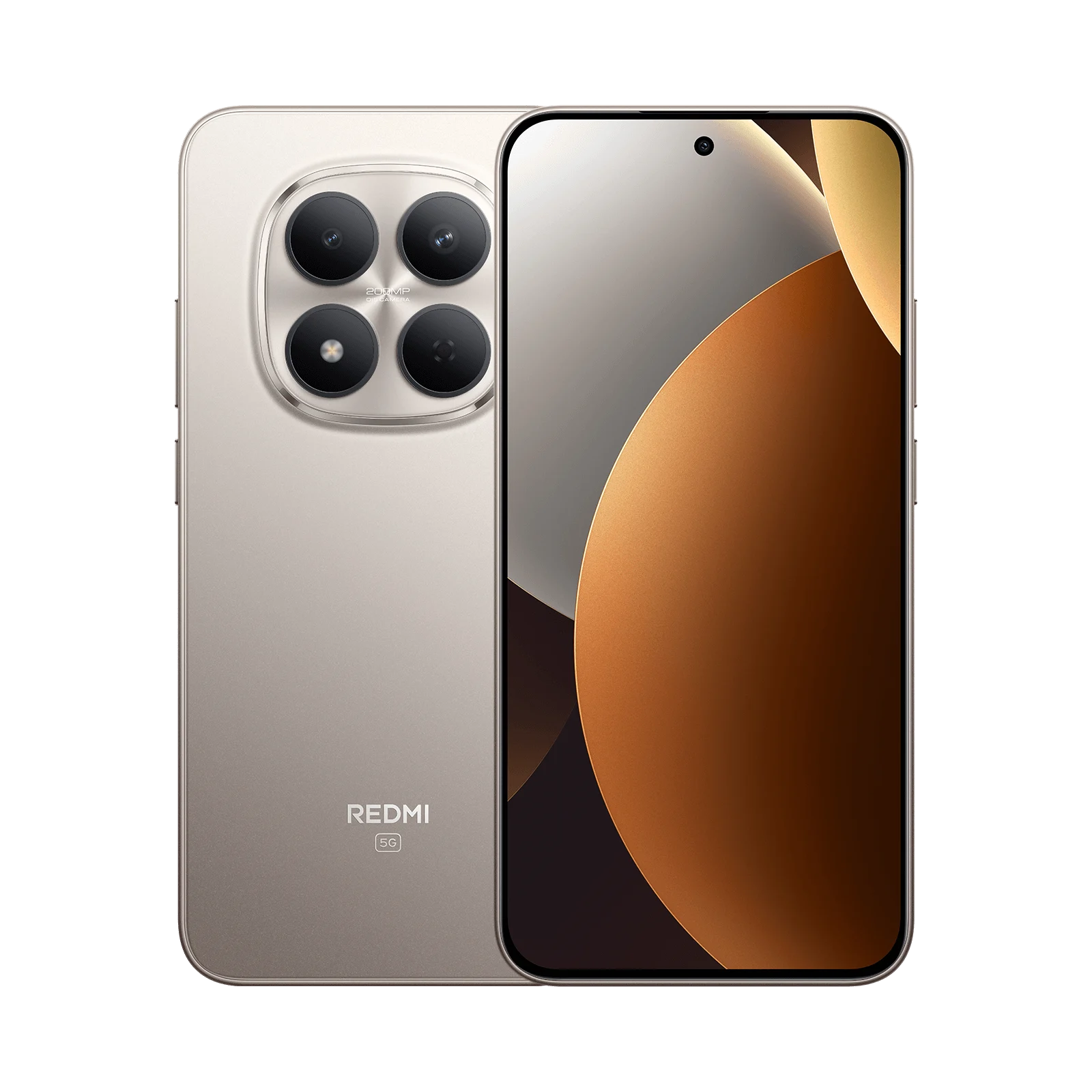
Redmi Note 15 Pro 5G prioritizes photography and screen space. Its 200MP stabilized main camera and 6.83-inch 1.5K AMOLED display give you plenty of resolution for photos, reading, video, and light editing on the phone itself.
High-resolution capture also leaves more room to crop a photo after you take it without losing as much detail. Starting configurations in several markets include 256GB of storage, which is welcome when large photo libraries and downloaded media start piling up.
Camera flexibility is more limited than the 200MP headline may suggest. An 8MP ultrawide handles wider scenes, but there is no separate optical telephoto camera. US shoppers looking at Xiaomi phones should also expect to shop outside the company’s domestic retail channels, with available versions varying by seller and region.
Price: About $473 (£349) for the 8GB/256GB configuration.
What you’ll like: Lots of storage, a spacious AMOLED screen, and a high-resolution main camera for photos and media.
Which budget smartphone should you buy?
Start with what you actually do on your phone. The Pixel 10a suits someone who wants a dependable all-rounder with long support, the Moto G Power stretches a smaller budget much further, Nothing adds genuine optical zoom, and the Nord 6 puts more processing muscle behind games and heavier workloads.
International models need one extra check before checkout. HONOR and Redmi can offer a lot of hardware for the money, but US buyers should confirm network bands, carrier compatibility, warranty coverage, and return options before importing.
Saving $100 or $150 stops looking like a bargain pretty quickly if your new phone struggles on your network or becomes difficult to service. Price gets a phone onto this list, but how well it fits your daily routine should decide which one ends up in your pocket.
Find out what the latest OnePlus Ace 7 leaks reveal about its display, battery, active cooling, cameras, and possible Pro model.