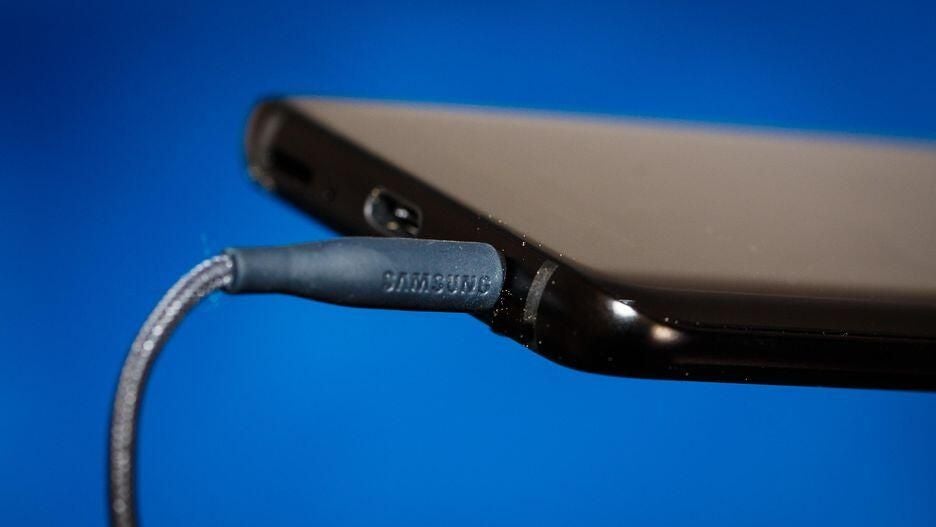
The Samsung Galaxy S9 closes the gap between smartphones and computers. With a desktop-class processor, 5.8-inch, 2960×1440-pixel display (6.2-inch on the S9 Plus), built-in stereo sound, and an improved DeX experience for docking the phone and running it as a full PC, the S9 and S9 Plus come closer than any smartphones yet to offering a true desktop replacement for workers. And, the company smartly chose to build on the program it started with the Note 8 Enterprise Edition by offering a Galaxy S9 Enterprise Edition as well.
SEE: Samsung puts business spin on Galaxy S9, joins Galaxy Note 8 with enterprise edition (ZDNet)
When will the Galaxy S9 be released?
The official launch date of the Galaxy S9 and S9 Plus is March 16, 2018. Pre-orders begin on March 2, while retail locations will have the devices in stores beginning on March 16. The unlocked versions of the Galaxy S9 and S9 Plus will be available through Samsung’s webite and the Shop Samsung app and will cost $719.99 and $839.99, respectively. Samsung will offer 24 months financing for $30/month for the S9 and $35/month for the S9 Plus. Samsung will also provide up to a $350 credit for the trade-in of an existing phone.
SEE: Galaxy S9 is $720, but you’ll pay more on Verizon and AT&T (CNET)
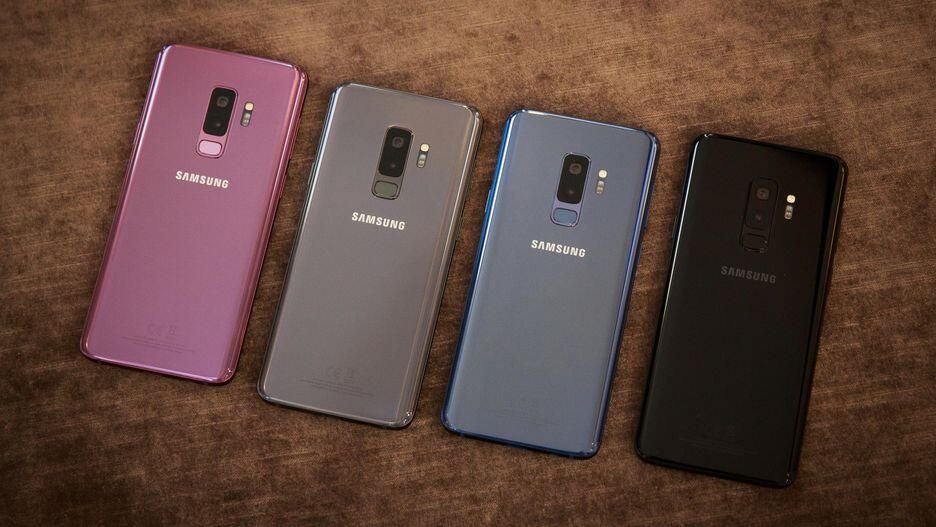
The devices are available in four colors: black, blue, silver, and purple (a new addition to the lineup). The Galaxy S9 Enterprise Edition will only be available in black. The Enterprise Edition will also be available on March 16 through channel partners. It will include Samsung Knox 3.1, Knox Configure, Enterprise Firmware Over-the-Air (E-FOTA), and Defense Grade Security.
What’s new in the Galaxy S9?
While the 2018 models aren’t a giant leap forward from last year’s S8 and S8 Plus, there are a number of notable upgrades that will appeal to professionals and businesses:
- A processor for the big kids–This thing has a 64-bit 10nm octa-core processor. That’s a fancy way of saying this is very small and enormously powerful. The high-end 2017 phones were just starting to catch up to laptops in benchmark speeds, especially the iPhone X and the Note 8. The S9 legitimately has the processing engine and graphics power to run a full computer.
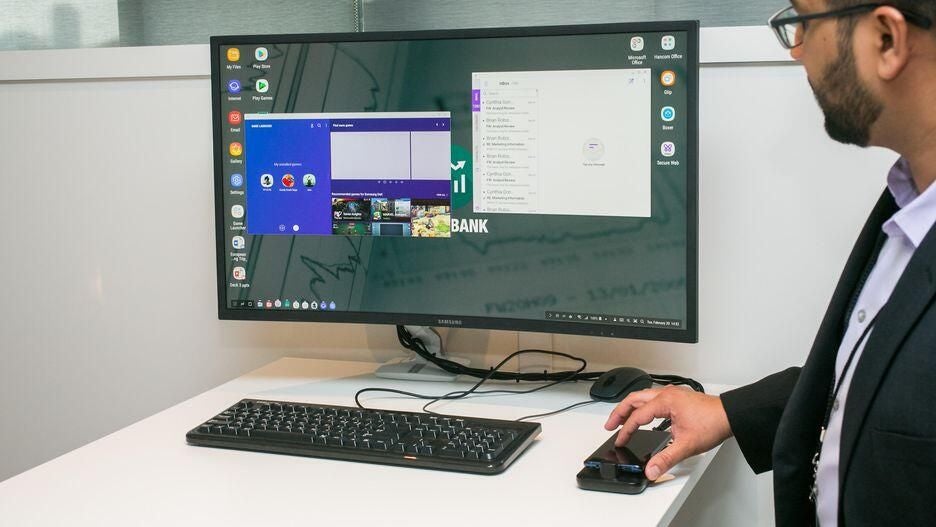
- Works even more like a desktop–The main thing professionals can do with that extra power, other than run everything faster, is plug the S9 into the new Dex Pad and use it to power a desktop computer experience with a monitor, mouse, and keyboard. The new version lets you use the phone as a touchpad mouse and keyboard. Samsung has even teased DeX being built into Samsung monitors in the future.
- Lower light camera–The cameras get better every year and Samsung is playing up the super slow motion capabilities of the S9 this year. However, the big thing that people will appreciate in everyday shooting is the new low-light capabilities. This camera allows 28% more light, according to Samsung. Those low-light photos also have 30% less noise because of the multi-frame noise reduction. There’s now DRAM integrated directly into the camera sensor to make everything faster and smarter.
- Sign in with your face–The S9 offers facial scanning that combines iris scanning (as on previous Samsung phones) and facial recognition (like the iPhone X). The “Intelligent Scan” facial recognition is not as secure as the iPhone X though, and so most professionals should avoid it.
- Better fingerprint scanning–The fingerprint scanner on the S8 and S8 Plus was in an awkward and unnatural position to the side of the camera on the back. Now, Samsung has put it in the center of the backplate, under the camera. This is the spot the Google Pixel phones have been using for several years and it’s a natural place that the forefinger sits when most people use the phone–much more user friendly.
SEE: All of TechRepublic’s cheat sheets and smart person’s guides
What are the full specs of the Galaxy S9?
- Google Android 8.0 Oreo
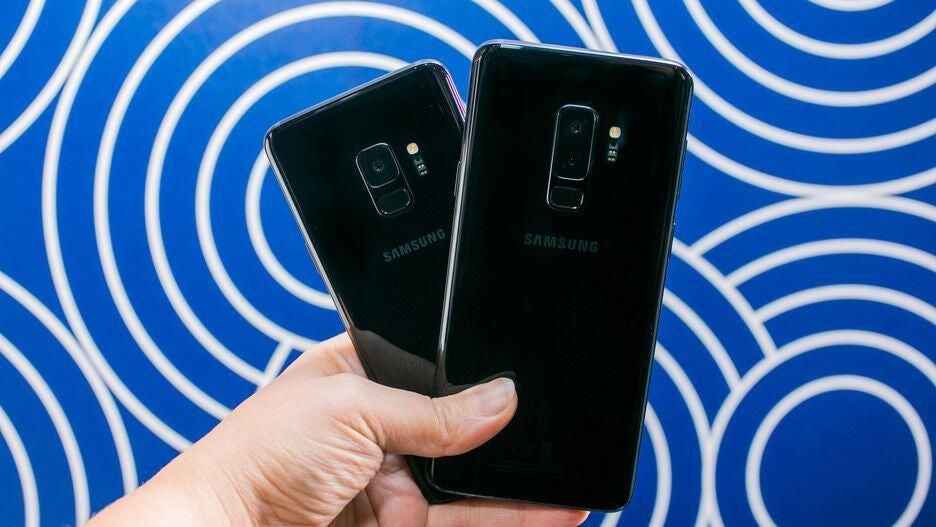
- S9 dimensions: 147.7mm x 68.7mm x 8.5mm, 163g (1.2mm slimmer than last year)
- S9 Plus dimensions: 158.1mm x 73.8mm x 8.5mm, 189g (1.4mm slimmer than last year)
- S9 display: 5.8-inch (529ppi) Super AMOLED (15% brighter than S8)
- S9 Plus display: 6.2-inch (570ppi)
- 8MP f1.7 front-facing camera
- S9 rear camera: 12MP sensor with OIS (f1.5/f2.4)
- S9 Plus rear camera: Dual cameras with OIS; wide-angle 12MP sensor (f1.5/f2.4) and telephoto 12MP sensor (f2.4)
- RAM: 4GB (6GB in the S9 Plus)
- Storage: 64GB + Micro SD Slot (up to 400 GB)*
- Battery: 3,000mAh (3,500mAh in the S9 Plus)
- Fast Wireless Charging
- Connectivity: Gigabit 4G LTE (Cat. 18 LTE), Enhanced 4X4 MIMO, Wi-Fi 802.11 a/b/g/n/ac (2.4/5GHz), Bluetooth v 5.0 (LE up to 2Mbps), ANT+, USB type-C, NFC, Location (GPS, Galileo, Glonass, BeiDou)
- Sensors: Iris, Pressure, Accelerometer, Barometer, Fingerprint, Gyro, Geomagnetic, Hall, Heart Rate, Proximity, RGB Light
- Stereo speakers, Dolby Atmos enabled surround sound
- IP68 dust and water resistance
- 3.5mm headphone jack
* Update on May 1, 2018: Users in the US can pre-order a Galaxy S9 or S9 Plus with 128GB or 256GB of internal storage, as reported by our sister site ZDNet.
SEE: Samsung Galaxy S9 and S9 Plus: Photos from every angle (CNET)
Why does the Galaxy S9 matter?
The Samsung Galaxy line remains the most well-known, most widely-sold, and among the most expensive phones in the Android universe. What Samsung Galaxy does, other phone makers in the Android universe tend to follow–and in devices that are available for as little as half the retail price.
While Samsung continues to borrow generously from Apple’s iPhone–such as the dual cameras, facial scanning, and animated emojis in the S9–it also continues to pack more new features, experimental features, and software integrations than its Android competitors.
That can make these Galaxy devices full of “bloatware” and less of a pure Android experience. But, it also keeps Samsung at the forefront of new functionality in smartphones. We see that again in the S9 with the way it uses its cameras and high-end processor for augmented reality and to integrate with Samsung Health to scan the food on your plate and give you nutritional information, for example. We also see it in the way Samsung is pushing the envelope with its desktop experience (DeX). The new version released with the S9, the DeX Pad, allows the S9 to function as a touchpad while docked in desktop mode.
Who will be most interested in the Galaxy S9?
The Samsung Galaxy S9 and S9 Plus will especially appeal to mobile innovators and developers who need to stay on the cutting edge of the ecosystem and want to tap into the advanced capabilities of these devices, which are likely to again be the most-sold Android phones on the planet in 2018.
For those companies with products that involve augmented reality, these devices are also now at the leading edge of the Android ecosystem in implementing Google’s ARCore and have the powerful hardware to drive it.
Professionals who want the most performance that money can buy in order to remain efficient and productive are likely to be happy with the Galaxy S9, and especially the S9 Plus’s extra screen real estate–even if it means putting up with Samsung’s extra software layers on top of Android, including lots of uninstallable apps that are redundant with Android’s built-in software. (After all, you can always install the Google Now Launcher and hide a bunch of the Samsung apps, if you’d like.)
With the Galaxy S9 Enterprise Edition, Samsung amps up the security and manageability features of the S9, which makes it infinitely easier for IT departments to deploy and administer, and safer for employees to use–especially when working with sensitive data. The capabilities include Knox 3.1, Enterprise Firmware Over-the-Air (E-FOTA), Knox Configure, remotely provisioning and configuring devices, remotely installing updates and software policies, remotely configuring settings, product lifecycle management, and defense-grade security. One thing to note about the Enterprise Edition is that it’s only available for the S9, and not the S9 Plus. If you want the larger screen, you’ll need to go with the Note 8 Enterprise Edition.
SEE: Mobile device computing policy (Tech Pro Research)