


After the exploding battery debacle of the Galaxy Note 7, Samsung has something to prove to the business professionals who were among the biggest fans of the Galaxy Note series. With the launch of the Galaxy S8 and S8+, Samsung looks poised to win back some goodwill.
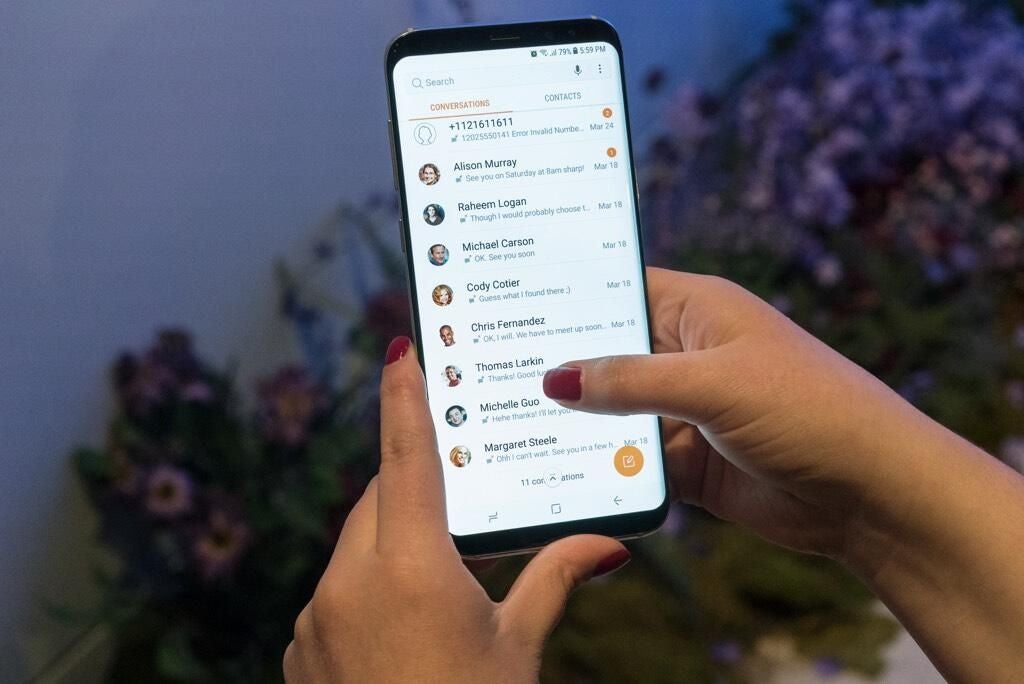
The Galaxy S8 sets a new bar with its curved AMOLED “Infinity Display” that covers 83% of the front of the phone. It doubles down on security and usability with three types of biometrics: fingerprint scanning, iris scanning, and facial recognition. And with its new Desktop Experience (DeX), it may have pulled off the smartphone-as-a-computer move that others such as Motorola and Microsoft have been chasing for years.
There’s a lot to like about the Galaxy S8 and S8+, especially for the enterprise. But, it’s probably not going to convert many of those who are already attached to the iPhone or a Google Pixel or Nexus device. However, even those Apple and Google fans can look at the S8 and get a peek at features that could be coming to their devices later this year.
SEE: Review: Samsung Galaxy S8 makes every other phone feel like a cinder block
Executive summary (TL;DR)
- What is the Samsung Galaxy S8 and S8+? The latest flagship device from Samsung’s top-selling line of smartphones has an almost bezel-less display with a curved AMOLED screen, three types of biometric authentication, a new “Desktop Experience” feature, and artificial intelligence and augmented reality built in.
- Why does it matter? Samsung remains the 800-pound gorilla of the Android ecosystem, even if its sales are under tremendous pressure from Chinese manufacturers. This device delivers important new innovations with leading edge technologies in AR and AI, a desktop option that enterprises are likely to experiment with, and Knox Security features that continue to appeal to enterprises.
- Who should buy it? This is a prime candidate for professionals who love the Samsung design and don’t mind a non-native Android experience, businesses that need best-in-class security for Android devices, and enterprises that want to experiment with smartphones to replace PCs and run VDI.
- Who shouldn’t buy it? If you or your organization is looking for the lowest cost per device, then you’d be better off looking to the Honor 6X or the OnePlus 3. Also, if you were burned by the Galaxy Note 7 recall, you may want to wait for 60 to 90 days after the release of the Galaxy S8, just to make sure there aren’t going to be any battery problems.
What is the Samsung Galaxy S8 and S8+?
The eighth generation Samsung Galaxy S device sticks to the same script that the Korean tech giant has been using since it launched the first one in 2010 (which I also reviewed): cutting-edge hardware with a bunch of Samsung-specific software and services heaped on top of Android.
But, the stakes are higher than ever for this year’s Galaxy S launch, coming six months after the recall of the Galaxy Note 7 because of its exploding battery problems. The Note 7 got top marks from most reviewers last fall, but by the beginning of 2017 it was the butt of every joke on airport PA systems reminding passengers that the Note 7 was banned from airplanes because of its explosive nature.
Mobility must-reads
- Big Apple OS Makeover: Here’s What to Expect & When
- MWC 2025: Nothing Shows Off (3A) Phones With AI Organization Tool
- Bad News for App Developers: Most Apps Fail to Hit $1,000 Monthly Revenue Within Two Years
- Mobile Device Computing Policy
After spending hands-on time with the Galaxy S8 and S8+ and speaking with Samsung executives about them, these new devices are raising the bar with incremental improvements and a few key features. Samsung also knows that it has work to do in winning back trust, and its leaders say that the Note 7 failure showed them that they needed to work with the industry to implement better battery technology and needed to rethink some of its internal processes to avoid similar problems.
The top features of the S8 include:
- Near bezel-less display (covering 83% of the front of the phone)
- Three types of biometric authentication (fingerprint, iris, and facial)
- The new Samsung Desktop Experience
- Samsung Bixby (AI-powered digital assistant)
- Augmented reality (through Bixby)
- IP68 waterproof and dust resistance
Tech specs
- Processor: Octa core (2.35GHz Quad + 1.9GHz Quad), 64 bit, 10 nm process
- Display: 5.8″ (146.5mm) 2960×1440, 570ppi in S8; 6.2″ (158.1mm) 2960×1440, 529ppi in S8+
- Camera: Rear has Dual Pixel 12MP OIS (F1.7); Front has 8MP AF (F1.7)
- RAM: 4GB (LPDDR4)
- Storage: 64GB (UFS 2.1) built-in; and MicroSD slot (supports up to 256GB)
- Battery: 3,000 mAh in S8; 3,500 mAh in S8+
- Connectivity: LTE Cat.16, Wi-Fi 802.11 a/b/g/n/ac (2.4/5GHz), VHT80 MU-MIMO,1024QAM Bluetooth v 5.0 (LE up to 2Mbps), ANT+, USB Type-C, NFC, Location (GPS, Galileo, Glonass, BeiDou)
- Operating System: Android 7.0
- Dimensions and weight: 148.9 x 68.1 x 8.0 mm, 155g for S8; 159.5 x 73.4 x 8.1 mm, 173g for S8+
- Colors: Midnight Black, Orchid Gray, Coral Blue, Maple Gold, Arctic Silver
- Availability: April 21 (pre-orders start March 30)
Additional resources:
- Video: DeX for Galaxy S8: Is Samsung’s ‘Desktop Experience’ the one we’ve been waiting for? (TechRepublic)
Video: Samsung Galaxy S8 dropped in water: See IP68 water resistance in action (TechRepublic) - When and where to buy a Galaxy S8 and S8 Plus (CNET)
- Samsung Galaxy S8 Plus puts more screen in its screen (hands-on) (CNET)
- Samsung announces Bixby, new AI assistant for Galaxy S8 (TechRepublic)
- Samsung Galaxy S to Galaxy S8: How the Android flagship smartphone has changed its look (ZDNet)
- Can Samsung’s Galaxy S8 save us from phone fatigue? (CNET)
- As Galaxy S8 launches, did Note 7 blowup change anything? (CNET)
- Samsung Galaxy Note 7: The smart person’s guide (TechRepublic)
- Android Nougat: The smart person’s guide (TechRepublic)
- Samsung begins mass production of 10nm Exynos 9 processors (ZDNet)
Why does it matter?
Samsung’s Galaxy S devices have traditionally been the only ones that are in the same league as the Apple iPhone when it comes to volume of smartphone sales. However, even before the Note 7 fiasco, Samsung’s preeminence in the Android ecosystem was under fire from Chinese manufacturers Huawei, OnePlus, Lenovo, and Xiaomi.
The S8 is Samsung’s response to its Chinese challengers as well as to Google and its new high-end Pixel phone. Samsung isn’t participating in the race to the bottom on price. The Galaxy S8 will maintain a premium price tag. Instead, Samsung has worked to pour more value into the device–not only with the features mentioned above, but also with a slew of accessories to compliment the S8.
These accessories include:
- DeX Station (for Samsung Desktop Experience)
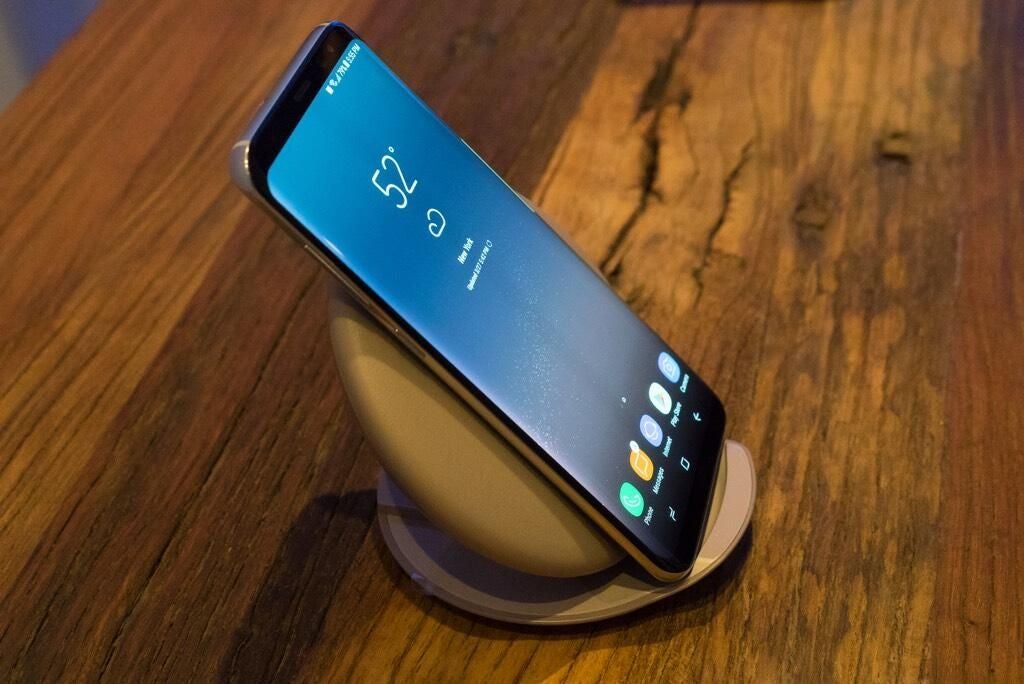
- New Wireless Fast Charging dock
- New Gear VR + Controller
- Gear 360 Camera
- Mesh Wi-Fi extenders
- A case with a BlackBerry-like keyboard built in
With its focus on AI, digital assistants, VR, AR, phone-desktop convergence, biometrics, and cybersecurity, Samsung has re-asserted itself as a leading innovator in the Android ecosystem. And with Knox Security and DeX, it has also re-established itself as a flag bearer for the enterprise.
Additional resources:
- Samsung Galaxy S8: Six big questions – and answers (ZDNet)
- Samsung Galaxy S8: Everything Samsung just announced (CNET)
- Samsung’s Bixby assistant needs to grow up. Fast (hands-on) (CNET)
- Samsung Galaxy S8 Microsoft Edition reveals Microsoft’s true business strategy (TechRepublic)
- 10 ways to reduce insider BYOD threats (TechRepublic)
- Galaxy S8 Bixby assistant will be expanded to all Samsung devices (ZDNet)
- Samsung Galaxy Tab S3 review: Samsung’s best tablet screen is a sight to behold (CNET)
Who should get it?
Samsung devices still appeal to design-conscious professionals. After all, some people strongly believe that the device you carry says something about you. The Galaxy S8 emotes professionalism, high quality, and innovativeness–so it will appeal to people who want to give off those vibes.
SEE: CNET’s Samsung Galaxy S8 review
It will also appeal to businesses that use Android devices but are concerned about security, including the recent reports of Android being targeted in 81% of malware infections on smartphones. Samsung’s Knox Security 2.8 includes frictionless deployment with Knox Configure, OTA bulk configuration (S8 is the first to use it), Knox Mobile Enrollment, and persistent settings. Plus, Knox Premium now functions as something of a light mobile device management (MDM) solution. Knox also integrates with the leading MDM vendors.
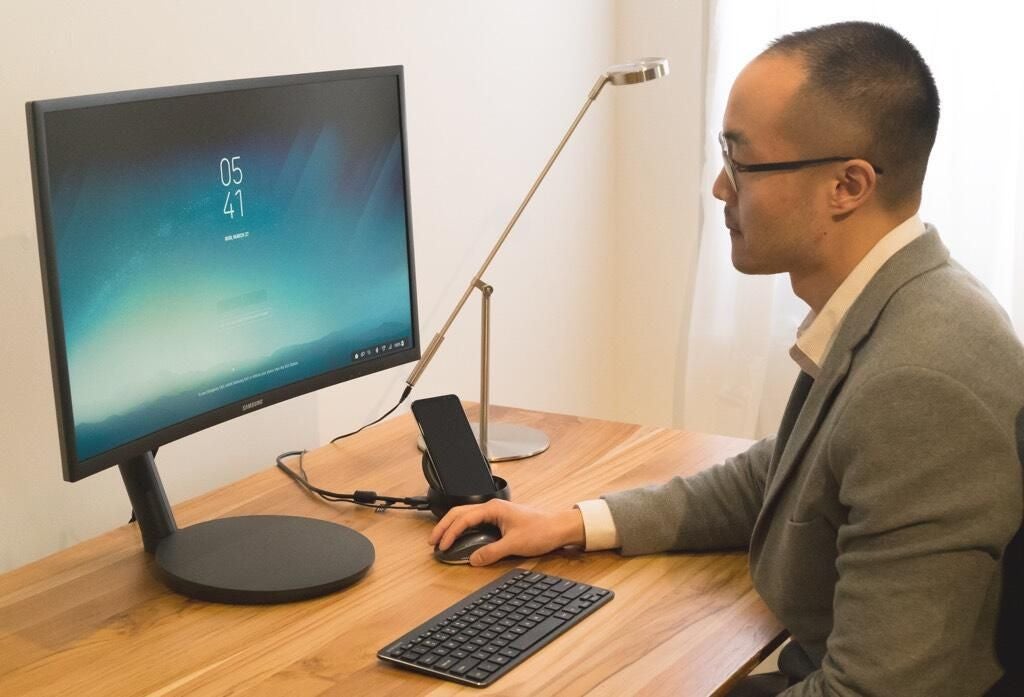
For businesses that want to consolidate smartphones and laptops and experiment with VDI, the Galaxy S8 could be the first solution with solid enough performance to make it a reality. The Samsung Desktop Experience allows you to plug a Galaxy S8 or S8+ into a DeX Station with a connected keyboard, mouse, and monitor and use it like a desktop. The UI looks similar to Samsung’s Android tablets, and it includes integration with Microsoft Word, Excel, and PowerPoint as well as VDI software from Citrix, VMware, and Amazon. With the latter, DeX on the S8 can simply act as a terminal connecting to your work machine via the cloud.
SEE: All of the TechRepublic smart person’s guides
Bill Gates has been predicting for a couple decades that smartphones would eventually be the brains that power our workstations, and companies such as Palm, Motorola, and Microsoft have tried to make it work. However, Samsung thinks it’s ready to succeed where others have failed for two reasons: Its new 10nm processors have enough oomph for desktop-class performance, and the Android ecosystem has the reach and the applications to make it work.
Based on the demos of Samsung DeX, I’d describe the experience as somewhere between a Google Chromebook and a large Samsung tablet. If you use software that already has a great tablet app for Android, then it will work especially well. Since this is the 1.0 version, it’s going to take time and testing to judge how enterprise-ready it actually is. Still, some companies are likely to start testing out the viability, because saving the cost of a work PC could justify the additional premium for a Galaxy S8.
Additional resources:
- 11 reasons why Samsung’s Galaxy S8 is better than Apple’s iPhone 7 for business (ZDNet)
- Samsung’s DeX desktop dock turns the Galaxy S8 into a grab-and-go PC (CNET)
- CIO Jury: 10 out of 12 tech leaders trust Samsung despite Galaxy Note 7 failure (TechRepublic)
- Samsung US reputation ranking falls by 42 places (ZDNet)
- Businesses beware: Smartphone malware rises 400% in 2016, Nokia reports (TechRepublic)
- Meet Google’s secret weapon for fighting Apple and Microsoft (CNET)
- Free ebook: Reducing the risks of BYOD in the enterprise (TechRepublic)
- Hardware Procurement Policy (Tech Pro Research)
Who shouldn’t get it?
Samsung devices are still priced at the the top of the Android market. You’re paying for the Samsung brand name, the high-end design, and the extra software and services that Samsung layers on top of Android. If price is a top priority for you, then you’ll likely find better value from phones by Huawei (and Honor), Lenovo (and Motorola), OnePlus, and Xiaomi. But, if you do, then you should also invest in a good MDM solution to ensure manageability and security in the enterprise.
For those who purchased the Galaxy Note 7, liked the device, and then were forced to return it because of the recall, you may be wary about giving Samsung another shot just six months later. That wait-and-see attitude is certainly justified. To be safe, it may be worth waiting 60-90 days after the official release in April to make sure the Galaxy S8 doesn’t run into similar battery issues. If even a handful of S8 devices run into the same problems, it could be disastrous for Samsung.
The company’s executives say that they’ve learned a lot from the problems with the Note 7, they’ve worked closely with the industry on putting better battery checks in place, and they’ve worked on applying the same kind of innovation they put into phones into their manufacturing processes. Time will tell if it’s fixed the problem.
For now, the Samsung Galaxy S8–like the Galaxy Note 7 before it–appears to be a well-designed, high-end, boundary-pushing device.
Additional resources:
- After liftoff, Samsung’s Galaxy S8 will face many unknowns (ZDNet)
- Can the S8 give Samsung the second chance it needs (CNET)
- Why I’m not buying the Galaxy S8 this year (CNET)
- How Samsung tests its smartphones (and hopes to win back trust) (ZDNet)
- Samsung plans to sell Galaxy Note 7 units as refurbished (ZDNet)
- CPSC urges better battery safety after Samsung’s Note 7 fiasco (CNET)
- Don’t expect your Galaxy S8 to have the same battery life (CNET)