


Both Webroot and McAfee offer antivirus tools as well as more comprehensive packages. For the purposes of this article, I mainly focused on the primary antivirus offerings in order to provide a better apples-to-apples comparison.
- Webroot: Best for individuals and small businesses that have aging devices that lack an abundance of system resources.
- McAfee: Best for individuals and small to mid-sized businesses that want a good set-and-forget AV package.
Webroot vs McAfee: Comparison table
| Our rating (out of 5) | ||
| Starting price | ||
| Performance impact | ||
| Identity Protection? | ||
| VPN? | ||
| Cloud storage? | ||
Webroot vs McAfee: Pricing
McAfee pricing may be more complex than Webroot, but it is cheaper. Whether you look at simple AV tools or complete suites, McAfee has lower prices than Webroot. That is not to say that Webroot is expensive. But its rates are consistently higher than McAfee.
Winner: McAfee.
Webroot Pricing
Webroot offers the following plans
- Essentials 1: $37.49 first year for one device.
- Essential 3: $52.49 first year for three devices.
- Premium: $77.99 first year for five devices.
- Total Protection: $89.99 first year for five devices.
McAfee Pricing
Here are the primary pricing options for McAfee AV:
- Basic: $29.99 per year for one device.
- Essential: $39.99 per year for up to 5 devices.
- Premium: $49.99 per year for unlimited devices.
- Advanced: $89.99 per year unlimited.
These are first year prices, which may increase when renewal is due.
Webroot vs McAfee: Feature comparison
Performance impact
Winner: Webroot
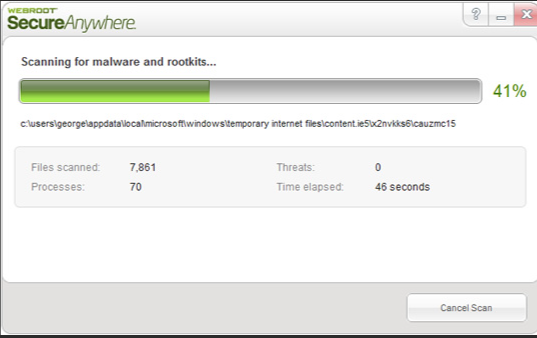
All applications use system resources, but McAfee consumes more than Webroot, which had minimal performance impact on my system. McAfee, on the other hand, can sometimes cause delays when it runs. I noticed slows in other applications at times. Webroot also has faster scans and swifter resolution of problems.
Identity protection
Winner: McAfee
Both vendors offer identity protection. McAfee makes the feature available in more basic packages while Webroot users need to pay for its Premium package to obtain it.
SEE: Best Antivirus Software for Small Businesses (TechRepublic)
VPN
Winner: McAfee
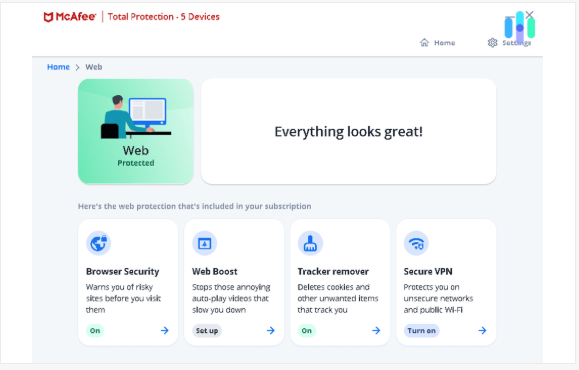
The basic McAfee AV package includes a free VPN. Other McAfee packages throw in a VPN, a firewall, anti-spam, a password manager, data clean up, web protection, a social privacy manager, and a protection score, which can add up to considerable savings, especially for small businesses. Webroot includes the VPN and identity protection with more expensive packages.
Cloud storage
Winner: Webroot
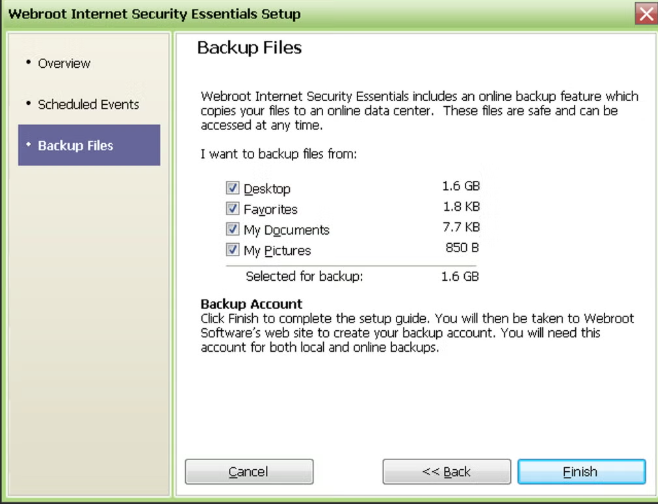
One feature that Webroot provides that McAfee does not is unlimited cloud backup and storage for one device. McAfee doesn’t match it.
SEE: McAfee vs Kaspersky: Which Solution Is Best for Your Team? (TechRepublic)
More cloud security coverage
- Blackpoint Cyber vs. Arctic Wolf: Which MDR Solution is Right for You?
- 6 Best Open Source Password Managers for Windows
- Unified by Design: The Smart Stack Advantage of NinjaOne and Microsoft Intune
- Free Business Email: I Found 8 Legit Ways to Get One
Webroot pros and cons
Pros of Webroot
- Very little system impact when running.
- Unlimited cloud backup and storage with the Total Protection option.
- Good value when you buy the Total Protection package as it includes so many additional tools
Cons of Webroot
- Expect to pay more for features beyond basic AV.
- The AV scanner isn’t rated as highly as the scanners from McAfee and other providers.
- The number of devices that can be protected is more restrictive than McAfee.
McAfee pros and cons
Pros of McAfee
- Many plans offer unlimited devices.
- Less expensive than Webroot.
- A large variety of subscription options.
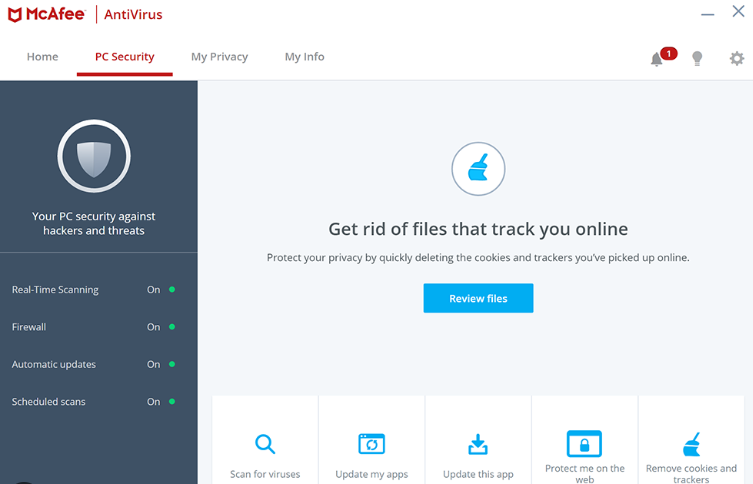
- Plans come with password manager, firewall, and VPN.
- Third-party tests mostly come out in favor of McAfee over Webroot on AV scanning effectiveness.
Cons of McAfee
- Resource-intensive.
- Reputation for having intrusive ads when the subscription runs out and for being difficult to completely remove.
Should your business use Webroot or McAfee?
Both Webroot and McAfee offer a range of AV and security tools. I got the distinct impression that Webroot is more interested in selling its Total Protection package rather than a simple AV tool as it provides a lot of features in the larger package, including AV as well as identity protection. McAfee offers good AV and a broader suite of tools. But Webroot comes with unlimited backup, which could be attractive to some users. It is all down to user needs whether you choose one or the other.
SEE: Cybersecurity: Benefits and Best Practices (TechRepublic Premium)
Choose Webroot if:
- Your computers and devices are aging and have limited system resources.
- If you want a comprehensive security package at a decent price that includes unlimited backup and cloud storage of one device. Webroot Total Protection is by far the best deal available from Webroot and includes a password manager, VPN, identity protection, dark web protection, AV, and more.
Choose McAfee if:
- You have many devices that you want covered by one license.
- You also need a VPN, a firewall, anti-spam and a password manager in one package at an affordable price.
- If you operate an environment or vertical market highly susceptible to viruses and malware as McAfee’s scanner scores a little better than Webroot.
Methodology
To compare Webroot and McAfee, I reviewed company websites, customer reviews, and online forums. I also visited Reddit and scrolled through a great many user comments of each to form a consensus based on the opinions of power users.