


Well, the day many Apple users have dreaded has come. Apple Maps is no longer entirely ad-free.
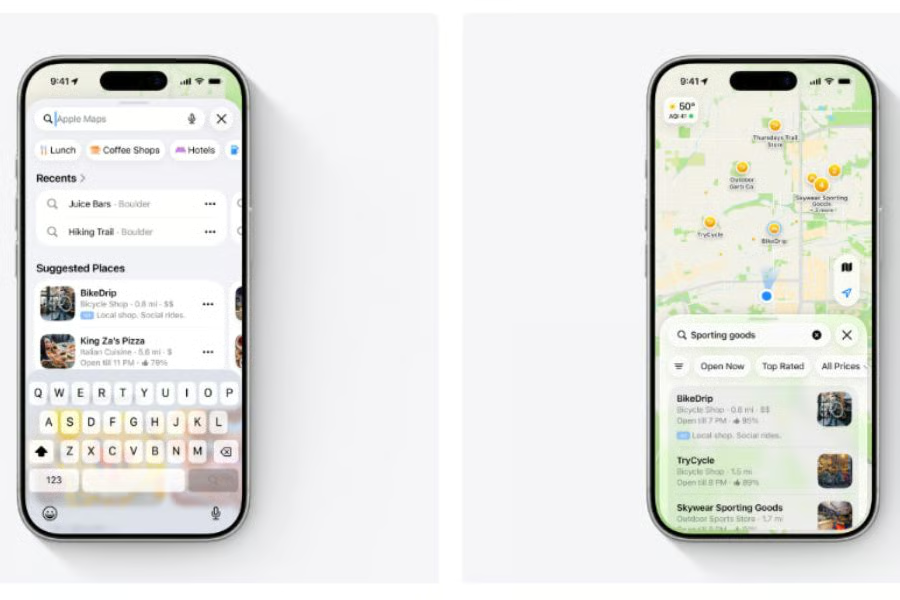
Apple has begun rolling out sponsored business listings to Maps users in the U.S. and Canada, following plans announced earlier this year to expand its advertising business. Ads can appear before a search and at the top of relevant search results, with a broader rollout expected over the coming weeks.
For iPhone users, the biggest change is simple: sponsored listings are now part of the Maps experience, and there is currently no option to pay to remove them — even for iCloud+ or Apple One subscribers.
Where Apple Maps ads will appear
Fortunately, Apple isn’t flooding Maps with ads everywhere. Instead, the ads can appear in two places within the Maps app.
Before users search, an initial advertisement can appear in the “Suggested Places” section of the search screen. After a user enters a search, a second ad can also appear at the top of relevant search results.
Users will see at most one ad per location, according to 9to5mac. Paid listings are designed to look similar to other business results but carry a blue “Ad” label to distinguish them from organic listings. So while the ads may look similar to regular business listings, watchful users should be able to tell when a business has paid for placement.
Google Maps has offered promoted business listings for years. For Apple Maps users, however, the rollout removes one distinction between the two services: Apple Maps had previously offered an ad-free search experience.
Apple Emphasizes Privacy
This represents another step Apple is taking to expand advertising beyond traditional placements in services such as the App Store. The company has framed advertising as a business opportunity while attempting to differentiate its approach from competitors by emphasizing privacy.
Naturally, introducing advertising in a mapping app is going to raise some important privacy questions. After all, Maps has access to information about what users search for and where they are while using the app.
Fortunately, the company says Maps advertising will not associate a user’s location or the ads they see and interact with their Apple Account. Apple also says personal data stays on the user’s device and isn’t collected or stored by Apple or shared with third parties.
Users may still see ads based on their approximate location, current search terms, or the part of the map they’re viewing. But Apple says that this advertising information isn’t linked to users’ Apple Accounts.
Some Apple Maps users are unhappy
Of course, the ads have already attracted some criticism from Apple Maps users.
Initial reactions reported online have included complaints that advertising makes Maps less appealing and comparisons with Google Maps, particularly among users who previously preferred Apple Maps for its ad-free design.
Some responses have even included users saying they will switch to Google Maps, while others have questioned why they should continue using Apple Maps now that it has ads.
Another important thing: unlike some paid digital services, users cannot currently pay to remove the Maps advertisements. That means even users who pay for services such as iCloud+ or Apple One can’t remove the sponsored listings, either.
Now, does this really mean that Apple Maps is about to lose a huge number of users? Well, the impact on the app remains unclear. While some users might consider switching, ads alone are unlikely to determine everyone’s choice. Furthermore, Apple Maps is also deeply integrated into the iPhone and Apple’s broader ecosystem, which could make a wholesale switch less likely.
Still, the move for Apple is a risk. Ads might generate another stream of revenue for the company, but they also significantly change an experience that many users had come to expect.
What the ads mean for businesses
On the flip side, the rollout creates an immediate new advertising channel for businesses. For them, Maps ads could be a useful new way to reach potential customers.
A restaurant, retailer, or other local business can pay for a prominent position when people are looking for places to visit. Appearing near the top of a Maps search could allow advertisers to reach potential customers when they are actively looking for a particular type of business.
Apple has already opened Maps ad booking and is offering a promotional deal for businesses interested in trying the new placements, helping them compete for attention at the top of local search results.
Must-read Apple coverage
- Nearly 7 in 10 iPhone Owners Plan iPhone 17 Upgrade
- Apple Prepares AI-Powered Siri Upgrade With Google Search Integration
- Apple’s Xcode 26 Beta Now Supports GPT-5 and Claude
- Apple’s Vision Pro Adoption Stalled As Content Released ‘Drip by Drip’
Apple’s growing advertising business
As the rollout continues, it points to Apple’s broader push to integrate advertising across its ecosystem. The company already sells ads across various parts of its business, including the App Store. Maps gives it another place to generate advertising revenue.
It will be interesting to see whether Maps advertising will remain relatively limited or eventually become a much larger part of the experience, and how this will impact customer response.
For now, the rollout remains relatively limited: sponsored listings are clearly labeled and appear only in specific parts of Maps. The bigger question is whether Apple keeps that footprint small as its advertising business expands — or whether ads gradually become a more visible part of using an iPhone.
Other News: Google has introduced pay-as-you-go pricing, spending caps, and savings plans for Gemini Enterprise to help businesses better control the unpredictable costs of AI agents.