


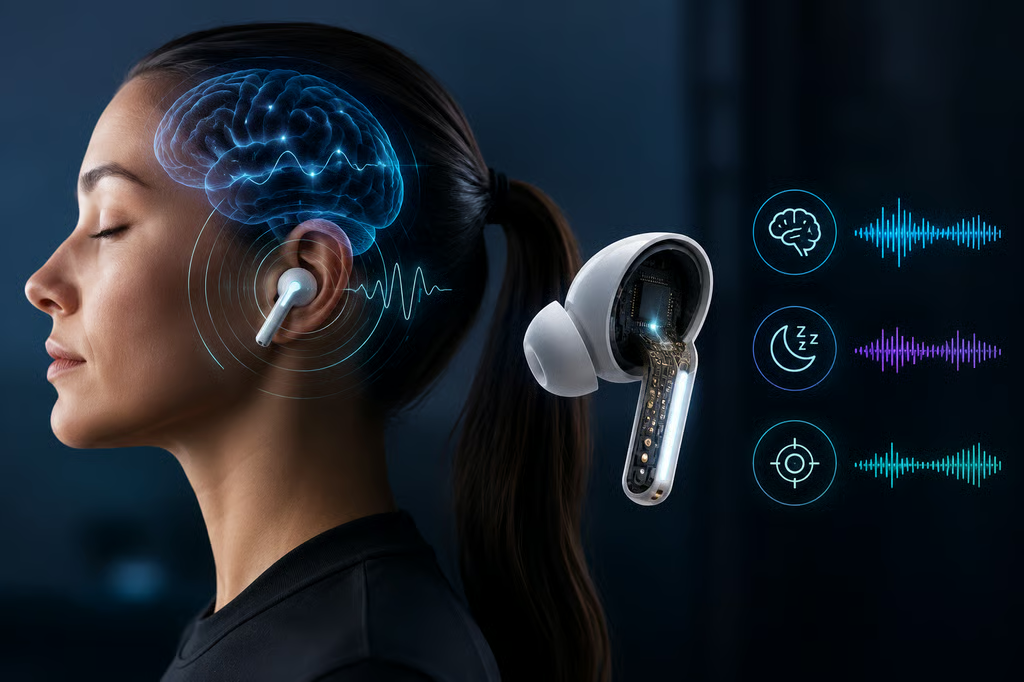
The next big change in wearable technology may be hiding in plain sight, sitting in your ears instead of on your wrist.
Companies including NextSense and Neurable are already developing or selling earbuds and headphones that use electroencephalogram (EEG) sensors to capture electrical activity associated with the brain, targeting uses such as sleep, focus and fatigue.
Unlike the specialized equipment traditionally associated with brain monitoring, these devices are designed to disappear into an everyday product that people already wear for hours at a time.
The underlying technology is not new: EEG has been used to measure electrical activity in the brain. What is changing is the ability to miniaturize the sensors, collect signals through listening devices, and use software to interpret them outside a conventional laboratory.
Challenges to accuracy and privacy may, however, affect how widespread the technology penetrates the market in this form.
How does a brain tracking wearable work?
Unlike smartwatches and rings, which use signals such as heart rate, movement and temperature to make inferences about the body, brain-sensing earbuds are designed to pick up electrical activity from the brain itself.
That gives them access to a different kind of signal, which companies like NextSense and Neurable claim can then be used to estimate things such as attention, fatigue and sleep.
The more interesting part, however, is what the earbuds can do with those measurements.
Per The Independent, NextSense, for example, uses EEG to track sleep stages and power a Focus Mode that adapts audio based on the user’s brain activity, turning the earbuds from devices that simply deliver sound into ones that can respond to the wearer.
That potential has also attracted players like Apple. The Cupertino company, which already makes health-tracking watches, filed a patent application in 2023 for AirPods capable of measuring brain activity.
While such technology remains far removed from the kind of brain-computer interface being developed by Elon Musk’s Neuralink, both are part of a broader push to connect brain activity with digital devices.
Is the market really ready for brain-monitoring earbuds?
While these earbuds may look like ordinary consumer electronics, they sit at the intersection of consumer electronics and health-focused devices.
That creates a higher bar for consumer trust. People may be comfortable with a smartwatch estimating how many steps they took, but a device telling them what their brain activity suggests raises different questions about trust.
Privacy could make that trust problem even harder. Unlike a step count or heart-rate reading, brain activity can reveal information about a person’s cognitive state, making questions about what companies collect, what they infer from it, how long they keep it, and who can access it much more important.
That comes at a time when consumers are already questioning how wearable companies handle sensitive health information. A brain-monitoring device could potentially generate new information about a user through its own analysis, meaning the data users hand over may be less revealing than what the company can derive from it.
For manufacturers, that means they have to convince consumers that the technology is accurate enough to be useful, transparent enough to be trusted, and valuable enough to justify giving a device continuous access to brain-signal data.
And that may ultimately determine whether brain-sensing earbuds become another short-lived wearable category or something people are willing to wear every day.
What could brain-monitoring earbuds mean?
For most people, the immediate impact is simple: a future pair of earbuds may know more about you than you do. Instead of only tracking your movement or heart rate, they could estimate when you are focused, tired, or ready for sleep and use that information to adjust how the device behaves or suggest activities for you.
There is also a question of where that information goes. If brain-sensing earbuds become common, their data could eventually be useful not just to the wearer but also to employers, schools, advertisers, and other services seeking to understand how people think, work, or respond to their surroundings.
The important question may therefore shift from whether earbuds can measure brain activity to what companies are allowed to infer from it. As brain sensing moves out of laboratories and into everyday electronics, understanding what is measured, what is inferred, and who gets access to both will become increasingly important.
Other News: Plaud has introduced AI-first earbuds that can record and summarize workplace conversations, then use that context to draft follow-up emails, documents, and other actions across connected apps.