


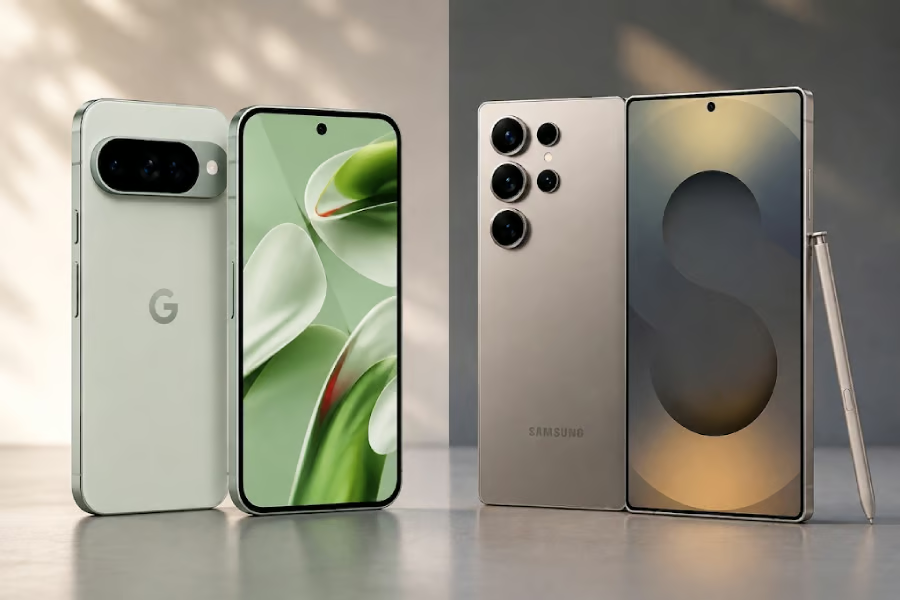
Buying an Android phone for four or five years used to require a little optimism. Google and Samsung have largely removed that gamble.
Google promises seven years of OS and security updates for Pixel 8 and newer phones, while Samsung promises seven generations of OS upgrades and seven years of security updates for recent Galaxy S flagships, including the Galaxy S26 series. Those commitments have dramatically extended how long premium Android phones can remain secure and current.
But similar-looking promises do not necessarily translate into identical ownership experiences.
Google has an advantage in getting new versions of Android onto supported Pixel phones quickly. Samsung supports a much larger range of hardware and layers its own One UI features on top of Android, but update schedules can vary more by device, carrier, and market.
For anyone planning to keep a phone well beyond the typical upgrade cycle, the better choice depends on what kind of support matters most.
- Samsung vs Google: At a glance
- Google and Samsung both promise years of Android updates
- Google has the advantage on Android update speed
- Samsung supports a much bigger hardware ecosystem
- Security updates matter more as phones get older
- Samsung and Google take different approaches to new features
- Which Android brand ages better?
- What this means for Android buyers and IT teams
Samsung vs Google: At a glance
| Longest current support commitment | Seven years of OS and security updates for Pixel 8 and newer | Seven generations of OS upgrades and seven years of security updates for recent Galaxy S flagships |
| Major Android update speed | Tends to be among the first to receive Google’s major Android releases | Usually follows after Samsung adapts Android for One UI and individual Galaxy models |
| Security update cadence | Updates roll out regularly to supported Pixel devices, with timing varying by device and carrier | Monthly, quarterly, or biannual depending on the specific Galaxy device |
| Support policy complexity | Relatively simple because Google sells a smaller Pixel lineup | More variable because Samsung supports a much larger range of phones and tablets |
| Hardware choice | Smaller selection of Pixel phones and foldables | Much broader lineup across flagship, foldable, midrange, rugged, and enterprise devices |
| Feature updates | Pixel Drops may add new or upgraded features to supported devices | One UI updates can add Samsung-specific features alongside Android changes |
| Best for | Buyers who prioritize fast Android updates and a simpler support policy | Buyers who prioritize device choice, Galaxy ecosystem features, and broader hardware options |
Google and Samsung both promise years of Android updates
Google reset expectations for Android longevity with the Pixel 8 series.
According to Google’s Pixel software support policy, Pixel 8 and newer phones receive seven years of operating system and security updates starting from when each device first became available through the Google Store in the U.S. Google says those updates may also include new and upgraded features through Pixel Drops.
Samsung has made a similar long-term commitment for its recent premium phones, although the company measures operating system support differently.
The Galaxy S24, S25, and S26 families are promised seven generations of OS upgrades and seven years of security updates. Samsung says the Galaxy S26 support period begins from the phone’s global launch date.
That puts the companies surprisingly close on paper. A premium Pixel or Galaxy purchased today should no longer become obsolete simply because its manufacturer stops providing operating system updates after only a few years.
The change is particularly important as Google continues tightening Android security. Recent measures include new protections around Android sideloading and developer verification, making continued software support an increasingly important part of keeping an Android device secure.
But the number of supported years only tells part of the story.
Google has the advantage on Android update speed
Pixel phones remain Google’s showcase for Android, giving them an advantage for users who want major Android releases quickly.
Google develops Android and controls the software experience on Pixel phones, while manufacturers such as Samsung adapt new Android releases for their own devices and interfaces.
That does not mean every Pixel owner receives an update simultaneously. Google says Pixel software updates roll out gradually and can vary by carrier and device, meaning an update may take several weeks to reach every eligible phone.
Even so, Pixel devices tend to be among the first phones to receive Google’s major Android releases. Android 17, for example, began rolling out to eligible Pixel phones before arriving on many competing Android devices.
Samsung faces a different task. Major Android releases also become new versions of One UI, Samsung’s customized interface that includes its own multitasking tools, Galaxy AI features, device integrations, and enterprise capabilities.
Samsung has improved its update support considerably, but the company notes that the timing of OS and security updates can vary by device model, network provider, and market.
For buyers who prioritize receiving major Android releases quickly and want a relatively simple support policy, Pixel has the advantage, though the timing of individual updates can vary.
Samsung supports a much bigger hardware ecosystem
Google’s smaller Pixel lineup makes its support story relatively easy to understand.
Samsung has a much larger portfolio. The Galaxy ecosystem stretches from premium Galaxy S and foldable phones to Galaxy A models, tablets, rugged devices, and enterprise-oriented hardware.
Not every Galaxy device receives the same update commitment or security-update schedule.
Samsung’s current security update scope separates supported devices into monthly, quarterly, and biannual update schedules. The company says these updates can include patches for Android vulnerabilities disclosed by Google as well as fixes for Samsung-specific security issues.
That makes the exact model more important when buying Samsung.
Recent Galaxy S flagships receive Samsung’s longest support commitment, while other Galaxy models can follow different policies. TechRepublic’s look at Samsung devices that may miss the Android 17 and One UI 9 transition illustrates why buyers should check a device’s support policy rather than assuming every Galaxy phone receives the same treatment.
Samsung’s advantage is the breadth of hardware available. Google’s narrower lineup makes its long-term support policies easier to navigate.
Security updates matter more as phones get older
Major Android releases attract most of the attention, but security patches become increasingly important as a phone ages.
A device can remain perfectly usable long after its camera, processor, or display no longer feels cutting-edge. Losing security support is different. Newly discovered vulnerabilities continue to appear regardless of how old the hardware is.
Both Google and Samsung provide long-term security support for eligible devices, although the timing and frequency of those updates can differ.
For businesses, this distinction becomes particularly important. Keeping a phone in service for five or six years can lower hardware replacement costs, but only if the device continues receiving patches and remains compatible with an organization’s security requirements.
IT teams managing Android fleets should therefore look beyond the advertised end date and consider:
- How frequently the specific model receives security updates.
- Whether the manufacturer clearly publishes its support policy.
- How quickly important patches reach deployed devices.
- Whether older hardware remains compatible with required business apps and management tools.
Seven years of promised support is valuable. How that support is delivered over those seven years matters just as much.
Samsung and Google take different approaches to new features
Software longevity is also about what manufacturers add during those years.
Google can use Pixel software updates and Pixel Drops to introduce new camera, calling, security, AI, and other features to supported devices. However, Google’s current support policy says the seven-year commitment for Pixel 8 and later may include new and upgraded Pixel Drop features, rather than guaranteeing that every new feature will reach every supported phone throughout the entire period.
Samsung takes a broader ecosystem approach. One UI connects Galaxy phones with tablets, watches, PCs, SmartThings devices, Samsung DeX, and other products. New One UI releases can therefore introduce Samsung-specific capabilities in addition to changes included in the underlying Android version.
That creates a trade-off.
Pixel provides a relatively direct path to Google’s latest Android software, while Galaxy phones offer Samsung’s additional software layer and wider device ecosystem. Feature availability on either platform can still depend on hardware, model generation, region, and other requirements.
A seven-year support promise does not mean a phone will receive every feature introduced during that period. AI tools and other computationally demanding features, for example, may depend on processors or hardware capabilities that older devices lack.
More Google coverage
- New Google Search AI Mode is ‘Total Reimagining,’ Says CEO Sundar Pichai
- In Major Ruling, Judge Finds Google ‘Willfully Acquired and Maintained Monopoly Power’ Over Digital Ad Market
- Google’s Big Bet on Nuclear Energy: ‘The Race to Power AI-Driven Data Centers is Accelerating’
- Computer History Museum Releases Original AlexNet Code: Why It Matters
Which Android brand ages better?
For buyers who prioritize fast access to major Android releases and a straightforward support policy, Google Pixel has the advantage.
Google’s relatively small hardware lineup makes it easier to determine which phones are supported, and eligible Pixel devices tend to be among the first to receive Google’s major Android releases. The exact timing can still vary by release, carrier, and device.
For buyers who prioritize hardware choice and Samsung’s wider Galaxy ecosystem, Samsung has the advantage.
Samsung offers devices across more price ranges and form factors, while recent Galaxy S flagships now pair that choice with seven generations of OS upgrades and seven years of security updates. The trade-off is that support commitments and update schedules vary more across Samsung’s much larger device portfolio.
The biggest change is that choosing between the two no longer requires accepting the short software lifespan that once defined many Android phones.
For someone buying a current Pixel or premium Galaxy and hoping to keep it for years, software support may no longer be the component that forces an upgrade. Battery degradation, hardware durability, app compatibility, and whether future features still run on aging processors could become the bigger reasons to replace the phone long before its final security update arrives.
What this means for Android buyers and IT teams
For individual buyers, longer software support changes the math around upgrading. A Pixel or premium Galaxy phone that continues receiving OS and security updates for years may be easier to justify keeping beyond the traditional upgrade cycle, particularly if its battery and performance remain adequate.
For IT teams, the advertised support period should be the starting point rather than the deciding factor. Before standardizing on a device, organizations should check its specific security-update schedule, expected end-of-support date, mobile device management compatibility, and whether critical business apps are likely to remain supported throughout the planned deployment.
That can also affect purchasing decisions. A less expensive Android phone may save money upfront, but a device with a longer usable support window could reduce how often an organization has to replace hardware across a large fleet.
Google and Samsung have both made keeping Android phones longer more realistic. The better long-term choice is ultimately the one whose update policy, security cadence, hardware, and enterprise features still meet your needs several years after the purchase order is signed.
Related reading: For another sign of how Android support and security are evolving, see how Google is adding a 24-hour wait for sideloading apps from unverified developers.