
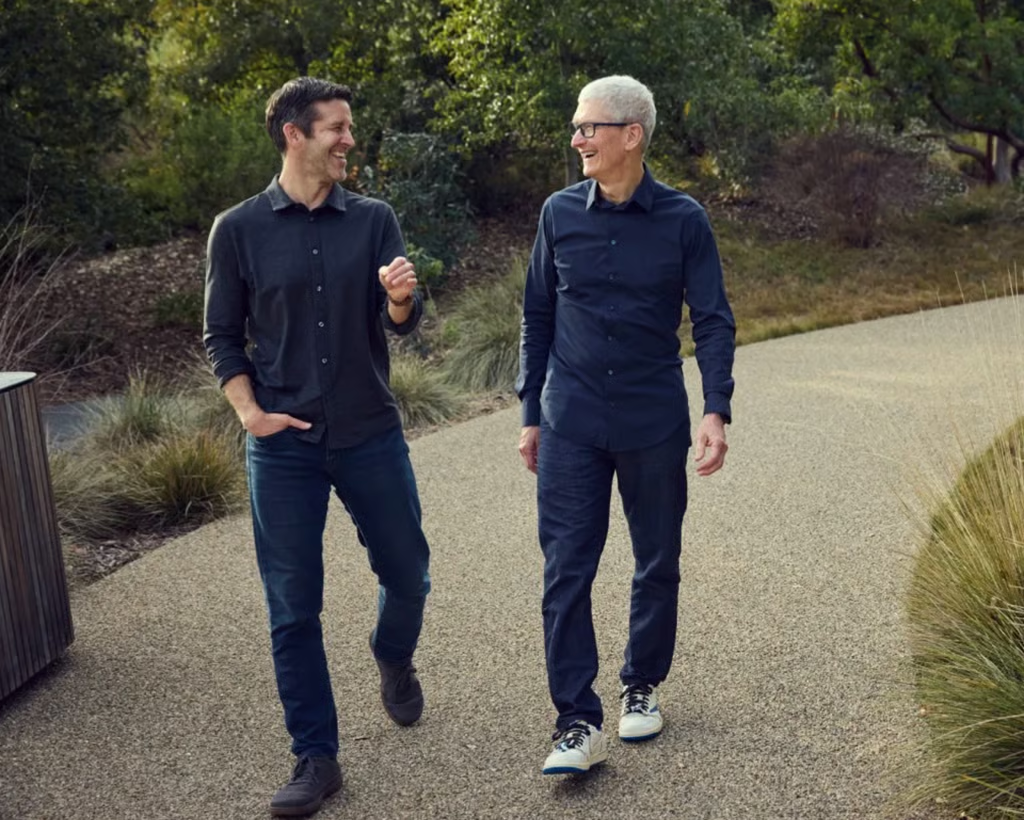


The man who shepherded Apple to a market capitalization of more than $4 trillion has ended his 15-year run as chief executive, handing the company to hardware chief John Ternus with an emotional farewell memo.
After 15 years as chief executive, Tim Cook officially stepped down on Sept. 1, passing the reins to John Ternus, the company’s longtime hardware engineering chief. Cook isn’t going far; he becomes executive chairman and will continue helping Apple engage with policymakers around the world. But the emotional weight of the moment was unmistakable in the memo he sent to employees.
“This is a moment I always knew would come one day, and yet it is still hard to believe it has arrived and I am writing these words,” Cook wrote.
Cook’s final words
The memo, obtained by Bloomberg, was less about strategy and more about gratitude. Cook described his tenure as “the privilege of a lifetime” and credited his team entirely for whatever success he achieved.
“The truth is, whatever there is to say about my success, I know it is all because of you,” he wrote. “You have brought out the best in me.”
He also leaned into Apple’s corporate mythology, invoking Steve Jobs’ famous line about leaving a “dent in the universe,” tying Apple’s future to the values and people inside the company rather than any single executive. “We bring out the best in each other. We lift each other up.”
In a separate public letter to Apple’s users, Cook reflected on the daily emails he read from customers: stories about Apple Watches saving lives, Macs transforming careers, and the occasional complaint about a bug. “In every one of those emails I feel the beating heart of our shared humanity,” he wrote.
The hardware man takes over
Ternus, who joined Apple’s product design team in 2001, now takes the helm days before Apple’s annual September product event. The company is expected to unveil the iPhone 18 Pro and new Apple Watches, while reports suggest its first foldable smartphone could also appear.
Cook’s endorsement of Ternus was unequivocal: “Few people understand what it takes to build products that change the world the way John does,” he wrote in the memo. The choice may signal continued emphasis on hardware and product execution, areas where Ternus has deep credibility. As hardware engineering chief, Ternus oversaw work across Apple’s major product lines as the company introduced the ultra-thin iPhone Air, the lower-cost MacBook Neo, and AirPods with hearing health features.
The road ahead
Ternus steps in at a complicated moment. Apple faces soaring component costs tied to AI-driven data center buildouts, regulatory scrutiny in multiple markets, and intense competition in artificial intelligence, a topic Cook notably didn’t address in his farewell. He also inherits a company where services revenue has become increasingly critical to the bottom line, even as hardware remains its soul.
A product builder in an AI world
Cook leaves behind a remarkably successful era, but Ternus inherits a company facing pressure on AI, supply chains and global politics. The choice of a hardware veteran suggests Apple is betting that better products — and the culture that produces them — remain its strongest answer.
As other technology companies race to sell AI subscriptions, Apple has placed a hardware veteran in charge. The choice could help the company connect its AI development more closely with the devices through which customers and businesses will use those features.
Yet there’s a risk in that focus. Hardware cycles are long, supply chains are fragile, and the margin pressures Ternus faces are real; Cook himself warned of looming price increases earlier this year. Meanwhile, Apple’s Services category, which carries a substantially higher gross margin than its Products category, will need continued attention from a leader whose career has largely centered on hardware.
For IT leaders and Apple customers, the practical question is whether Ternus can turn Apple’s hardware expertise into more capable AI devices without allowing component costs to drive prices significantly higher. His decisions could shape enterprise purchasing plans, device refresh cycles and the role Apple products play in AI-enabled workplaces.