


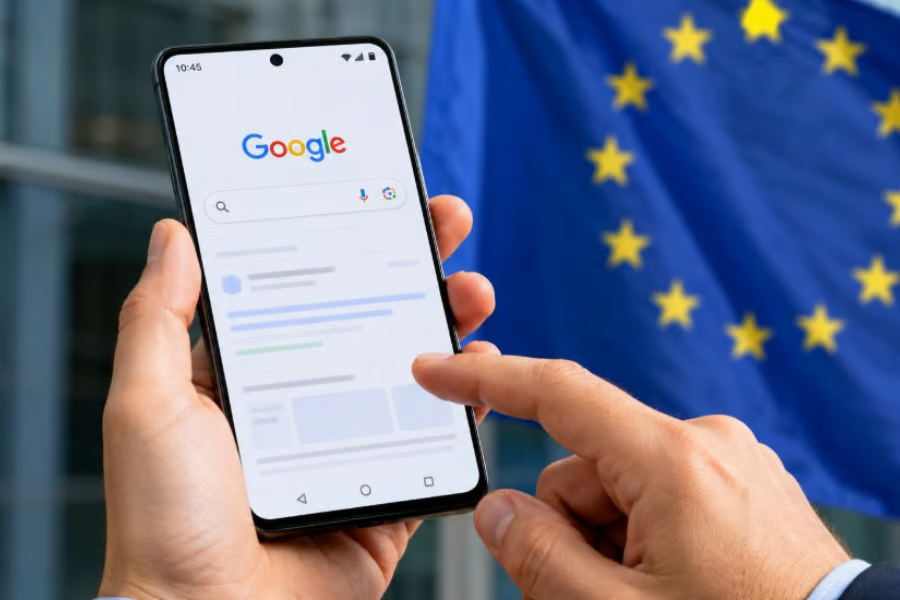
Google’s AI ecosystem is about to become more open across the European Union.
EU regulators have ordered Google to give rival AI assistants access to key Android features and share anonymized search data with eligible search engines and AI companies under the Digital Markets Act. The changes will roll out in phases beginning in 2027, giving competitors more opportunities to challenge Gemini and Google Search.
The rules could give Europeans more control over which AI services handle voice commands, searches, and everyday tasks. European organizations may also face new security, privacy, vendor-management, and compliance decisions as more AI providers gain access to Android functions and Google-collected search data.
Rival AI assistants gain deeper Android access
The European Commission said Google must open 11 Android features to competing AI providers, Reuters reported. The requirements are intended to let rival assistants operate more like Google’s Gemini service.
Android users could eventually activate another AI assistant with a voice command similar to “Hey Google.” Rival services may also gain permission to complete background tasks, such as searching for local information, booking a restaurant, or requesting a taxi through another app.
According to Reuters, EU tech chief Henna Virkkunen said regulators hoped to see “emerging alternatives to Google Search and Google’s AI services, such as Gemini” while giving users across the bloc more choice.
Access will be limited to companies that meet privacy and security requirements. Google can also assess whether an applicant poses cybersecurity or data-protection risks before opening Android functions to the provider.
Search rivals get access to Google data
Google must also provide eligible search engines and AI chatbots with anonymized data used to improve its search services.
The Associated Press said that regulators viewed Google’s vast collection of search information as an advantage smaller competitors could not easily reproduce. A pricing formula will determine what approved companies pay for access.
Google objected to the requirements.
AP noted that Kent Walker, the company’s president of global affairs, said the decisions risked “undermining vital privacy and security guardrails for millions of Europeans.”
EU officials maintained that shared information must be anonymized. Regulators also said the measures include safeguards for device security, data protection, and system integrity.
More Google coverage
- New Google Search AI Mode is ‘Total Reimagining,’ Says CEO Sundar Pichai
- In Major Ruling, Judge Finds Google ‘Willfully Acquired and Maintained Monopoly Power’ Over Digital Ad Market
- Google’s Big Bet on Nuclear Energy: ‘The Race to Power AI-Driven Data Centers is Accelerating’
- Computer History Museum Releases Original AlexNet Code: Why It Matters
What the EU rules mean for Android users and businesses
For Android users in the EU, the biggest change will be more choice.
Starting in July 2027, people may be able to activate rival AI assistants by voice and use them for tasks such as searching for local information, booking services, or interacting with third-party apps.
Greater choice will also require closer attention to permissions. Users may need to check which assistant is active, what information it can access, and whether voice requests or app data are processed by another provider.
European businesses that manage Android devices will face a broader set of policy decisions. IT and security teams may need to determine which assistants employees can use, whether background actions should be allowed, and how third-party providers handle company data.
The impact could be greater in regulated sectors such as finance, healthcare, and government. Giving an assistant access to business applications, location data, contacts, or voice commands may trigger additional vendor reviews and data-protection assessments
Developers and smaller AI companies could benefit from the changes. Better access to Android functions and anonymized search data may help them build services for European languages, local markets, and regional customer needs without depending entirely on Google.
The Commission’s order is legally binding under the DMA, Euronews emphasized, although it is separate from a formal infringement investigation that could lead to fines.
For consumers, the rules could mean more AI options on Android. For businesses, the larger task will be deciding which assistants to approve and how much access those tools should receive.
Read how Alibaba Cloud’s two new Paris availability zones could affect European enterprises weighing data sovereignty, resilience, and AI infrastructure needs.