
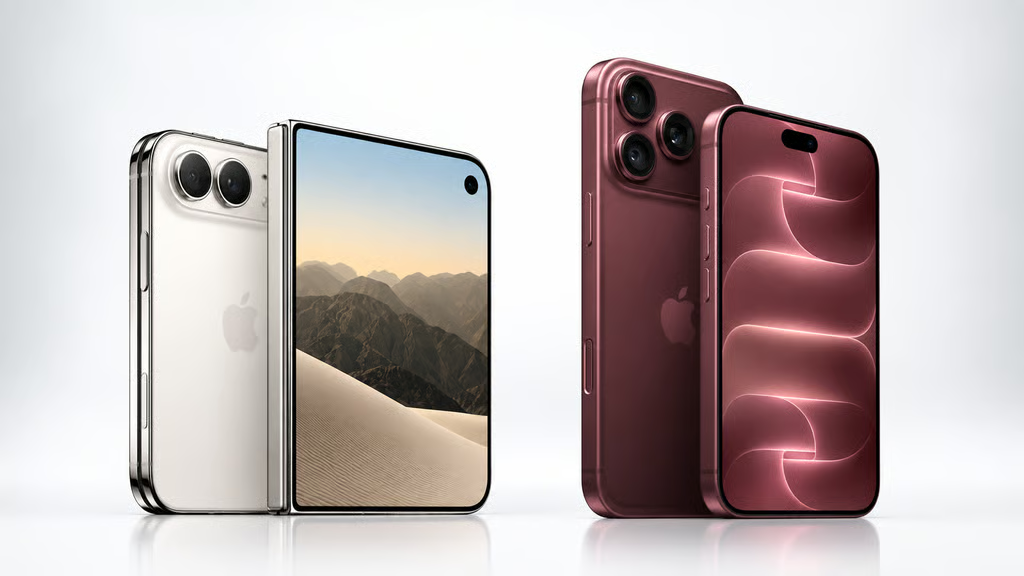


Apple’s first foldable iPhone costs $700 more than the iPhone 18 Pro Max, even though both use the same A20 Pro chip, C2 cellular modem, and N1 wireless chip. The $1,999 iPhone Duo instead charges a premium for its folding design and larger display, while the $1,299 Pro Max retains advantages in cameras, battery life, and Face ID.
The iPhone 18 Pro Max went on sale Sept. 18, while Duo preorders open Oct. 16 ahead of its Oct. 23 release. Buyers therefore have confirmed hardware and pricing to compare, but no long-term independent testing of Apple’s first foldable yet.
What the extra $700 buys
According to Apple’s iPhone Duo announcement, the device opens to a 7.6-inch OLED display that is 50% larger than the Pro Max’s 6.9-inch screen. A 5.4-inch outer display handles one-handed use. Despite adding a hinge and second screen, Duo weighs 254 grams, only 5 grams more than the Pro Max.
| Spec | iPhone Duo | iPhone 18 Pro Max |
|---|---|---|
| Starting price | $1,999 | $1,299 |
| Chip | A20 Pro | A20 Pro |
| Display | 7.6-inch inner, 5.4-inch outer | 6.9-inch OLED |
| Rear cameras | 48MP main, ultrawide | 48MP main, ultrawide, 4x telephoto |
| Video playback | Up to 44 hours outer / 31 hours inner | Up to 45 hours |
| Authentication | Touch ID | Face ID |
| Weight | 254g | 249g |
| Thickness | 5.2mm open / 11.3mm closed | 8.75mm |
The iPhone 18 Pro specifications show where the cheaper model remains stronger. Its dedicated 48MP telephoto camera provides 4x optical zoom and up to 8x optical-quality reach, while Duo has no dedicated telephoto lens. A recent iPhone 18 Pro reference guide also details its variable-aperture camera and other hardware changes.
The price gap is also about how the two phones are meant to be used. Duo puts more emphasis on screen space and multitasking, with iOS 27 adding Split View, saved app pairs, and support for two windows of the same app. A closer look at Duo’s foldable-specific iOS 27 features shows how apps resize and adapt across the larger display. Apple has also named Netflix, Zoom, and Slack among apps already using the format, while USB-C Apple Pencil support is scheduled for later in 2026.
Apple’s Duo specifications confirm that the foldable is eSIM-only worldwide and uses side-button Touch ID instead of Face ID. Those differences may matter to buyers switching from a traditional iPhone, while a separate Duo and iPad mini comparison looks at whether the larger folding screen can realistically replace carrying a second device.
How we compared the phones
This comparison uses current US list pricing and Apple’s published specifications for displays, cameras, battery claims, charging, dimensions, authentication, and connectivity. Because Duo does not ship until Oct. 23, Apple’s battery and durability claims are not treated as independent test results. The assessment weighs confirmed hardware and software differences against the $700 price gap rather than awarding a universal winner.
The Pro Max offers the stronger camera system, longer quoted battery life, and a conventional design for $700 less. Duo spends that premium on a larger folding workspace and new multitasking options. The value of those additions depends largely on whether the foldable format changes how the buyer actually uses the device.
Also read: For another view of Apple’s foldable strategy, the iPhone Duo and Galaxy Z Fold8 comparison shows how Apple’s first-generation design stacks up against Samsung’s more mature foldable platform.