


If your next Teams call feels boring, Microsoft Teams has the cure.
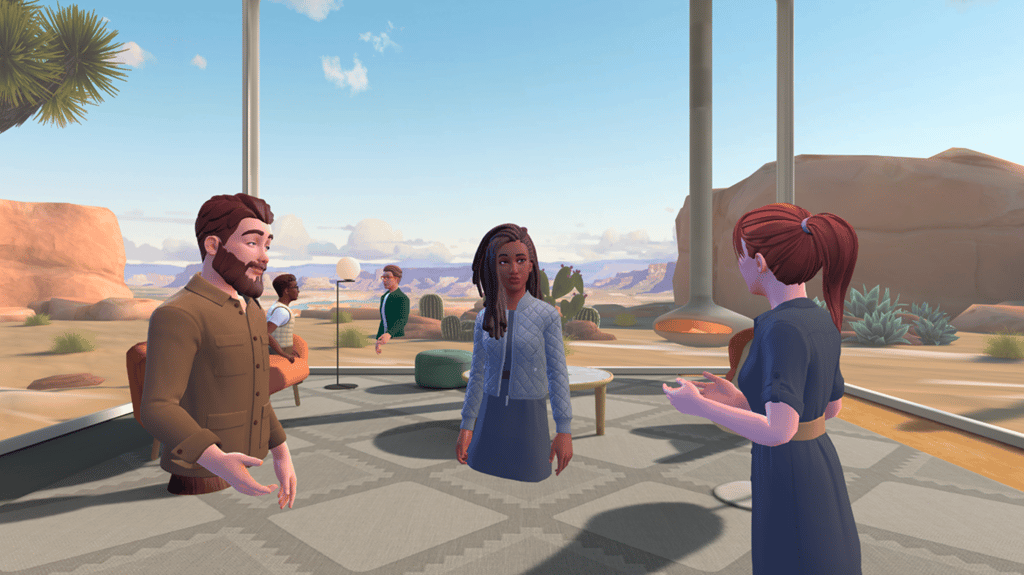
The company just rolled out immersive 3D meetings where users can meet as avatars in virtual spaces with spatial audio, roamable rooms, and social zones, all without leaving the app.
This marks Microsoft’s pivot away from Mesh as a standalone product. Effective Dec. 1, 2025, Mesh is being retired, with immersive collaboration now built into Teams, the platform organizations already use daily.
“Immersive events can help drive enhanced engagement and connection for your workforce across multiple points of interest in a single branded event with a tailored experience — ideal for all hands, showcases, company events, new employee onboarding, and trainings,” says Drew Blundell, Product Marketing Manager at Microsoft.
Immersive events come to general availability
Microsoft said immersive events are now generally available in Teams and work on Windows, macOS, and Meta Quest devices. Users can now plan, manage, and host immersive experiences using familiar tools they already know, like the Teams calendar, chat, and collaboration tools.
Immersive events build a 3D environment where participants join as avatars, explore virtual spaces, and connect in smaller groups. “With immersive events, organizers can create tailored 3D environments where attendees join as avatars, interact naturally, and feel truly present,” Microsoft added.
Microsoft’s support documentation explained that immersive spaces use Mesh technology to enable spatial audio, co-presence, and free movement inside a 3D space. These capabilities now support scrums, brainstorming sessions, onboarding activities, networking events, and casual team gatherings inside Teams.
Users can join immersive spaces through the Teams desktop app or with a Meta Quest headset. They can walk around, switch between first- and third-person views, and customize avatars. Microsoft provides multiple environments, such as Lakehouse and Oasis, and organizers can add brand elements, media screens, and other assets.
Hosting an immersive event requires a qualifying commercial Teams license and a Teams Premium license. Meanwhile, co-hosting or attending requires a standard Teams license.
Mesh sunsets while Teams takes over
As Microsoft folds Mesh into Teams instead of keeping it as a separate client, the familiar collaboration space becomes the new home for immersive work.
The company is positioning spatial interaction as part of daily meetings rather than a specialized feature set, showing that the future of Microsoft’s metaverse ambitions now lives entirely inside Teams.
For more on the platform’s evolution, read the latest news on the major Microsoft Teams performance update rolling out next year.