


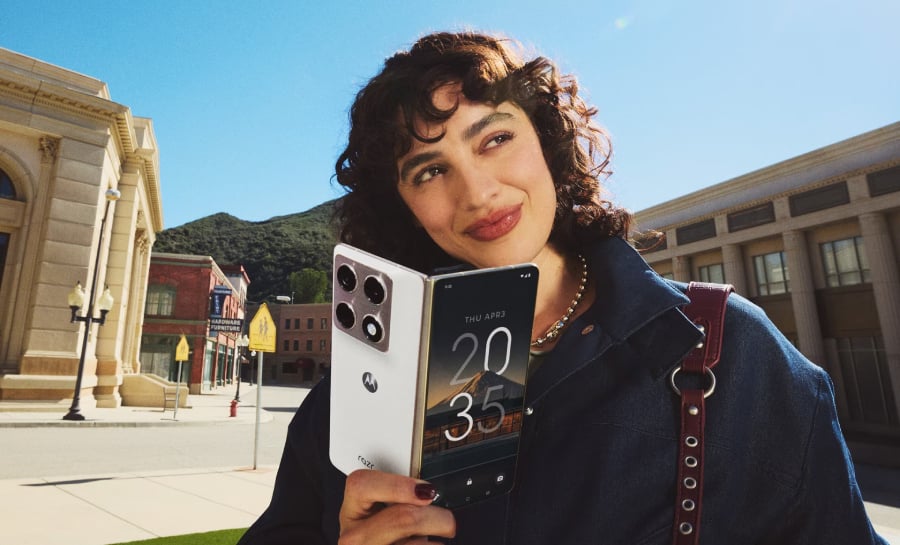
Motorola is officially entering the foldable race. At CES 2026, the company unveiled the razr fold, its first foldable smartphone, marking a major expansion of the iconic razr line and a clear indication that Motorola is ready to compete in the next phase of mobile design.
The reveal took place on Lenovo’s main stage in Las Vegas, where Motorola introduced the razr fold as a dual-display device built around flexibility and on-device AI.
Shaped around usability, not novelty
When closed, the razr fold looks and behaves like a conventional smartphone. Motorola built the device around a large external display designed to handle everyday tasks, such as checking messages, scrolling, and quick tasks, without forcing users to open the device each time.
Unfold it, and the experience shifts. The phone opens into a wide, tablet-like inner screen that Motorola describes as a working canvas rather than a novelty display. The larger view supports side-by-side apps, smooth multitasking, and more immersive content, allowing the device to move naturally between phone-sized convenience and big-screen use.
Motorola is careful to frame the razr fold as a device that adapts to how people already work and create. Features like adaptive layouts and stylus support suggest Motorola expects users to stay in the foldable experience throughout the day.
AI designed to stay out of the way
Rather than turning AI into a headline feature, the tech company presents it as a background layer supporting everyday use of the razr fold. The intelligence lives on the device, helping the phone adapt as users move between quick interactions on the outer screen and longer sessions on the larger inner display.
Motorola says its on-device intelligence focuses on relevance, offering information and prompts only when they fit the moment. As tasks shift, the device keeps pace without pulling users out of what they’re doing.
By pairing on-device AI with flexible layouts and multitasking, the company casts the razr fold as a device that responds to context rather than commands, staying present when useful and fading into the background when it’s not.
Mobility must-reads
- Big Apple OS Makeover: Here’s What to Expect & When
- MWC 2025: Nothing Shows Off (3A) Phones With AI Organization Tool
- Bad News for App Developers: Most Apps Fail to Hit $1,000 Monthly Revenue Within Two Years
- Mobile Device Computing Policy
A bigger moment for Motorola
The razr fold was introduced alongside several other Motorola announcements at the event. These included the new ultra-premium Motorola signature smartphone, the debut of Motorola Qira as a unified AI platform, and additions to the company’s connected device lineup, including the moto watch, moto pen ultra, and moto sound flow accessories.
Even so, the razr fold remained the clearest statement from the company at the show. As Motorola’s first foldable phone, it set the tone for the rest of the CES announcements, with the surrounding updates adding context rather than competing for attention.
WhatsApp is reworking how group chats function, adding personalized member tags that make busy conversations easier to follow without changing how groups are managed.